
Showing posts with label Cesar Chavez. Show all posts
Showing posts with label Cesar Chavez. Show all posts
Saturday, March 22, 2025


Wednesday, March 29, 2023
Celebrate the Life of Cesar Chavez and Dolores Huerta
Celebrating Cesar Chavez and Dolores Huerta

1972- Sacramento
March 31 is Cesar Chavez’s birthday and Cesar Chavez Day – a state holiday in California, one of eight states to recognize the date, and one of the few holidays in the nation dedicated to a labor leader. Sacramento and dozens of cities, counties and labor federations will celebrate the life of Cesar Chavez.
The year 2012 was the 50th anniversary of the founding of the United Farm Workers (UFW) by Cesar Chavez, Dolores Huerta, Philip Vera Cruz and others. Celebrations held that year focused on the historic struggle for union rights and justice in the fields of California.
April 11, 2023 will be the 5th Annual Dolores Huerta Day in California. It will be her 93rd. birthday. Dolores Huerta was formerly an Honorary Co-Chair of Democratic Socialists of America.

Dolores Huerta. 2023
For an update on the UFW 2023 see.
https://antiracismdsa.blogspot.com/2023/03/farmworkers-union-seeks-california.html
The UFW was the first successful union of farm workers in U.S. history. There had been more than ten prior attempts to build a farm workers’ union. Each of the prior attempts was destroyed by racism and corporate power. Chávez and Huerta chose to build a union that incorporated the strategies of social movements and community organizing and allied itself with churches, students, and organized labor. The successful creation of the UFW changed the nature of labor organizing in the Southwest and contributed significantly to the birth of Latino politics in the U.S. The UFW showed unions that immigrants can and must be organized.
Both Chavez and Dolores Huerta ( formerly a DSA Honorary Co Chair ) have received the Presidential Medal of Freedom and have been recognized by the U.S. Department of Labor and in the California Hall of Fame for their work.
Dolores Huerta remains active as a staunch advocate for women’s rights and reproductive freedom. She is an honorary DSA chair, a founding board member of the Feminist Majority Foundation and a member of the board of Ms. Magazine. She is active in Democratic Party conventions and campaigns and frequently speaks at universities and organizational forums and union halls on issues of social justice and public policy. Huerta continues to develop community leaders and to advocate for the working poor, immigrants, women and youth as president of the Dolores Huerta Foundation.
Today, school children study Chavez’s life - but the study of Dolores Huerta’s life is prohibited in Arizona and severely limited in Texas as socialist, “revolutionary,” or anti-American.
César Chavez, Dolores Huerta, Philip Vera Cruz, and others deliberately created a multiracial union. Mexican, Mexican-American, Filipino, African-American, Dominican, Puerto Rican and Arab workers, among others, have been part of the UFW. This cross-racial organizing was necessary in order to combat the prior divisions and exploitations of workers based upon race and language. Dividing the workers on racial and language lines, as well as immigration status, always left the corporations the winners.
In the 60's, Chávez and Huerta became the pre-eminent civil rights leaders for Mexican and Chicano workers, helping with local union struggles throughout the nation. They worked tirelessly to make people aware of the struggles of farm workers for better pay and safer working conditions. It is a testament to their skills and courage that the UFW even survived. They were opposed by major interests in corporate agriculture, including the Bruce Church and Gallo Corporations as well as the leadership of the Republican Party, then led by Ronald Reagan. Workers were fired, beaten, threatened and even killed in pursuit of union benefits . Non-union farm workers today continue to live on sub-poverty wages while producing abundant crops in the richest valley, in the richest state, in the richest nation in the world.
In response to corporate power, Chavez developed new strategies such as the boycott, based upon his personal commitment to non-violence in the tradition of Ghandi and Martin Luther King Jr. César Chavez died in his sleep on April 23, 1993 near Yuma, Arizona.
Today Mexican, Mexican-American and Latino union leadership is common in our major cities and in several industries and Latino union leaders increasingly play an important role in local, state, and national elections. For example, the mobilization of Latino families and voters was critical to the re-election of Barack Obama. The UFW was a school for organizing. Hundreds of activists in labor and community organizations owe their skills to UFW training and experience. Along with improved working conditions, salaries, and benefits for the unionized workers, training this cadre of organizers remains a major legacy of the UFW.
The UFW is also known for helping to create the California Agricultural Labor Relations Act in 1975, under then-Governor Jerry Brown, which gives farm workers collective bargaining rights. The law was made necessary by a 1972 Teamsters Union raid on UFW contracts. Sadly, the victory was only partial. While farm workers are often able to win elections under the ALRB, they seldom can win a contract. Growers stall and delay until the workers leave the area.
Today, under the leadership of UFW president Arturo Rodriguez, only about 25,000 farm workers enjoy benefits on the job. Wages and benefits in non union farm labor have again been reduced to the pre-union levels.
Chavez taught us that all organizations have problems, that all organizations are imperfect. Many curriculum packages for schools stress his emphasis on service to others. The service side of Cesar’s work was certainly inspiring. In the last decade, several books have been written criticizing the Chavez legacy. The union experienced both external and internal conflicts. But building popular organizations, while messy, builds people's power and democracy. In creating the UFW, Chavez and Huerta organized thousands into a union and inspired millions.
The organizing side of the UFW legacy changed the Southwest and organized labor. The movement led by Chavez and Huerta reduced the oppression of farm workers. Many people, descendents of earlier generations of farm workers, learned to take a stand for justice. They learned to not accept poor jobs, poor pay, or unsafe working conditions as natural or inevitable. Rather, these are social creations which can be changed through organizing for economic and political power.
Today, thousands of new immigrants harvest the crops, often indigenous Zapotec and Mixtec people from the south of Mexico, and only a small percent are in unions. The new generations of immigrants and migrant labor hardly know Chavez’s name nor the UFW’s contributions. Yet, in other regions immigrants are being organized into unions such as Justice for Janitors and Unite/Here by activists who learned their organizing skills working with the UFW. And, Latino political leaders often made their first commitments on a UFW picket line.
The generation that created the UFW is passing. A new generation of political activists, mostly within the Democratic Party, has emerged since the Chavez generation. Organizing the May Day 2006 massive immigrant rights demonstrations was significantly assisted by persons trained within the UFW. A new, significant Latino union and political base has been created in the nation.
Chavez's and Huerta’s legacy is significant for popular struggles, Chicano/Mexicano self-determination and immigrant workers’ unions. The UFW taught us how to organize for power and for justice. Chavez is present in all of our work. You can find out more about this remarkable leader at www.ufw.org; http://www.chavezfoundation.org/;
http://www.farmworkermovement.org/ : and MexicanAmericanDigitalHistory.org
Duane Campbell is professor emeritus of bilingual/multicultural education at California State University-Sacramento; author of Choosing Democracy: A Practical Guide to Multicultural Education, 4th Edition, (Allyn and Bacon,2010); and chair of Sacramento DSA.
Thursday, March 31, 2022
Cesar Chavez and California Framworkers
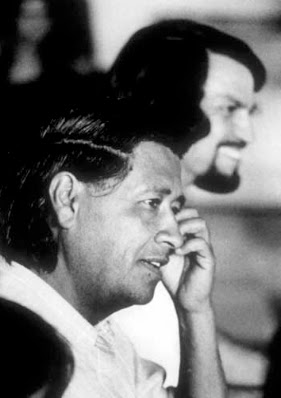 |
| Chavez and author Campbell ,1972. |
Let us be clear. Chavez was religious, but he was not a saint. Neither were the growers, their Teamster collaborators, nor corporate agribusiness saints. Celebrations should not be about hero worship or uncritical praise, nor should we ignore the present oppression of farm workers in the U.S.
What they did accomplish along with Philip Vera Cruz , Marshall Ganz, LeRoy Chatfield, Gil Padilla, Eliseo Medina and hundreds of others was to organize in California the first successful farm worker union against overwhelming odds.
Each of the prior attempts to organize a farm worker union had been destroyed by racism and corporate power.Chavez, Huerta, Philip Vera Cruz, and the others deliberately created a multiracial union; Mexican, Mexican American, Filipino, African-American, Dominican, Puerto Rican and Arab workers, among others, have been part of the UFW. This cross racial organizing was necessary in order to combat the prior divisions and exploitations of workers based upon race and language. Dividing the workers on racial and language lines, as well as immigration status always left the corporations the winners.
The violent assaults on the farmworkers and UFW from 1960- 1980 along with the current reconquest of power in the fields by corporate agriculture are examples of strategic racism, that is a system of racial oppression created and enforced because it benefits the over class- in this case corporate agriculture and farm owners. Strategic racism as described by Ian Haney López in Dog Whistle Politics: How Coded Racial Appeals Have Reinvented Racism & Wrecked the Middle Class ( 2014) is the development and implementation of racial practices because they benefit a group or a class.
Chávez chose to build a union that incorporated the strategies of social movements and community organizing. They allied the union with churches, students, and organized labor. The successful creation of the UFW changed the nature of labor organizing in the Southwest and contributed significantly to the growth of Latino politics in the U.S.
The UFW and Chavez and Huerta have always had severe critics from the Right and from corporate agriculture. Dolores Huerta has been banned from the history text books in Texas and Arizona as too radical. Both also have critics from the left.
Miriam Pawel in The Union of Their Dreams: Power, Hope, and Struggle in Cesar Chavez’s Farm Worker Movement(2009) uses individualist, personality driven reporting to assert that Chavez himself organized “Witch hunts” to expel union staff who disagreed with his leadership. See Steve Early’s essay non Talking Union. http://talkingunion.wordpress.com/2011/05/17/a-union-of-their-dreams-becomes-a-nightmarehas-ufw-history-been-replayed-in-seiu/
What the left critics allege,
Frank Bardacke’s Trampling Out the Vintage: Cesar Chavez and the Two Souls of the United Farm Workers. (2011), Verso. is the view of a well- informed observer who worked in the lettuce fields near Salinas as is Lettuce Wars: Ten Years of Work and Struggle in the Fields of California (2012) by Bruce Neuberger. These books, along with Pawell’s have been reviewed in prior posts on Talking Union. See review here. http://talkingunion.wordpress.com/2011/05/17/its-a-long-way-from-delano-to-watsonville-a-review/
These books argue a peculiar point of view: they strongly and persistently imply that the current problems of exploitation of workers in farm labor was caused by the destructive behavior of Cesar Chavez, his instability, and his ego - not by corporate agriculture; not by the racist state in rural California
On the other hand Cesar Chavez was given the U.S. Presidential Medal of Freedom posthumously in 1994, and Dolores Huerta ( A DSA Honorary Chair) was given the Medal of Freedom in 2012. Teaching materials and videos have been made recording their work. Schools, scholarships, foundations, organizing institutes and political organizations have been named after them. Few labor or Latino leaders have achieved such positive recognition.
I, for one, wonder why these authors and some other left writers see the major problem as the growth of what they see as a legend and myths about Cesar Chavez ( and recognition of the UFW) rather than the major problem being the role of corporate agriculture, exploitation and racism.
When writers take this view, they then need to explain why and how the parallel decline of the Teamsters, the ILGWU, the Auto Workers , the Steelworkers, the IAM, and other unions occurred during this same era. Compare the period of decline of 1977-1986 in the UFW to the complex battles of the Reuther Brothers to gain control and to keep control of the United Auto Workers, including the UAW’s relationship with the AFL-CIO . (1949-1970). The UAW went from 1.5 million members in 1979 to 390,000 in 2010, and the United Steelworkers and other unions suffered similar declines.
It doesn’t require a theory of emotional instability and personal interventions to explain that the smaller, less established, less well funded union – the UFW- suffered dramatic declines from racial oppression and the brutal assault on the union in the fields of Texas, Arizona and California.
The above critics under play the role of the corporate assault on unions, and in particular the assault on a union led by Mexican American leaders. This was, after all, the era when Ronald Reagan came to power in California along with the organization of the forces that came to be called neo-liberalism. It was also a time of consolidation of racial power in agriculture.
Marshall Ganz, who was a leader in the union and a participant in the internal struggles, tells a more complex and more complete story in his book, Why David Sometimes Wins. (2009) See the review in Talking Union http://talkingunion.wordpress.com/2009/10/16/why-david-sometimes-wins-marshall-ganz/
This isn’t to say that Chavez, Huerta and many on the UFW Executive Board did not have shortcomings. They did. Ganz describes several of these in his book and in interviews he participated in for the new book, From the Jaws of Victory by Matt Garcia (2012). Ganz provide some well researched and insightful observations on the dynamics of a union trying to transition from a movement to a union- or to something else. This analysis is helpful to organizers trying to build unions.
There were conflicts and internal contradictions. Not many movements last for even ten years let alone thirty. In addition to the assault from corporate agriculture, the Republican Party, Ronald Reagan, neoliberalism and racism, the UFW was confronted with internal union struggles for democracy, an intra union assault by the Teamsters, and with the tumultuous and disruptive politics on the left in the 60’s and 70’s.
In my opinion, Bardacke, Pawell, and Neuberger under analyze the nature of the racial state and the interaction of racial and economic oppression in the fields. And, these critics significantly failed to see the they dynamics of the struggle for Chicano/Mexican American self determination within the UFW.
The role of racism, and the individual reactions to systemic structural racial oppression are complex and vary in part based upon the differences in experiences of the participants. As the Chicano movement argued at its core- the experiences of U.S. born and reared Mexican Americans and Chicanos were different than the experiences and the perceptions of racism of Mexican immigrants, both documented and undocumented. There are a diversity of racisms and a diversity in the manner in which workers learn to respond to oppression. Chicanos and Mexican Americans grew up, were educated, and worked in an internal colony. Their schools, their unions, and their political experiences were structured along racial lines. They learned colonized structures. The authors do not sufficiently acknowledge the struggle of the UFW and the Chicano Movement in breaking this colonial legacy.
Marshall Ganz in Why David Sometimes Wins, does a better job of describing the internal dynamics of UFW organizing- after all he was there. He describes some of the racial fault lines of farm worker organizing. Ganz was the director of organizing for the UFW in Salinas and a long time member of the UFW executive board.
Chavez knew well some of the failings of unions in the 1960’s, including the problems of a growing internal bureaucracy, but the UFW in the 1980’s was not able to create a viable democratic union movement. Marshall Ganz argues that Chavez deconstructed the organizational strength of the UFW in the 1979 -1981 period in an effort to keep personal control of the union. (Ganz, p. 247 )
The critics who blame individuals for the union’s decline also miss the important rise of Latino politics in the Southwest today. Chavez and the UFW played a significant role by training generations of future leaders as organizers as is well described in Randy Shaw’s, Beyond the Fields: Cesar Chavez, the UFW, and the Struggle for Justice in the 21st. Century. The UFW was a place where hundreds learned organizing skills, politics, discipline, and how to work in multi racial movement politics – skills needed by many on the left. Today hundreds of union and community leaders, particularly in California are veterans, trained in for the long distance struggle of the UFW.
The Current Situation – Strategic Racism
The movement led by Cesar Chavez , Dolores Huerta and others created a union and reduced the oppression of farm workers for a time. Workers learned to not accept poor jobs, poor pay, unsafe working conditions as natural or inevitable. Then the corporations and the Right Wing forces adapted their strategies of oppression.
The assault on the UFW and the current reconquest of power in the fields are examples of strategic racism, that is a system of racial oppression created and enforced because it benefits the over class- in this case corporate agriculture and farm owners. The current renewed oppression is a product of strategic racism including a complex structure of institutions and individuals from police and sheriffs, to immigration authorities and anti immigrant activists, and elected officials and their support networks. These groups foster and promote inter racial conflict, job competition, and anti union organizing, as strategies to keep wages and benefits low and to promote their continuing white supremacy in rural California.
As the union was weakened by the Right Wing corporate assault, the conditions in the fields returned almost to their prior level of exploitation. The Agricultural Labor Relations Act had it budget cut by 30 % for years under Governor Deukmejian in 1982- 1986 along with other assaults on the law. Now, thousands of new immigrants harvest the crops and only a small percent are protected by union contracts. Over 200,000 indigenous workers, mostly from Mexico, harvest the crops in the Southwest. They are Mixtec, Zapotec, Triqui and more. They do have a few health, safety and wage protection by California labor laws, along with the right to farm worker collective bargaining elections and binding arbitration established significantly by the political activity of the current UFW – more than farm workers have in any other state. For a record of this period see David Bacon’s, The Right to Stay Home: How US Policy Drives Mexican Migration (2013).
Duane Campbell is a professor emeritus of bilingual multicultural education at California State University Sacramento, a union activist, and a former chair of Sacramento DSA. He was a volunteer for the UFW from 1972- 1977. He is the Director of the Mexican American Digital History project. www.MexicanAmericanDigitalHistory.org
Monday, March 29, 2021
Cesar Chavez Day _ Organize

The author and Cesar Chavez, 1972,
Cesar Chavez Day
Cesar Chavez Day is a state holiday in California – one of eight states to recognize the date, and one of the few holidays in the nation dedicated to a labor leader. Sacramento and dozens of cities, counties and labor federations will celebrate the life of Cesar Chavez on March 31.
On March 26, U.S. Secretary of Labor Hilda Solis honored Cesar Chavez and the UFW founders by dedicating the auditorium at the Department of Labor in Chavez’s name.
The Cesar Chavez celebrations focus on the struggle for union rights and justice in the fields of California. Along with Dolores Huerta, Philip Vera Cruz, and others, César created the United Farm Workers (UFW) the first successful union of farm workers in U.S. history. There had been more than ten prior attempts to build a farm workers union.
Each of the prior attempts to organize farm worker unions were destroyed by racism and corporate power. Chávez chose to build a union that incorporated the strategies of social movements and community organizing and allied itself with the churches, students, and organized labor. The successful creation of the UFW changed the nature of labor organizing in the Southwest and contributed significantly to the birth of Latino politics in the U.S.
Today, under the leadership of UFW president Teresa Romero only about 8,000 farm workers enjoy benefits on the job. Wages and benefit in farm labor have again been reduced to the pre union levels. Unionized workers are incorporated into California's educational, health and civic communities. The UFW has shown unions that immigrants can and must be organized. Today the UFW is working to pass a new immigration law that would assist farm workers.
Chavez and the UFW are best known helping to create instrumental role in passing the California Agricultural Labor Relations Act in 1975 under then Governor Gerry Brown which gives workers collective bargaining rights. The law was made necessary by the assault on the UFW of the Teamsters Union. While workers are often able to win elections under the ALRB, they seldom can win a contract. Growers stall and delay until the workers leave the area.
César Chavez, Dolores Huerta, Philip Vera Cruz, and others deliberately created a multiracial organization, Mexican, Mexican American, Filipino, African-American, Dominican, Puerto Rican and Arab workers, among others, have been part of the UFW. This cross racial organizing was necessary in order to combat the prior divisions and exploitations of workers based upon race and language. Dividing the workers on racial and language lines always left the corporations the winners.
In the 60's Chávez became the pre-eminent civil rights leader for the Mexican and Chicano workers, helping with local union struggles throughout the nation. He worked tirelessly to make people aware of the struggles of farm workers for better pay and safer working conditions. It is a testament to Cesar Chavez's skills and courage that the UFW even survived. They were opposed by major interests in corporate agriculture including the Bruce Church and Gallo Corporations as well as the leadership of the Republican Party then led by Ronald Reagan. Workers were fired, beaten, threatened and even killed in pursuit of union benefits . Non union farm workers today continue to live on sub-poverty wages while producing the abundant crops in the richest valley, in the richest state in the richest nation in the world.
In response to corporate power, Cesar developed new strategies, such as the boycott, based upon his personal commitment to non-violence in the tradition of Ghandi and Martin Luther King Jr. César Chavez died in his sleep on April 23, 1993 near Yuma, Arizona.
Today Mexican, Mexican American and Puerto Rican union leadership is common in our major cities and in several industries and Latino union leaders increasingly play an important role in local, state, and national elections. For myself and others, the UFW was a school for organizing. Hundreds of activists in labor and community organizations owe their skills to UFW training and experience. Along with improved working conditions, salaries, and benefits for the unionized workers, training this cadre of organizers remains a major legacy of the UFW.
César taught us that all organizations have problems, that all organizations are imperfect. In the last decade several books have been written criticizing the Chavez legacy.
In the midst of several life and death struggles over power against corporate agriculture and the political power of the state, the UFW executive committee did not develop democratic union structures . Marshall Ganz’s book, Why David Sometimes Wins: leadership, organization and strategy in the California Farmworker Movement (2009) describes these issues well.
Frank Bardake, in Trampling Out the Vintage (2011) spends a great deal of time on the purges of UFW activists, organizers, and volunteers in 1977 -1981 period. (See the review here on Talking Union). While the purges are at times presented as anticommunist decisions by Chavez, many of the dismissals were for lack of loyalty to Chavez and his decisions as the final arbiter of all issues in the union. Some of the “purges” were based upon left politics, and some of the dismissals were based upon other differences, including differing views of the best direction for the union. There were dismissals and staff leavings for a variety of reasons. Some of the most significant dismissals were not about left nor right, but were about issues of both policy differences and personal loyalties.
Building popular organizations while messy builds people's power and democracy. In creating the UFW Chavez organized thousands into a union and inspired millions. Today children in schools study his life- although such study is prohibited in Arizona and severely limited in Texas as “revolutionary”, or anti American. Many curriculum packages for schools stress his emphasis on service to others. The service side of Cesar’s work was certainly inspiring.
The organizing side of the UFW legacy changed the Southwest and organized labor. In a 1988 campaign and fast Cesar focused attention on the many dangerous problems of pesticides used in the fields. Artists have captured his image in hundreds of ways. Schools, parks, and highways have been named for him. Establishing Cesar Chavez holiday in California and other states has increased knowledge of his contributions.
The movement led by Cesar created a union and reduced the oppression of farm workers. Many people, descendents of earlier generations of farm workers, learned to take a stand for justice. We learned to not accept poor jobs, poor pay, unsafe working conditions as natural or inevitable. Rather, these are social creations which can be changed through organizing for economic and political power. Dolores Huerta continues her important education and organizing work throughout the nation.
Now, thousands of new immigrants harvest the crops and only a small percent are in unions. The new generations of immigrants and migrant labor hardly know Chavez’ name nor his contributions. Yet, in other regions immigrants are being organized into unions such as Justice for Janitors, by activists who learned their organizing skills working with the UFW. And, Latino political leaders often made their first commitments on a UFW picket line.
The generation that created the UFW is passing. A new generation of political activists, mostly within the Democratic Party, have emerged since the Chavez generations. In the 2006 massive immigrant rights movements, several new organizing practices emerged. The organizing of these demonstrations was significantly assisted by persons trained within the UFW. A new, significant Latino union and political base has been created.
Chavez' legacy to popular struggles, to Chicano/Mexicano self determination and to unions for the immigrant workers is significant. The union taught us how to organize for power and for justice. He is present in all of our work. I plan to march on March 31,2012 in memory of Cesar Chavez' contributions to building a more democratic society for working people. You can find our more about this remarkable leader at www.ufw.org And, http://www.chavezfoundation.org/
And, http://www.farmworkermovement.org/
Chávez chose to build a union that incorporated the strategies of social movements and community organizing. They allied the union with churches, students, and organized labor. The successful creation of the UFW changed the nature of labor organizing in the Southwest and contributed significantly to the growth of Latino politics in the U.S.
The Current Situation – Strategic Racism
The movement led by Cesar Chavez , Dolores Huerta and others created a union and reduced the oppression of farm workers for a time. Workers learned to not accept poor jobs, poor pay, unsafe working conditions as natural or inevitable. Then the corporations and the Right Wing forces adapted their strategies of oppression.
The assault on the UFW and the current reconquest of power in the fields are examples of strategic racism, that is a system of racial oppression created and enforced because it benefits the over class- in this case corporate agriculture and farm owners. The current renewed oppression is a product of strategic racism including a complex structure of institutions and individuals from police and sheriffs, to immigration authorities and anti immigrant activists, and elected officials and their support networks. These groups foster and promote inter racial conflict, job competition, and anti union organizing, as strategies to keep wages and benefits low and to promote their continuing white supremacy in rural areas.
Duane Campbell is an Emeritus Professor of Bilingual/Multicultural Education at Calif. State University-Sacramento and the author of Choosing Democracy; a practical guide to multicultural education. 4th. edition. (Allyn and Bacon,2010)
He is a co chair of the Immigrants Rights Working Group of DSA.
Thursday, March 28, 2019

Monday, March 04, 2019

Friday, March 30, 2018
Cesar Chavez Dolores Huerta, the UFW, and Strategic Racism.
 |
| Cesar Chavez & Duane Campbell, 1972 |
Once social change begins, it cannot be reversed. You
cannot un-educate the person who has learned to read. You cannot
humiliate the person who feels pride. You cannot oppress the people who are not
afraid anymore. Cesar Chávez. November 9, 1984.
by Duane Campbell
On March 31, 2018,
Eleven states and numerous cities will hold holidays
celebrating labor and Latino Leader
Cesar Chavez. Conferences, marches and celebrations will occur in numerous
cities this weekend and particularly in rural farm areas of the nation. A recent film Cesar Chavez: An American
Hero, starring Michael Peña as Cesar
Chavez and Rosario Dawson as Dolores
Huerta presents important parts of this story.
Meanwhile, in March
of 2015 hundreds of farmworkers have
walked off their jobs in Baja California, Mexico, from the agricultural fields just
a few miles from the U.S. border , fields developed to provide a harvest to the
U.S. markets. Farm labor strikes and
violence against strikers remains a volatile issue. Farm workers deserve dignity, respect, and
fair wages. Achieving these goals will
require a union.
The current UFW
leadership, as well as former UFW leaders
and former DSA Honorary Chairs
Eliseo Medina and Dolores Huerta are recognized leaders in the ongoing efforts
to achieve comprehensive immigration reform in the nation.
On immigration, UFW President Arturo Rodriquez
says, “We urge Republicans to abandon their political games that hurt millions
of hard-working, taxpaying immigrants and their families, and help us finish
the job by passing legislation such as the comprehensive reform bill that was
approved by the Senate on a bipartisan vote in June 2013,” Rodriguez
said. Similar compromise proposals, negotiated by the UFW and the
nation's major agricultural employer associations, have passed the U.S. Senate
multiple times over the last decade. The same proposal has won majority support
in the House of Representatives, even though House GOP leaders have refused to
permit a vote on the measure. “The UFW will not rest until the President's
deferred relief is enacted and a permanent immigration reform, including a path
to citizenship for all 11 million undocumented immigrants, is signed into law.” www.UFW.org
What Chavez, Huerta
did accomplish along with Philip
Vera Cruz , Marshall Ganz, LeRoy
Chatfield, Gil Padilla, Eliseo Medina and
hundreds of others was to
organize in California the first successful farm worker union against
overwhelming odds.
Wednesday, March 29, 2017
Teaching the Legacy of Cesar Chavez and Dolores Huerta

When we are really honest with ourselves, we must admit that our lives are all that really belong to us. So it is how we use our lives that determines what kind of people we are. ..I am convinced that the truest act of courage..is to sacrifice ourselves for others in a totally nonviolent struggle for justice.
Cesar Chavez (1927-1993)
by Duane Campbell
On March 31, 2017, Eleven states and numerous cities will hold holidays celebrating labor and Latino leader Cesar Chavez.
Conferences, marches and celebrations will occur in numerous cities and particularly in rural areas of the nation. A recent film Cesar Chavez: An American Hero, starring Michael Peña as Cesar Chavez and Rosario Dawson as Dolores Huerta presents important parts of this union story. With the work of the Chicano/Mexican American Digital History Project their story of union organizing will begin to be covered in all public school history texts in California this year,
The current UFW leadership, as well as former UFW leaders and current DSA Honorary Chairs Eliseo Medina and Dolores Huerta are recognized leaders in the ongoing efforts to achieve comprehensive immigration reform in the nation.
UFW President Arturo Rodriquez says, “We urge Republicans to abandon their political games that hurt millions of hard-working, taxpaying immigrants and their families, and help us finish the job by passing legislation such as the comprehensive reform bill that was approved by the Senate on a bipartisan vote in June 2013,” Rodriguez said. “The UFW will not rest until the President's deferred relief is enacted and a permanent immigration reform, including a path to citizenship for all 11 million undocumented immigrants, is signed into law.” www.UFW.org
Monday, July 18, 2016
Chicano History Will be in the California Text Books in 2017
By Duane Campbell
History and social science textbooks in public schools in California and most of the nation are racist, class-biased, and ignore LGBT history. This condition will change in California in 2017 when new textbooks are adopted.

At 2:45 PM July 14, 2016, the California State Board of Education unanimously endorsed a new History /Social Science Framework for California’s public schools that includes a substantial addition of Chicano/Latino history, improved history of LGBT people, and improvements in several other histories.
This completes a 6 year effort against substantial opposition to revise the Framework. As a result textbooks in California in 2017 will be the most inclusive ever required, and all students will be taught an inclusive history. This has been the major campaign of this blog and the Mexican American Digital History project since 2009.
Under this decision California students will finally be encouraged to know the history of Latino civil rights leaders like Cesar Chavez and Dolores Huerta and Filipino labor leaders like Larry Itliong, as well as an accurate and inclusive history of LGBT activists as a part of the history of California and the nation. These topics are currently substantially absent from public school textbooks and curricula in California.
Tuesday, March 24, 2015
Teaching About Cesar Chavez, Dolores Huerta and the UFW
By Duane E. Campbell

Once social change begins, it cannot be reversed. You
cannot un-educate the person who has learned to read. You cannot
humiliate the person who feels pride. You cannot oppress the people who are not
afraid anymore. Cesar Chávez. November 9, 1984.
On March 31, 2015, Eleven
states and numerous cities will
hold holidays celebrating labor and
Latino Leader Cesar Chavez. Conferences, marches and celebrations will occur in
numerous cities this weekend. See the post below on the Cesar Chavez Youth Leadership Conference at UCD on March 28. A recent film Cesar Chavez: An American
Hero, starring Michael Peña as Cesar
Chavez and Rosario Dawson as Dolores
Huerta presents important parts of this story and shows how Chavez was lied
about and attacked by Ronald Reagan, the Nixon Administration, the Republican
Party and numerous right wing forces. This film works well in high school
classrooms. Lesson plans for teaching about Cesar Chavez and Dolores Huerta are
here. https://sites.google.com/site/democracyandeducationorg/Home/lessons-cesar-chavez-and-dolores-huerta.Chavez lessons
The story of Cesar Chavez,
and to a lesser degree Dolores Huerta is mentioned in history books for
California students, however much of the additional Mexican American history is
missing. A group of scholars, teachers,
allies, activists have joined in our campaign to improve the history
textbooks in California by including the histories of Mexican American/
Chicano people. More than 52% of California students are descendants of
Latino and Mexican people. Unfortunately they can't they be found in the textbooks.
You are invited to
participate in this effort. We need each of you and your friends to write
a letter. Here is a guide. Here is how to write a letter :https://sites.google.com/site/democracyandeducationorg/Home/latino-students-and-civic-engagement/project-plan---mexican-american-history
We can each do our part.
Meanwhile, in March
of 2015 hundreds of farmworkers have
walked off their jobs in Baja California, Mexico, from the agricultural fields just
a few miles from the U.S. border , fields developed to provide a harvest to the
U.S. markets. Farm labor strikes and
violence against strikers remains a volatile issue. Farm workers deserve dignity, respect, and
fair wages. Achieving these goals will
require a union.
Monday, March 23, 2015

Saturday, March 21, 2015

Saturday, March 22, 2014
Cesar Chavez film inspires
by Randy Shaw

The atmosphere was electric in Berkeley’s California Theater as a full house waited in anticipation for Diego Luna’s new film, Cesar Chavez. A block long line of people were turned away, reflecting an interest in the movie that Luna hoped would return when the film is released in three weeks.
Having spent years researching and thinking about Cesar Chavez for my book, Beyond the Fields: Cesar Chavez, the UFW, and the Struggle for Justice in the 21st Century, I was intrigued by how a feature film would handle the long and complex story of the farmworkers movement. And I think it covered the story of Cesar Chavez himself remarkably well for the years covered in the movie.
http://youtu.be/awP3yXv-4ng

Chavez’s Remarkable Life
Cesar Chavez’s rise from a young boy carrying cantaloupes in the fields to one of the nation’s leading labor and social change leaders is a story that almost defies belief. Among the film’s great strengths is its focus on how Chavez overcame seemingly insurmountable obstacles to build California’s farmworker movement.Friday, March 29, 2013
Cesar Chavez and Dolores Huerta recognized for leadership

Cesar
Chavez and Dolores Huerta recognized for their life long contributions to
organized labor and social justice.
Cesar Chavez Day is a state holiday in
California – one of eight states to recognize the date, and one of the few holidays in the nation
dedicated to a labor
leader. Sacramento and dozens of cities, counties and labor
federations will celebrate the life of Cesar Chavez on March 31, 2013.
The
year 2012 was the 50th. anniversary of the founding of
the U.F.W. by Cesar Chavez,
Dolores Huerta, Philip Vera Cruz and others. The celebrations focused on the struggle for union rights and justice in the fields of
California.
The United Farm Workers (UFW) was the first successful union of farm workers
in U.S. history. There had been more than ten prior
attempts to build a farm workers union. Each of the prior attempts were destroyed by racism and corporate power. Chávez and
Huerta chose to build a union that
incorporated the strategies of social movements and community organizing and allied itself with the churches, students, and organized labor. The successful creation of the UFW
changed the nature of labor organizing
in the Southwest and
contributed significantly to the birth of Latino politics in the U.S.
Today, under the leadership of UFW president Arturo Rodriguez, only
about 25,000 farm workers enjoy
benefits on the job. Wages and benefit in farm labor have again been reduced to
the pre union levels. The UFW has
shown unions that immigrants can and must be organized.
Monday, October 08, 2012
Thursday, March 29, 2012
Celebrate Cesar Chavez Day - 50 th Anniversary

Cesar Chavez Day is a state holiday in
California – one of eight states to recognize the date, and one of the few holidays in the nation
dedicated to a labor
leader. Sacramento and dozens of cities, counties and labor
federations will celebrate the life of Cesar Chavez on March 31, 2012,
On
March 26, U.S. Secretary of Labor Hilda Solis honored Cesar Chavez and the UFW
founders by dedicating the auditorium at the Department of Labor in Chavez’s
name.
Mexican
labor leader Jose Humberto Montes de Oca of the SME, electrical workers union
will lead the Sacramento march on
March 31. Montes do Oca and the SME in Mexico are fighting for survival
against a repressive government. In central Mexico 44,000 Electrical Power Workers (SME) were
fired to privatize the industry and destroy the union.
This
year, 2012 is the 50th. anniversary of the founding of the
U.F.W. The Cesar Chavez
celebrations focus on the struggle
for union rights and justice in the fields of California. Along with Dolores Huerta, Philip Vera
Cruz, and others, César created the United Farm Workers (UFW) the first successful union of
farm workers in U.S. history. There had been more than ten prior
attempts to build a farm workers union.
Each of the prior attempts to organize farm worker unions were destroyed
by racism and corporate power. Chávez chose to build a union that incorporated
the strategies of social movements and community organizing and allied itself with the churches, students, and organized labor. The successful creation of the UFW
changed the nature of labor organizing
in the Southwest and
contributed significantly to the birth of Latino politics in the U.S.
Saturday, December 31, 2011
Trampling out the Vintage ? a review of a book on Cesar Chavez

A dissident’s
view of the rise and the fall of the United Farm Workers union.
By Duane Campbell
Frank Bardacke’s Trampling Out the Vintage: Cesar Chavez and
the Two Souls of the United Farm Workers. (2011, Verso). is the view of a
well- informed observer who worked in the lettuce fields near
Salinas for six seasons, then
spent another 25 years teaching English to farm workers in the Watsonville, Cal. area. His views on the growth and decline of the United Farm
Workers union – some of which I do not share– offer important
points of history and reflection
for unionists today, particularly those working with the Occupy Wall
Street movement.
Trampling Out the Vintage, provides several insights
not previously developed in well informed books on the UFW including important
differences between grape workers and workers in row crops such as lettuce; the length of time
workers were in the UFW, the more
settled family nature of grape workers, the strength of each type of ranch committees, the leadership of ranch crews ( and thus the potential differences in
creating democratic accountability), and the differing histories of worker
militancy in different crops. The author correctly argues that each of these led to
somewhat different organizing environment in building the union. He also details problems of
administrative mismanagement in the hiring halls in the grape areas and
alleged mismanagement of organizing
within the union sponsored health care insurance and clinic systems .
Sunday, October 30, 2011
Why California students ( and most teachers) do not know Chicano History
Workshop: Teaching Chicano/ Latino History in Grades 8-12. Curriculum ideas for teaching about César Chávez,
Dolores Huerta, Civil Rights Movement, and economic justice. With Duane Campbell, Director of the
Education and Democracy Institute., Sacramento. Dolores Delgado Campbell. Professor. American River College.
Presented as a
part of the annual conference of The
Bilingual Multicultural Education Department (BMED) Sat . Nov. 5, 2011.
10;35 Am. In the University Union, at Sacramento State.
California has the
largest population of any state, with more than 6,252,000 students in
school in 2008. California students make up more than 11
percent of the United States total. California, along with some 16 other
states, adopts textbooks for the entire state instead of district by district
purchasing. This makes the California adoption the largest single
textbook sale in the nation.
California has failed to revise its k-12 history curriculum since
1987. Since 2008, the failure was
caused by the way the legislature and the governor responded to the state’s budget crisis.
Tuesday, March 29, 2011
The legacy of Cesar Chavez and the economic crisis of 2011
|
| Cesar Chavez and Duane Campbell,1972 |
By Duane E. Campbell
On March 31, 2011, California and ten other states will celebrate the life and work of labor organizer Cesar Chavez. State workers will have the day off. Ironically, however, farm workers will not. It is interesting that these states take a day off to recognize the contributions of a labor leader while cutting vital services for poor people. Meanwhile the spirit of Cesar Chavez lives on in the struggle for union rights and justice in the fields of California, Ohio, and Florida as well as in the struggles for union rights and workers dignity in Wisconsin, Ohio, Indiana and Pennsylvania. What can we learn from the creation of the UFW that is useful today?
Along with Dolores Huerta, Philip Vera Cruz, and others, César created the United Farm Workers (UFW) the first successful union of farm workers in U.S. history. There had been more than ten prior attempts to build a farm workers union.
Each of the prior attempts to organize farm worker unions were destroyed by racism and corporate power. Chávez chose to build a union that incorporated the strategies of social movements and community organizing and allied itself with the churches, students, and organized labor. The successful creation of the UFW changed the nature of labor organizing in the Southwest and contributed significantly to the growth of Latino politics in the U.S. The UFW has shown unions that immigrants can and must be organized.
César Chavez, Dolores Huerta, Philip Vera Cruz, and others deliberately created a multiracial organization, Mexican immigrants, Mexican American, Filipino, African-American, Dominican, Puerto Rican and Arab workers, among others, have been part of the UFW. This cross racial organizing was necessary in order to combat the prior divisions and exploitations of workers based upon race and language. Dividing the workers on racial, language lines and immigration status always left the corporations the winners.
Subscribe to:
Posts (Atom)


