Showing posts with label unions. Show all posts

Tuesday, March 25, 2025

Faculty Unions Sue Trump Administration to Protect Free Speech

NEW YORK– The American Association of University Professors (AAUP) and the AFT today sued the Trump administration on behalf of their members for unlawfully cutting off $400 million in federal funding for crucial public health research to force Columbia University to surrender its academic independence. While the Trump administration has been slashing funding since its first days in office, this move represents a stunning new tactic: using cuts as a cudgel to coerce a private institution to adopt restrictive speech codes and allow government control over teaching and learning.

The plaintiffs, who represent members of Columbia University faculty in both the humanities and sciences, allege that this coercive tactic not only undermines academic independence, but stops vital scientific research that contributes to the health and prosperity of all Americans. The terminated grants supported research on urgent issues, including Alzheimer’s disease prevention, fetal health in pregnant women, and cancer research.

The Trump administration’s unprecedented demands, and threats of similar actions against 60 universities, have created instability and a deep chilling effect on college campuses across the country.  Although the administration claims to be acting to combat antisemitism under its authority to prevent discrimination, it has completely disregarded the requirements of Title VI, the statute that provides it with that authority–requirements that exist to prevent the government from exercising too much unfettered control over funding recipients. According to the complaint, the cancellation of federal funds also violates the First Amendment, the separation of powers, and other constitutional provisions.

“The Trump administration’s threats and coercion at Columbia are part of a clear authoritarian playbook meant to crush academic freedom and critical research in American higher education. Faculty, students, and the American public will not stand for it. The repercussions extend far beyond the walls of the academy. Our constitutional rights, and the opportunity for our children and grandchildren to live in a democracy are on the line,” said Todd Wolfson, president of the AAUP.

“President Trump has taken a hatchet to American ingenuity, imagination and invention at Columbia to attack academic freedom and force compliance with his political views,” saidAFT President Randi Weingarten. “Let’s be clear: the administration should tackle legitimate issues of discrimination. But this modern-day McCarthyism is not just an illegal attack on our nation’s deeply held free speech and due process rights, it creates a chilling effect that hinders the pursuit of knowledge—the core purpose of our colleges and universities. Today, we reject this bullying and resolve to challenge the administration’s edicts until they are rescinded.”

“We’re seeing university leadership across the country failing to take any action to counter the Trump administration’s unlawful assault on academic freedom,” said Reinhold Martin, president of Columbia-AAUP and professor of architecture. “As faculty, we don’t have the luxury of inaction. The integrity of civic discourse and the freedoms that form the basis of a democratic society are under attack. We have to stand up.”

The complaint alleges that the Trump administration’s broad punitive tactics are indicative of an attempt to consolidate power over higher education broadly. According to the complaint, the administration is simultaneously threatening other universities with similar punishment in order to chill dissent on specific topics and speech with which the administration disagrees. Trump administration officials have spoken publicly about their plans to “bankrupt these universities” if they don’t “play ball.”

Universities have historically been engines of innovation in critical fields like technology, national security, and medical treatments. Cuts to that research will ultimately harm the health, prosperity and security of all Americans.

“Columbia is the testing ground for the Trump administration’s tactic to force universities to yield to its control,” said Orion Danjuma, counsel at Protect Democracy. “We are bringing this lawsuit to protect higher education from unlawful government censorship and political repression.”

The lawsuit was filed in the Southern District of New York and names as defendants the government agencies that cut Columbia’s funding on March 7 and signed the March 13 letter to Columbia laying out the government's demands required to restore the funding, including the Department of Justice, Department of Education, Health and Human Services and General Services Administration. The plaintiffs are represented by Protect Democracy and Altshuler Berzon LLP.

The full complaint can be read here.

###

About the American Association of University Professors


Tuesday, March 11, 2025

Trump Attacks Public Education


Monday, November 18, 2024

First They Came for the Socialists

 First they came for the socialists, and I did not speak out—because I was not a socialist.

Then they came for the trade unionists, and I did not speak out—because I was not a trade unionist.

Then they came for the Jews, and I did not speak out—because I was not a Jew.

Then they came for me—and there was no one left to speak for me.

—Martin Niemöller


This quote is attributed to the prominent German pastor Martin Niemöller. It is sometimes mistakenly referred to as a poem. 

After World War II, Niemöller openly spoke about his own early complicity in Nazism and his eventual change of heart. His powerful words about guilt and responsibility still resonate today.


On our blog.

https://www.dsanorthstar.org/blog/first-they-came-for-the-socialists


Tuesday, October 08, 2024

Can Harris Win Blue-Collar Union Members?

Can Harris Win Blue-Collar Union Members?: Today on TAP: The decimation of the labor movement makes that a very uphill climb.

Monday, September 02, 2024

Celebration of Labor Day

As we celebrate Labor Day, 2024, there is some very good news. 

Bernie Sanders 


Public approval of labor unions, at 70%, is higher today than it has been in decades. Over the last year major unions like the UAW have won some highly publicized strikes, while many other unions have negotiated trail-blazing contracts for their members. Young people at Starbucks and on college campuses are now more involved in labor organizing than ever before. And, for the first time in American history, a president of the United States, Joe Biden, walked a picket line with striking workers.

It is not an accident as to why we are now seeing more militancy and growth in the labor movement. The working people of our country are increasingly aware of the unprecedented level of corporate greed and power we are now experiencing, and the outrageous level of income and wealth inequality that exists. They understand that never before in American history have so few had so much, while so many continue to struggle. And they are fighting back. They know that workers in unions can negotiate contracts that give them better wages, working conditions and benefits than non-union workers. They appreciate that when you’re in a union you have some power against the arbitrary decisions corporate bosses. 

Working people today are more than aware that, over the last 50 years, there has been a massive transfer of wealth from the bottom 90% to the top 1%. They are disgusted that, despite huge increases in worker productivity, real inflation-accounted for wages for the average American worker are lower now than they were over 50 years ago as 60% of Americans live paycheck to paycheck. They are insulted that CEOs of major corporations make almost 350 times as much as their average employee. They are concerned that the American dream is ending and that their kids may have an even lower standard of living than they do. And they worry that with the rapid growth of Artificial Intelligence and robotics, they have no power as to what will happen to their jobs as the economy undergoes major transformations.

The average American worker also understands that his/her political power has been significantly diminished as billionaires pour huge amounts of money into both political parties as they undermine our democracy. It is no great secret as to who now has the clout in Congress. It is the billionaires, the corporate CEOs, the campaign donors and their well-connected lobbyists.


Purchase affordable magnetic Harris/Walz bumper stickers (2 for $5) and give them to other volunteers.
Purchase Harris/Walz window decals for car/home and give them to other volunteers. 

Monday, September 04, 2023

The Meaning of Labor Day

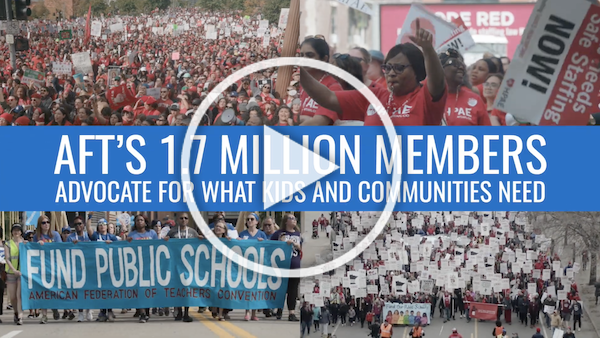
 This antagonism toward unions and worker power is out of step with most Americans. New polling for the AFL-CIO shows historic support for unions across party lines, with especially strong support from young Americans. Navigator Research finds that most Americans view teachers unions favorably, including majorities of both parents and nonparents. And more than 50 groups of workers have joined the American Federation of Teachers so far this year—a pace unseen in decades. America knows: It’s better in a union.

AFT Video


At a time when so many forces are spreading fear and division, unions literally unite people. In the face of fear, we have hope. In the face of despair, we have dreams. In the face of silence, we tell our stories. In the face of smears, we offer solutions. We bring people together to be the most powerful we can be.

The AFT is the home of the people who make a difference in other people’s lives. We offer real solutions for kids and communities. We address hard issues like learning loss, loneliness and literacy challenges. We take on the extremists who want to defund public services, dismantle our democracy, destroy public education and demonize the vulnerable, and the corporations that are more concerned about healthcare profits than patients. And we encourage our members to vote so we have leaders who share and fight for our values.

We have each other’s backs—whether it’s winning safe healthcare staffing levels, as we just did in Oregon, or defending educators’ obligation to teach honest history, as we are doing in New Hampshire. We’re there to help with our free trauma counseling benefit for members, and with the 9 million free books and other resources we have distributed to spark the love of reading. And we have helped members save millions of dollars in student debt, freeing them to buy a home, start a family or buy a car. This is what unions do: We care, we fight and we show up.

AFT Video

This Labor Day, let’s recommit to helping working people and their families gain a better life. Whether it’s members of the United Auto Workers or the Writers Guild of America; workers at Starbucks, Amazon or Apple; or you and your fellow members of the AFT—together we can accomplish things that would be impossible on our own.

Thank you for making a difference in the lives of others, and thank you for being a member of our union. We wish you a wonderful Labor Day. 

In solidarity,


Monday, February 06, 2023

Remembering the LATTIMER Massacre


Here on September 10, 1897, nearly 400 immigrant coal miners on strike were met and fired upon by sheriff's deputies. Unarmed, they were marching from Harwood to Lattimer in support of higher wages and more equitable working conditions. Nineteen of the marchers were killed, and 38 were wounded. This was one of the most serious acts of violence in American labor history.

Erected 1997 by the Pennsylvania Historical and Museum Commission.
Anthracite coal miners of Polish, Slovak, and Lithuanian origin marched five miles to Lattimer, Pennsylvania on Sept. 10, 1897. Sheriff's deputies fired at them without warning killing 19 men and wounding 38 others; many were shot in the back. The marchers who died were all foreign-born.
  • Eastern and Southern European immigrants lived in communities around Hazleton, Pennsylvania. The United Mine Workers of America (UMWA) was established in 1890 and the union was still in its infancy. 
  • On August 21, 1897 Pennsylvania's anti-immigrant Campbell Act went into effect taxing employers three cents a day for each adult immigrant on their payroll. The anthracite mine owners responded by shifting the burden to the immigrant miner, deducting the tax from his wages.
  • The Lehigh and Wilkes-Barre Coal Company discharged twenty young mule drivers who refused to obey a new work rule. The company consolidated its mule stables, forcing the teenage mule drivers to travel much farther each day to pick up their mules, time for which they were not compensated. The mule drivers struck and set up a picket line.
  • Miners marched from colliery to colliery urging others to join the strike in a show of solidarity. Two hundred and fifty men left Harwood on Sept. 10, 1897 for the march to Lattimer; their numbers would grow to 400. UMWA organizer John Fahy advised them not to carry weapons, only the American flag.
  • At Lattimer the marchers were met by Luzerne County Sheriff James Martin and his deputies, armed with rifles and pistols. The deputies opened fire killing 19 men and wounding 38 others.
  • The deceased miners became martyrs, symbols of the labor struggle in the Anthracite Region. A Polish newspaper in Scranton extolled those who died as "the patron saints of the working people in America." In February 1898 Sheriff Martin and his posse stood trial in Wilkes-Barre but all were found innocent.
  • Outraged by the shooting thousands of immigrant miners flocked to the UMWA, adding 15,000 new names to union membership rolls. Two years later John Mitchell, UMWA president, would call a strike of all anthracite miners stating "the coal you dig isn't Slavic or Polish or Irish coal. It's just coal."

  • In 1972 a historic marker and memorial rock were put in place to remember the fallen miners and the great miscarriage of justice at Lattimer. Union members from throughout the state attended the dedication. Cesar Chavez of the United Farm Workers of America delivered the first speech; he connected the miners' fight for unionization to the struggles of farm laborers in California, many of whom were immigrants.
Anti immigrant politics has consequences. 

Thursday, March 31, 2022

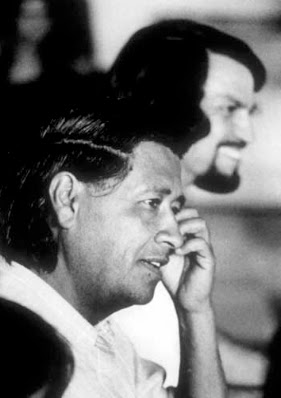
Cesar Chavez and California Framworkers

Chavez and author Campbell ,1972. 


Let us be clear.  Chavez was religious, but he was not a saint. Neither were the growers, their  Teamster collaborators, nor corporate agribusiness saints.  Celebrations should not be about hero worship or uncritical praise, nor  should we ignore the present oppression of farm workers in the U.S.  

What they did  accomplish along with Philip Vera Cruz ,  Marshall Ganz, LeRoy Chatfield, Gil Padilla, Eliseo Medina and  hundreds of others was to   organize in California the first successful farm worker union against overwhelming odds. 

Each of the prior attempts to organize a  farm worker union  had been  destroyed by racism and corporate power.Chavez, Huerta, Philip Vera Cruz, and the  others deliberately created a multiracial union; Mexican,  Mexican American, Filipino, African-American, Dominican, Puerto Rican and Arab workers, among others, have been part of the UFW.  This cross racial organizing  was necessary in order to combat the  prior divisions and exploitations of workers based upon race and language. Dividing the workers on racial and  language lines, as well as immigration status  always left the corporations the winners.


The violent  assaults  on the farmworkers and UFW from 1960- 1980  along with the current reconquest of power in the fields  by corporate agriculture are examples of strategic racism, that is a system of racial oppression created and enforced because it benefits the over class- in this case corporate agriculture and farm owners.  Strategic racism as described by Ian Haney López  in Dog Whistle Politics: How Coded Racial Appeals Have Reinvented Racism & Wrecked the Middle Class ( 2014) is the development and implementation of  racial practices because they benefit a group or a class. 


Chávez chose to build a union that incorporated the strategies of social movements and community organizing.  They allied the union   with churches, students,  and organized labor.  The successful creation of the UFW changed the nature of labor organizing  in the Southwest  and contributed significantly to the growth  of Latino politics in the U.S.


The UFW and Chavez and Huerta have always had severe critics from the Right and  from corporate agriculture. Dolores Huerta  has  been  banned from the history text books in Texas and Arizona as too radical. Both also have critics from the left.  


Miriam Pawel in The Union of Their Dreams: Power, Hope, and Struggle in Cesar Chavez’s Farm Worker Movement(2009)  uses individualist, personality driven reporting to assert  that Chavez himself organized “Witch hunts” to expel union staff who disagreed with his leadership.  See Steve Early’s essay  non Talking Union. http://talkingunion.wordpress.com/2011/05/17/a-union-of-their-dreams-becomes-a-nightmarehas-ufw-history-been-replayed-in-seiu/  

What the left critics allege, 

Frank Bardacke’s Trampling Out the Vintage: Cesar Chavez and the Two Souls of the United Farm Workers. (2011), Verso. is the view of a well- informed observer  who  worked in the lettuce fields near Salinas as is Lettuce Wars: Ten Years of  Work and Struggle in the Fields of California (2012) by Bruce Neuberger.  These books, along with Pawell’s have been reviewed in prior posts on Talking Union.  See review here. http://talkingunion.wordpress.com/2011/05/17/its-a-long-way-from-delano-to-watsonville-a-review/

These books argue  a peculiar point of view:   they  strongly and persistently imply that the  current  problems of exploitation of workers  in farm labor was caused by the destructive behavior of  Cesar Chavez,  his instability, and his ego  - not by corporate agriculture; not by the racist state in rural California

On the other hand Cesar Chavez was  given the U.S. Presidential  Medal of Freedom posthumously  in 1994, and Dolores Huerta ( A DSA Honorary Chair) was given the Medal of Freedom in 2012.   Teaching materials and videos have been made recording their work.  Schools, scholarships, foundations,  organizing institutes and political organizations  have been named after them.  Few  labor or Latino leaders  have achieved such positive recognition.   

I, for one, wonder why these authors and some  other left writers  see the major problem as the growth of  what they see as a legend and myths about Cesar Chavez ( and recognition of the UFW) rather than the major problem being the role of corporate agriculture, exploitation and racism.

When writers take this view,  they then  need to explain why and how the parallel decline of the Teamsters, the ILGWU, the Auto Workers , the Steelworkers, the IAM, and other unions  occurred during this  same era.   Compare the period of decline of 1977-1986 in the UFW to the complex battles of  the Reuther Brothers to gain control and to keep control of the  United Auto Workers, including the UAW’s relationship with the AFL-CIO . (1949-1970).  The UAW went from 1.5 million members in 1979 to 390,000 in 2010, and the United Steelworkers and other unions  suffered similar declines. 

It doesn’t require a theory of emotional instability and personal interventions  to explain that the smaller, less established, less well funded  union – the UFW-  suffered dramatic  declines  from racial oppression and the brutal assault on the union  in the fields of  Texas, Arizona and California.

The above critics under play the role of the corporate assault on unions, and in particular the assault on a union led by  Mexican American leaders. This was, after all,  the era when  Ronald Reagan came to power in California along with the organization of the forces that came to be called neo-liberalism.  It was also a time of  consolidation of racial power in agriculture.  

Marshall Ganz, who was a leader in the union and a participant in the internal struggles, tells a more complex and more complete story in his book, Why David Sometimes Wins. (2009) See  the review in Talking Union http://talkingunion.wordpress.com/2009/10/16/why-david-sometimes-wins-marshall-ganz/

This isn’t to say that Chavez, Huerta and many on the UFW Executive Board  did not have shortcomings.  They did.  Ganz describes  several of these in his  book and in interviews he participated in for the new book, From the Jaws of Victory by   Matt  Garcia (2012).  Ganz provide some well researched and insightful observations on the dynamics of a union trying to transition from a movement to a union- or to something else.   This analysis is helpful to organizers trying to build unions. 

There were conflicts and internal contradictions.  Not many movements last for even ten years let alone thirty.    In addition to the assault from corporate agriculture, the Republican Party, Ronald Reagan, neoliberalism and racism, the UFW was confronted  with internal union struggles for democracy,  an intra union assault by the Teamsters,  and with the tumultuous and disruptive  politics on the left in the 60’s and 70’s. 

In my opinion, Bardacke, Pawell, and Neuberger under analyze the nature of the racial state and  the interaction of racial and economic oppression in the fields.  And, these critics significantly  failed  to see the they dynamics of  the struggle for  Chicano/Mexican American self determination within the UFW. 

The role of racism, and the individual reactions to systemic structural racial oppression are complex and  vary in part based upon the differences in experiences of the participants.  As the Chicano movement argued at its core- the experiences of U.S. born and reared  Mexican Americans and Chicanos were different than the experiences and the perceptions of racism of Mexican immigrants, both documented and undocumented.   There are a diversity of racisms and a diversity in the manner in which workers   learn to respond  to oppression.  Chicanos and Mexican Americans grew up, were educated, and worked in an internal colony.  Their schools, their unions, and their political experiences were structured along racial  lines.  They learned colonized structures.  The authors do not sufficiently  acknowledge the struggle of the UFW and the Chicano Movement in breaking this colonial legacy. 

Marshall Ganz in Why David Sometimes Wins,  does a better job of describing the internal dynamics of UFW organizing- after all he was there.  He describes  some of the racial fault lines of  farm worker organizing.  Ganz was the director of organizing  for the UFW in Salinas and a long time member of the UFW executive board.

Chavez knew well some of  the failings of unions  in the 1960’s, including  the problems of a growing internal bureaucracy, but the UFW in the 1980’s  was not able to create a viable  democratic union movement.  Marshall Ganz argues that Chavez deconstructed the organizational strength of the UFW in the 1979 -1981 period in an effort to keep personal control of the union.  (Ganz, p. 247 ) 

The critics  who blame individuals for the union’s decline  also miss the important rise of Latino politics in the Southwest today.   Chavez and the UFW played  a significant role by training  generations of future leaders as organizers as is well described  in Randy Shaw’s, Beyond the Fields: Cesar Chavez, the UFW, and the Struggle for Justice in the 21st. Century.   The UFW was a  place  where hundreds learned organizing skills, politics, discipline, and how to work in multi racial  movement politics – skills needed by many on the left.   Today hundreds of union and community leaders, particularly in California are veterans, trained in for the long distance struggle of  the UFW. 

The Current Situation – Strategic Racism 

 The movement led by Cesar Chavez , Dolores Huerta  and others  created a union and reduced the oppression of farm workers for a time.   Workers learned to not accept poor jobs, poor pay,  unsafe working conditions as natural or inevitable.  Then the corporations and the Right Wing forces adapted their strategies of oppression.  


The assault on the UFW and the current reconquest of power in the fields are examples of strategic racism, that is a system of racial oppression created and enforced because it benefits the over class- in this case corporate agriculture and farm owners.  The current renewed oppression is a product  of strategic racism including  a complex structure of institutions and individuals from police and sheriffs, to immigration authorities and anti immigrant activists, and elected officials and their support networks.  These groups foster and promote inter racial conflict, job competition, and anti union organizing,  as strategies  to keep wages and benefits low and to promote their continuing white supremacy in rural California. 

 As the union was weakened by the Right Wing corporate assault, the conditions in the fields returned almost to their prior level of exploitation.  The Agricultural Labor Relations Act had it budget cut  by 30 % for years under Governor Deukmejian in 1982- 1986 along with other assaults on the law.   Now, thousands of new immigrants harvest the crops and only a small percent are protected by  union contracts.  Over 200,000 indigenous workers, mostly from Mexico, harvest the crops in the Southwest.  They are Mixtec, Zapotec, Triqui and more.  They do have a few health, safety and wage protection by California labor laws,  along with the right to  farm worker collective bargaining elections and binding arbitration  established significantly by the political activity of the current UFW – more than farm workers have in any other state.  For a record of this period see David Bacon’s,  The Right to Stay Home: How US Policy Drives Mexican Migration (2013). 


Duane Campbell is a professor emeritus of bilingual multicultural education at California State University Sacramento, a union activist, and a former  chair of Sacramento DSA.  He was a volunteer for the UFW from 1972- 1977. He is the Director of the Mexican American Digital History project. www.MexicanAmericanDigitalHistory.org 

Friday, March 13, 2020

Teachers, Unions, Respond to the Virus and Trump's Incompetence !

Korean Response

Since January, in response to the coronavirus, the AFT’s attention has been focused on how to ensure the health and safety of our families and communities, particularly those on the frontline of this crisis. Now, since the World Health Organization has labeled the coronavirus a global pandemic, our attention must be on everything: prevention and precaution, treatment, and the short- and long-term economic impact of COVID-19 on families and communities.
The Centers for Disease Control and Prevention cautions that the spread of the new coronavirus will get worse in the United States before it gets better. But we’ve seen that the comprehensive response to COVID-19 in both China and South Korea—where they have used widespread testing and quarantines—appears to have stemmed the spread of the virus and is a very good sign.
The difference in the United States is that we are not fighting COVID-19 with all the tools we need because, unlike China and South Korea, the federal government has cut public health infrastructure and does not have enough tests for the coronavirus to use them preventively, as opposed to when a cluster erupts. Nonetheless, we wanted you to know what the AFT is doing related to preventing, treating and dealing with the long-term impacts of COVID-19 to protect people, prevent the spread and limit the ravages to our economy:
  • We are focused on the health and safety of frontline healthcare providers. This means fighting for proper safety equipment, including N95 masks. It also means pushing for high standards for workplace safety, even as the CDC attempts to roll back safety standards, potentially putting healthcare workers at risk.
  • We are equally focused on the health and safety of children, families and communities, and maintaining as much normalcy as possible. We know that social distancing, limiting who can be in schools beyond students and staff, and closing schools when necessary flattens the curve of exposure to the virus. But we also need to ensure that if (and when) schools close, distance and online learning is done in a positive, equitable and beneficial way—and that children who rely on schools for meals and a safe and welcoming environment have access to those supports.
  • We are supporting efforts to reduce the economic impacts of the pandemic. House Speaker Nancy Pelosi has proposed a multibillion-dollar package of policies and programs to fight the spread of COVID-19 and help ensure that our economy and working people and their families are protected. It includes emergency paid sick leave, free coronavirus testing, provisions to protect frontline healthcare workers, and food assistance for seniors and vulnerable children and families. This bill, combined with the initial $8.3 billion in emergency funding to fight the coronavirus, is exactly what’s needed.
The AFT has done numerous information sessions since the coronavirus emerged, and we’ll do the largest telephone town hall to date this Saturday at 2 p.m. Eastern. We will highlight what we know, provide our recommendations and answer your questions. You can sign up for the town hall here.
And right now, you can help by sending a letter to your senators telling them to pass the vital comprehensive package that I mentioned above to protect the health of our families and communities, as well as to address the short- and long-term impacts to their economic well-being. You can send the letter by clicking here.

Thursday, July 19, 2018

Teachers' Union Join To Fight Right Wing and Janus

Blog | OurFuture.org by People's Action


Teachers Join Progressives as Partners “In a
Revolution JULY 19, 2018 

Jeff Bryant

That unification is certainly the image conveyed by the annual conventions of the National Education Association and the American Federation of Teachers that both took place in July. Union leaders at both events made strong speeches denouncing President Trump and U.S. Secretary of Education Betsy DeVos, vowing to thrive despite Janus, and pledging to harness the energy of the #RedForEd movement that sent teachers out into the streets to protest in state after state across the nation this spring.
The unions also hailed the unprecedented number of teachers running for elected office this November, including a former national teacher of the year.

Partners in a Revolution

At the AFT meeting, the two former rivals for the Democratic Party’s 2016 presidential nomination – former Secretary of State Hillary Clinton and current U.S. Senator Bernie Sanders of Vermont – joined union President Randi Weingarten on stage – although not together. All three hailed teachers as partners in a “revolution.”
Clinton, in her speech, placed the union firmly in an “unprecedented outpouring of grassroots activism” for the broad progressive agenda for affordable healthcare, immigrant and refugee students, LGBT rights, and gun safety measures. With a reference to the “wrongly decided” Janus decision, Clinton declared, “Teachers’ unions aren’t going anywhere.”
In his address to the AFT, Sanders placed teachers in the “political revolution” that served as the theme of his political campaign. He called the Janus decision “disastrous” but said it may have “unintended consequences” and become “a big surprise … that helps us rebuild the trade union movement in America.”

Backlash to Janus

Indeed, political and labor journalists have reported that an anti-union decision for Janus could throw employment policies into chaos by opening a Pandora’s box of countersuits from labor groups and a ratcheting up of labor militancy.
Already, there are signs of a powerful union counteroffensive to the Janusdecision.
In New York, teachers are going door to door to encourage “fee-payers,” those teachers and school staff who had declined to join the union but were still obligated to pay union fees pre-Janus, to pledge to “recommit” to the union. The campaign thus far has resulted in the American Federation of Teachers and its state affiliates obtaining recommitment pledges from some 500,000 members in 18 states over the past five months, according to the New York Times.
In California, “unions have been preparing for Janus for several years,” reports Capital & Main. Prior to the court’s decision, teachers’ union members voted in favor of raising dues, and the unions conducted outreach to fee-payers to cut their numbers in half.
Public sector unions are engaged in a “Conversations and Cards” campaign to get fee-payers to sign recommitments, an effort modeled after a successful campaign by the United Domestic Workers of America health care workers.
Organized labor’s response to Janus “might represent a paradigm shift that could transform public-sector organizing,” says the C&M reporter. “California has already erupted in a virtual fever of union organizing and membership-building unseen since the public-sector labor movement’s formative heyday in the 1960s and ‘70s.”
“We’ve already had close to 100 percent of our members recommit,” saysthe president of the Boston teachers’ union. The Illinois state teachers’ union claims to have recommitment cards from 90 percent of its members, the Minnesota teachers union claims to have gotten its number of fee-payers down to only 5 percent of members, and the Pennsylvania teachers union reports its number of recommitments is 30 percent so far.
In legislative action, labor organizing has helped push through new measures in state legislatures to protect unions, including bills in California that improve union access and communications to employees, a Maryland bill requiring new teachers to meet with a union representative, a New Jersey bill that gives unions a broad range of new protections, and in New York a new bill expressly written to counter the Janus ruling and an executive order from the governor to protect public unions from union opt-out campaigns.

‘A Crisis for America’

Conservatives of course are not resting on their laurels after Janus.
As The New York Times reports, The Mackinac Center – a Michigan-based rightwing advocacy group funded by an array of conservative foundations, including those linked to the Koch Brothers and the DeVos and Bradley families – “is planning to spend $10 million this year and $40 million to $50 million over the next two or three years on a ‘national awareness campaign'” to convince current union fee-payers and members to opt out of their unions
The organization’s “My Pay, My Say” campaign funds a national call center, with round-the-clock 20 paid staff, canvasses, and literature campaigns across the country.
Mackinac’s pressure campaign is linked to an even broader effort by the State Policy Network – another rightwing creation of state-based advocacy groups funded by the same web of extremist billionaires – “to persuade public-sector trade union members to tear up their membership cards and stop paying dues,” The Guardian reports.
“The secret push, the group hopes, could cost unions up to a fifth of their 7 million members, lead to the loss of millions of dollars in income and undermine a cornerstone of US progressive politics,” says the reporter.
The unions’ strong counteroffensive to the post- Janus campaigns by conservatives may have been expected, but the full-throated support from Democrats that teachers’ unions are getting was never a sure thing and may be yet another consequence of Janus that conservatives may not have not considered.
Indeed, conservatives may have convinced Democrats that teachers are front-and-center in the fight for the party to regain its representation in government.
In her address to the AFT, Clinton told teachers, “Every American has a stake in what you do … whether they realize it or not.” She implored teachers to reach out to others in the progressive movement and convince them that unions aren’t just about helping workers but uplifting communities.
Massachusetts Senator Elizabeth Warren, who also spoke at the AFT event, declared, “This is a time of crisis, and a crisis for America’s teachers is a crisis for America.” In her powerful rallying cry, she implored teachers to join other progressives in “raising our voices for democracy” and “organize like we’ve never organized before.”
 
Creative Commons License
This work is licensed under a Creative Commons Attribution-NonCommercial 3.0 Unported License.