Showing posts with label justice. Show all posts

Tuesday, June 16, 2026

Immigrants Justice


 Join the Immigrant Justice Summer Training Series

When ICE comes to your community, do you know what to do? This summer, Indivisible is giving you a blueprint. 

Immigrant Justice Summer is a five-call national training series that will level up how you show up for immigrant justice. You’ll learn how to build up hyper-local networks and connect to experienced organizations to respond to ICE surges or new concentration camps in your area. 

With ICE buying up warehouses and anti-immigration agencies turbocharged by the GOP’s recent infusion of $70 billion into their coffers, we all need to be prepared. 

By the end of our series, you’ll be equipped to mount a safe, immigrant-aligned response when there’s an emergency action needed in your community to protect your neighbors from Trump’s detention and deportation regime.

Provided by Indivisible.   https://indivisible.org/resources/


Do’s and Don’ts for students and their families, if ICE comes to their homes,

All children have a right to public education.

What the law says about deportations and schools.

Schools must be safe havens, welcoming places of learning, free from racism and the threat of deportations. 

/

  • Strengthen your local connections and neighborhood response systems. Join local mutual aid efforts, sign up for grocery deliveries, or find other ways to help your neighbors.
  • Create space for grief, solidarity, and collective action. 
  • Join or start a local rapid response network, so that your community is prepared to mobilize quickly against a new detention facility, a new surge in militarized enforcement from the regime, or other threats posed to you and your neighbors.
  • Paint murals, create art installations, host cookouts, and highlight joy in this fight to assert the dignity of our immigrant friends and family members. 
  • Support immigrant-led organizations working on the ground; follow their lead and where appropriate propose tangible ways you could help with their next initiative.


Monday, January 19, 2026

Honor M.L. King; Fight for Democracy


Martin Luther King Jr. Day arrives this year amid a deliberate effort to rewrite American history and a wholesale assault on civil rights in America.

It has been one year since Donald Trump was inaugurated on Martin Luther King Jr. Day. It felt cruel and grotesque that a man who represents so much of what Dr. King stood against could rise to power on a day meant to honor the struggle for racial justice and democracy.

Over the last year, we have seen a devastating, sustained attack on nearly every facet of the civil rights architecture in America. We have seen the gutting of civil rights enforcement; high-profile purges of Black federal employees and a drive to functionally resegregate the federal workforce; the rewriting of history in official documents and even in Smithsonian museums; and vicious attacks on Black refugees from Haiti, Somalia, and other African countries. 

As I write this email, we are awaiting a Supreme Court decision that could potentially gut the final remaining provisions of the Voting Rights Act -- part of an overarching campaign to suppress Black voters and Black political power across the country.

It is important to name what we are facing. This is a dedicated, organized campaign to eradicate civil rights, erase history, and enshrine white supremacy as a central governing principle. While the scale and speed of the onslaught are immense, the project itself is not new. Today’s MAGA movement is the modern heir to the racial authoritarian regime that has shaped American governance since the nation’s founding.

When we look for inspiration and lessons, we often turn to struggles for democracy abroad. But the truth is that the United States has been engaged in an unfinished fight for democracy for most of its history. In a very real sense, this country did not begin to function as a democracy until civil rights organizers created the conditions for the passage of the Voting Rights Act in 1965.

That is why the first, and most important, lessons for today’s fight for democracy come from the civil rights movement here at home. In fact, many of the international movements we cite for inspiration trace their own lineage back to Dr. King and the Birmingham Bus Boycott, the Freedom Riders, and the Selma march.

From successful economic campaigns like the Birmingham Bus Boycott, to the disciplined use of nonviolence, to the strategic leveraging of repression so that state violence backfired, to mass mobilization and noncooperation -- so many of the tactics and strategies we talk about today were forged by leaders like Dr. King, John Lewis, Ella Baker, Diane Nash, and countless unnamed organizers who refused to accept injustice as inevitable.

The fight for racial justice in America has always been the fight for democracy in America; it’s crucial that we recognize them as inseparable. And as we honor Dr. King and his legacy, we do so not by sanitizing or reducing it, but by recognizing the fullness of his vision -- for racial justice, economic justice, and ending war and imperialism.

So on this MLK Day, we ask you to do more than post a quote or take the day off.

We ask you to learn and reflect on the legacy of Dr. King and the civil rights movement, and to recommit to the fight for a just, inclusive, and equitable democracy.

We ask you to support organizations leading the fight today, such as our friends at the Transformative Justice Coalition and Black Voters Matter Fund, who are each organizing to protect and advance Black political power and voting rights in this crucial moment.

And we ask you to commit to sustained, collective action in the months and years ahead.

The arc of the moral universe does not bend on its own. It bends because people organize, resist, and refuse to comply with injustice -- again and again, even when the path is hard.

Honoring Dr. King today means continuing that work.

In solidarity,
Leah Greenberg
Co-Executive Director, Indivisible

View video; MLK>

https://www.democracynow.org/2026/1/19/mlk_day_special_dr_martin_luther


Thursday, May 02, 2024

Its Hard to Write This e mail


This email is hard to write.

Last weekend, my husband and I joined the anti-war encampment at Washington University in St. Louis to support students protesting their university’s complicity in Israel’s genocide of Palestinians in Gaza.

When the University called in armed police officers to violently break up what had been a very calm, even festive, gathering on the University lawn; my husband and I were both arrested. 

In addition to the arrest, my husband, Steve Tamari, a 65-year old history professor, was also brutally beaten by four police officers for filming the arrests of students. Horrifying footage shows him slammed to the ground, then dragged away while his body remains limp, before officers callously drop him on his injured ribs with his hands tied behind his back.

My husband returned home from the hospital yesterday with nine fractured ribs and a broken hand. One doctor told him he was lucky to be alive, as his lungs could have easily been punctured during the abuse, which would have killed him on the spot.

Somehow, through it all, he issued this statement and reminder from his hospital room:

“My ordeal…is a small price to pay for Israel’s ongoing genocide in Gaza, aided and abetted by the U.S. government, the military, the political elite of both the Democratic and Republican parties, and, most outrageously, institutions of higher education like Washington University(…)The students are our collective best hope for an end to wanton violence, a more humane future, and a free Palestine.”

Take action now to support student protesters around the country. Use this tool to email 37 university presidents to support the student’s demands and tell administrators to be on the right side of history.

We are at a historical crossroads where students are meeting this critical moment by taking their demands directly to their administrations and forcing them to the table. 

The demand is simple: Divest from companies that are actively contributing to Israel’s genocide. 

At Washington University, students are demanding that the university cut all financial and recruitment ties with the weapons manufacturer Boeing. Boeing, based in St. Louis, is responsible for munitions that have destroyed homes and killed families in Gaza. 

Like many other administrators across the country, Washington University leaders instead chose violent repression rather than address students’ concerns about the school’s complicity in genocide.

In addition to Steve and me, more than 100 students, faculty, and community members were arrested for participating in the Gaza solidarity encampment at Wash U. During the violent arrests, at least 21 protestors sustained injuries.

The repression didn’t stop there. The university administration banned twenty-three students and six faculty from campus. The faculty members were placed on administrative leave, locked out of their work emails, and instructed not to communicate with any faculty, staff, or students at Washington University, even in an off-campus setting. 

Washington University is of course just one example. In the last two weeks, over 2000 students have been arrested on college campuses during anti-war protests. Often, arrests have been accompanied by extreme police brutality like we just saw at UCLA, University of Texas, and Columbia. This is clearly a coordinated attack on the campus movements for Palestinian freedom.

We stand wholeheartedly with the students across the nation and the globe demanding transparency and urging divestment from the war machine. 

Students need all of our support right now. Here are three ways to help today:

 
  • 5 MIN: Use this tool to email University administrators from around the country and support students’ demands and their right to protest safely.
     
  • 15 MIN: Check this list to find out if a school you attended has an active Gaza solidarity encampment. If so, call and email the school administration to express your support as an alumni for student protesters and their demands. Then ask fellow alumni to do the same.
     
  • 5 HOURS: Support students at your local college campus. Check the list above to find out if a school near you has an active Gaza solidarity encampment. Then, look for an online account on Instagram, Twitter, or Tiktok set up by the specific encampment, or look for your local chapter of Students for Justice for Palestine (SJP). Check these accounts to find out what kind of support students are asking for in your area.
     

We must all use the power at our disposal to grind this war machine to a halt.


Sandra Tamari
Executive Director
Adalah Justice Project


P.S. If you want to contact Washington University administrators specifically to tell them to divest from Boeing, end their complicity, and stop violently repressing students & faculty, tag them on X (formerly Twitter) @wustland @WashUChancelloror contact Chancellor Andrew D. Martin directly at admartin@wustl.edu and 1-314-935-5100. You can find the contact information for the other WashU administrators here.
 

Our mailing address is:
Adalah Justice Project
P.O. Box 541
Glen CarbonIllinois 62034

Wednesday, November 22, 2023

Sanders: Justice for Palestine : Security for Israel

 https://www.nytimes.com/2023/11/22/opinion/bernie-sanders-israel-gaza.html?


Saturday, January 14, 2023

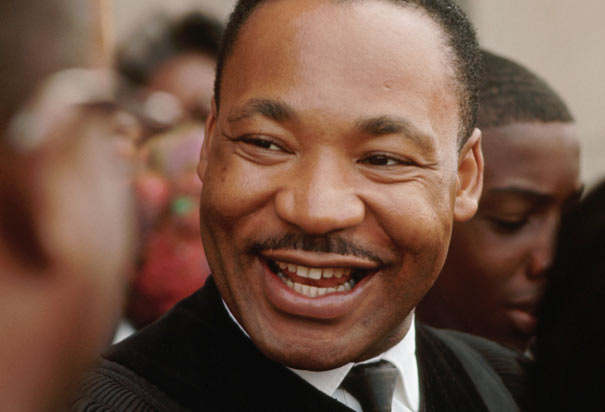
Martin. Luther King Jr. Remembrance


Martin Luther King : Remembrance 

By Jamelle Bouie

NYT Opinion Columnist

The way most Americans talk about the Rev. Dr. Martin Luther King Jr., more than 50 years after his assassination, you might think that he gave exactly one speech — on Aug. 28, 1963, in Washington — and spoke exclusively about racial harmony and his oft-mentioned dream of integration.

But King, of course, is a more complicated figure than his sanctified image would suggest, and his body of work — his writings, speeches and interviews — is deeper and more wide-ranging than most Americans might appreciate. With our annual celebration of King’s life on the immediate horizon, I thought it would be worthwhile to look at one of his lesser-known, although by no means obscure, speeches, one in which he discusses the struggle for global peace.

Our loyalties must transcend our race, our tribe, our class and our nation; and this means we must develop a world perspective. No individual can live alone; no nation can live alone, and as long as we try, the more we are going to have war in this world.

“We must either learn to live together as brothers,” he says, “or we are all going to perish together as fools.”

This sets up the main message of the sermon, which is that all life is interrelated and interconnected. “We are all caught in an inescapable network of mutuality, tied to a single garment of destiny,” King says. “Whatever affects one directly, affects all indirectly. We are made to live together because of the interrelated structure of reality.”

This isn’t an idle call for personal decency; it is a reminder that in pursuit of justice, how we relate to each other in our means will affect our eventual ends.

“We will never have peace in this world,” says King, “until men everywhere recognize that ends are not cut off from means, because the means represent the ideal in the making, and the end in process, and ultimately you can’t reach good ends through evil means, because the means represent the seed and the end represents the tree.”

Nonetheless, King concludes his sermon by reaffirming the dream of his 1963 speech, that “every man will respect the dignity and worth of human personality,” that “the empty stomachs of Mississippi will be filled,” that “men will beat their swords into plowshares” and “justice will roll down like water.”

I think that this is among King’s most powerful sermons, both rhetorically and in the radical humanity of its message. And although he is speaking to questions of war and peace that may not be as acute to Americans in 2023 as they were to Americans in 1967, I think the larger message of obligation and interconnectedness is as relevant today as ever.

Our problems are global problems: a rising tide of chauvinism and authoritarianism; corruption that touches and distorts representative institutions around the world; and, of course, climate change. King’s observation that for any of us to do anything we must rely on the work and labor of someone halfway around the world — “You go into the kitchen to drink your coffee for the morning, and that’s poured into your cup by a South American” — is truer now than it was then, and demands that we recognize the fact, not for self-flagellation but for solidarity.

To connect to laborers around the world, to see that their struggles relate to ours and ours relate to theirs, is to begin to forge the “network of mutuality” that we will need to tackle our global problems as well as to confront the obstacles to our collective liberation from domination and hierarchy.

Most Americans do not think of Martin Luther King Jr. as a democratic theorist, but he is exactly that. And here, in this sermon, he makes clear that what a peaceful and equal society demands — that is, what a truly democratic society demands — is our mutual recognition of each other, here and everywhere.


https://www.nytimes.com/2023/01/14/opinion/martin-luther-king-jr-speech.html?


 building on the democratic socialists tradition, 


Sunday, May 13, 2018

Poor People's Campaign Comes to Sacramento

‘Our People Are Being Hurt and We Won’t be Silent Anymore’
---
CaliforniaPoor People’s Campaign: A National Call for Moral Revival To Kick Off Six Weeks of Non-Violent Direct Action Monday in Sacramento
---
Protests Planned in over 30 State Capitals, Washington, D.C.
---
Movement Demands Sweeping Overhaul of Nation’s Voting Rights Laws, Policies to Address Poverty, Ecological Devastation, War Economy
SACRAMENTO, CALIFORNIA—The CaliforniaPoor People’s Campaign: A National Call for Moral Revival will kick off a six-week season of nonviolent direct action Monday in Sacramento.  The Campaign is demanding a massive overhaul of the nation’s voting rights laws, new programs to lift up the 140 million Americans living in poverty, immediate attention to ecological devastation and measures to curb militarism and the war economy. 
The Monday rally in California is one of over 30 actions across the country by poor and disenfranchised people, clergy and advocates who will engage in 40 days of nonviolent direct action and voter mobilization, among other activities. As a movement, we aim at transforming the nation’s political, economic and moral structures by building on the work of the original Poor People’s Campaign 50 years ago. 

To emphasize the urgent necessity for action,hundreds of participants are joining ‘Freedom Trains’,in solidarity with their 1968 counter parts. These caravans will be launching from  Los Angeles, San Diego and San Francisco. To Commemorate the daily hardships that Women  endure, these caravans will embark on Mother’s Day, May 13th, to join forces in Sacramento to focus on the first week’s theme: Somebody’s Hurting Our People: Women, Youth, Disabled, Children in Poverty and Right to Education.

Tuesday, May 08, 2018

Poor People's Campaign Gears Up for Mother's Day


Poor People’s Campaign Gears Up for Mother’s Day Launch. A major new report makes the case for a 'fusion movement' against systemic racism, poverty and inequality, militarism and the war economy, and ecological devastation.

I am not speaking about the poor. I am not speaking for the poor. I am the poor.”
Claudia De la Cruz was speaking at an April 10 press briefing in Washington, D.C. on behalf of the Poor People’s Campaign: A National Call for Moral Revival.Inspired by a similar 1968 initiative led by Dr. Martin Luther King and other civil rights leaders, the campaign aims to lift up the voices of people like De la Cruz who’ve been most affected by our country’s persistent poverty.
A descendant of immigrants from the Dominican Republic, De la Cruz was born in the South Bronx, the poorest Congressional district in the country. Median household income there is about $26,000, compared to $116,000 for the wealthiest district, which straddles Virginia’s northern suburbs. She’s a member of the national steering committee of the Poor People’s Campaign and one of the state organizers for the New York City area.
At the briefing, the Poor People’s Campaign and the Institute for Policy Studies co-released a 120-page report on poverty and inequality, systemic racism, ecological devastation, the war economy, and militarism. The Souls of Poor Folk draws on empirical data and interviews with grassroots leaders in each of these inter-related areas to make the case for reviving the 1968 campaign. The report points out, for example, that 140 million Americans today are poor or low-income.

Saturday, October 14, 2017


“The ‘MLK 50th Anniversary’ celebration is a historical milestone that commemorates not only Dr. King's speech on campus but his vision for greater equality and justice for all,” Watson-Derbigny says. “For these reasons, we celebrate as a reminder to live out his dream daily by educating students for leadership, success, and service, and working to build vibrant communities that embody diversity, equity, and inclusion.”
"The significance of Dr. King's visit to Sacramento State is that it coincided with a shift in the political climate in the nation and a resultant change in the focus of the movement," says Robin Carter, MLK celebration co-chair. "He spent the last year of his life articulating a shift from civil rights to human rights. His speech on our campus highlighted his advocacy for this shift." - Dixie Reid
MLK 50th Anniversary Celebration at Sac State, Monday, Oct. 16
Everything, other than the fundraiser brunch, is free and open to the public. Tickets are required for both the 4:15 p.m. gospel concert and 7:30 p.m. keynote address. To RSVP for events you wish to attend and to download free tickets, go to Sac State's MLK celebration page.
·       9:30 to 10:45 a.m., University Union, Redwood Room – Brunch to benefit student scholarships features motivational speaker Inky Johnson. Tickets are $50 and can be purchased online.
·       11 to 11:50 a.m. University Union, Hinde Auditorium – The March (1964), 33-minute documentary about the 1963 March on Washington for Jobs and Freedom, where King spoke. Roberto Pomo, professor of theater, will introduce Richard Blue, brother of the late filmmaker, James Blue.
·       Noon to 12:45 p.m., University Union Ballroom – Keynote speaker Tavis Smiley discusses “Empathy and Economic Inequality.” The PBS talk-show host is the author of Death of a King: The Real Story of Dr. Martin Luther King, Jr.'s Final Year (no ticket required).
·       12:45 p.m., University Union – Unity march to Hornet Stadium.
·       1:10 p.m., Broad Field House lawn – Dedication of the Tree of Empathy commemorating King’s 1967 visit.
·       2:15 to 3 p.m., University Union, Redwood Room – “The Civil Rights Movement,” panel discussion featuring Clayborne Carson, professor of history at Stanford University and director of the Martin Luther King, Jr. Research and Education Institute. The moderator is J. Luke Wood, a professor at San Diego State and a Sac State alumnus.
·       3:15 to 4 p.m., University Union, various locations – Student workshops.
·       4:15 to 5 p.m., University Union, Lobby Suite – Student docents lead tours of the exhibit “Fifty Years Ago Today at Sacramento State: The Future of the Civil Rights Movement.” The exhibit is open for self-tours from 9 a.m. to 8 p.m.
·       4:15 to 5 p.m. University Union Ballroom – “Empathy, Empowerment, and Praise,” gospel concert featuring the MLK Community Choir and JJ Hairston. Ticketed event. RSVP required.

·       7:30 p.m., University Union Ballroom – Smiley delivers the keynote address, “The Death of a King: A Life of Empathy that Created a Movement.” Ticketed event. RSVP required.
 
Creative Commons License
This work is licensed under a Creative Commons Attribution-NonCommercial 3.0 Unported License.