Showing posts with label Textbooks. Show all posts

Sunday, April 15, 2018

Texas education board approves course formerly known as Mexican-American studies


* Update, April 13: On Friday, the State Board of Education gave its final approval to development of the Ethnic Studies: An Overview of Americans of Mexican Descent course.

Texas advocates for Mexican-American studies classes won a bitter victory Wednesday, gaining approval to move forward with the class they wanted but losing the course title.

The State Board of Education had been debating more than four years over how and whether to offer teachers materials and guidance to teach Mexican-American studies. In a preliminary vote, the board voted nearly unanimously to create curriculum standards for the elective class. But now it will be called “Ethnic Studies: An Overview of Americans of Mexican Descent.”  

A final vote on the issue is scheduled for Friday.

The class will be based on an innovative course Houston ISD got state approval to offer in 2015. Texas Education Agency staff will make any needed changes to that set of curriculum standards and then bring it back for the first of two public hearings and votes in June.

Monday, July 18, 2016

Chicano History Will be in the California Text Books in 2017

By Duane Campbell
History and social science textbooks in public schools in California and most of the nation are racist, class-biased, and ignore LGBT history. This condition will change in California in 2017 when new textbooks are adopted.

It is over. We won !

 At 2:45 PM July 14, 2016,  the California State Board of Education unanimously endorsed a new History /Social Science Framework for California’s public schools that includes a substantial addition of Chicano/Latino history, improved history of LGBT people, and improvements in several other histories.
This completes a 6 year effort against substantial opposition to revise the Framework.  As a result textbooks in California in 2017 will be the most inclusive ever required, and all students will be taught an inclusive history. This has been the major campaign of this blog and the Mexican American Digital History project since 2009. 

Under this decision California students will finally be encouraged to know the history of Latino civil rights leaders like Cesar Chavez and Dolores Huerta and Filipino labor leaders like Larry Itliong, as well as an accurate and inclusive history of LGBT activists  as a part of the history of California and the nation. These topics are currently substantially absent from public school textbooks and curricula in California.

Tuesday, May 10, 2016

California to Re Write History Books -Include Chicano History

California to adopt a new guide to Mexican American (Chicano) history, (and everyone else)

Cesar Chavez and Duane Campbell 1972
"Once social change begins, it cannot be reversed.  You can not un-educate the person who has learned to read.. You cannot oppress the people who are not afraid anymore.
Cesar Chávez. November 9, 1984.

Update. the decision was made May 19. The proposed new framework passed the Quality Instructional Materials Committee. It is most likely to be adopted as is. 

History will change in May of 2016 for the students of California, and in subsequent years students throughout the nation. Teachers. Are you prepared to teach all history?

We have a unique opportunity to change the history books in California  K-12 to include Chicano/Mexican American history.
Mexican American/ Chicano history is currently substantially absent from public school textbooks and curriculum in California- and it has been since 1986.  Latino student political non participation and alienation from school is significantly caused by Latino absence from the K-12 textbooks and curriculum.

For the last two years the Mexican American Digital History Project and a broad group of allies have been working for to add Chicano history to the California History/Social Science Framework, the document that determines what goes into textbooks in California. See https://sites.google.com/site/chicanodigital/

Tuesday, January 26, 2016

Teachers: We Need Chicano History in the California Textbooks - Act Now.


By Duane Campbell
The Mexican American Digital History Project and a broad group of allies have been working for over a year to add Chicano history to the California History/Social Science Framework, the document that determines what goes into textbooks in California. 
For  example see here. http://choosingdemocracy.blogspot.com/2015/04/teachers-we-need-your-letters-on.html  and numerous posts on this site. 
 The Quality Instructional Materials Commission of the California State Board of Education have posted their proposed revised framework and it includes most of what we proposed.  
Comments from teachers and community members are welcome. 
The IQC approved the draft History–Social Science Framework for California Public Schools for its second review on November 20, 2015. The approved draft is posted on the History–Social Science Curriculum Frameworks Web page at 


Going forward, any new public comments will be submitted as part of the second review process. 
Members of the public are invited to submit comments on the draft History–Social Science Framework through February 29, 2016, via e-mail to HSSframework@cde.ca.gov. Comments may be submitted in any format, but if a commenter is seeking revisions to the draft it is recommended that the comment include the chapter, page, and line number(s), the text as it is currently written in the draft, and the exact language of the suggested change.

Thursday, April 23, 2015

Worse than Texas : Chicano History Ignored in California State Textbooks

But, you can do something about that this week !

Mañana is now !
See prior post.  "You cannot oppress a people who are not afraid anymore."
We need your letters insisting on the expansion of Mexican American history in the California State textbooks.   
The closing date is May 1, 2015.  Mañana is now. 
We have a unique opportunity to change the history books in California  K-12 to include Chicano/Mexican American history- but we must act now. This is the time to get that letter written and e mailed  asking that Mexican American history be included in the re write of the History/Social Science Framework for California Schools.
Mexican American/ Chicano history is currently substantially absent from public school textbooks and curriculum in California- and it has been since 1986.  See the prior post below.  A guide to writing such a letter is here. https://sites.google.com/site/democracyandeducationorg/Home/latino-students-and-civic-engagement/project-plan---mexican-american-history.

The following letter from historian Dr. Lorena Marquez describes  some of the important Chicano history that is not covered in the framework and not covered in California history textbooks.  It should be. 

To the History/Social Science Framework Committee
Dear History Social Science Framework Committee,

I strongly urge you to revise the current draft of the History/Social Science Framework to include a more adequate recording of the history of California and the nation by including the significant contributions of ethnic Mexicans. Exclusion and omission of this history is a great disservice to the generations of Chicanas/os who have worked tirelessly to build this country. Latinos comprise nearly 39% of the state population and now constitute over 52% of the students in our schools. By hearing their histories in the larger rubric of United States history, they will feel validated, but most importantly, they will be empowered to make positive change in their communities.
 I recommend extension of the description of the Chicano movement to more adequately address this issue.  Recommended additions: Line 1959.  Page 348.

Thursday, April 16, 2015

You cannot oppress people who are not afraid anymore

  "Once social change begins, it cannot be reversed.  You can not un-educate the person who has learned to read.. You cannot oppress the people who are not afraid anymore.
Cesar Chávez. November 9, 1984.

We have a unique opportunity to change the history books in California  K-12 to include Chicano/Mexican American history- but we must act now. Time is passing. 
Mexican American/ Chicano history is currently substantially absent from public school textbooks and curriculum in California- and it has been since 1986.  Latino student political non participation and alienation from school is significantly caused by Latino absence from the K-12 textbooks and curriculum. 
On behalf of the Mexican American Digital History project, we  ask that you  write a letter to the review committee for the revision of the History/Social Science framework.  Now is a good time to get this done (a guide to writing such a letter is here )https://sites.google.com/site/democracyandeducationorg/Home/latino-students-and-civic-engagement/project-plan---mexican-american-history

We ask you to 
1.     Look over the draft History/Social Science Framework for California Schools.  
(or take our  suggestions and guides to specific pages)
2.    Write a letter  to the Framework Committee encouraging the inclusion of  Mexican American/Latino history in the revised framework.  It is most effective to make specific recommendations of material to include- see samples. To be effective your letter should arrive by May 1, 2015.
3.   Send your letter to  hssframework@cde.ca.gov
4.  Send a copy to the Mexican American Digital History project at campd22702@gmail.com
5.     Links to documents and  background information is available at the site above.

Thursday, April 09, 2015

Letters on the inclusion of Mexican American History in the History/Social Science Framework

Cesar Chavez and Duane Campbell 1972
History /Social Science Framework Committee   (Sample letter)

Re: Inclusion of  Mexican American/ Latino history in draft Framework

I am a professor (emeritus) of  Education at CSU Sacramento.  For thirty-five years I prepared new teachers for California schools.  One of my particular emphasis was preparing future teachers to teach history and social studies.  You can find a record of this in my most recent book, Choosing Democracy: a practical guide to multicultural education. Allyn and Bacon  (4th edit. 2010)
Based upon this experience I strongly urge you to revise the current draft of the History Framework to include a more adequate recording of the history of California and the nation by including the significant contributions of Mexicans and Mexican Americans to this history.  You really can’t have a fair and balanced history without extending more information on this topic.  Latinos comprise nearly 39% of the state population, and descendants of Mexican Americans and Latinos now constitute over 52% of the students in our schools.
As I have argued in my writings, and in testimony to the drafting committee during the 2009 attempt to revise the framework, children and young adults need to see themselves in the curriculum.  Students, particularly students of color, have low levels of attachment to California and U.S.  civics messages in significant part because the government institution they encounter the most- the schools-  too often ignore the students own history, cultures and experiences.

A fundamental way to engage students in civic culture is to engage them in their own schools and communities.  That is where the students most encounter civic opportunities.

Monday, April 06, 2015

Teachers- ( and allies) We need your letters on inclusion of Mexican American History

Cesar and friends at Sac State. 1972.
  "Once social change begins, it cannot be reversed.  You can not un-educate the person who has learned to read.. You cannot oppress the people who are not afraid anymore.
Cesar Chávez. November 9, 1984.

We have a unique opportunity to change the history books in California  K-12 to include Chicano/Mexican American history- but we must act now. Time is passing. 
Mexican American/ Chicano history is currently substantially absent from public school textbooks and curriculum in California- and it has been since 1986.  Latino student political non participation and alienation from school is significantly caused by Latino absence from the K-12 textbooks and curriculum.

Update: October 2015.  The Mexican American Digital History Project and a broad group of allies have been working for over a year to add Chicano history to the California History/Social Science Framework, the document that determines what goes into textbooks in California.


 We are pleased to inform you that the Quality Instructional Materials Commission of the California State Board of Education have posted their proposed revised framework and it includes most of what we wanted. 

On behalf of the Mexican American Digital History project, we  ask that you  write a letter to the review committee for the revision of the History/Social Science framework.  Now is a good time to get this done (a guide to writing such a letter is here https://sites.google.com/site/democracyandeducationorg/Home/latino-students-and-civic-engagement/project-plan---mexican-american-history

We ask you to
1.     Look over the draft History/Social Science Framework for California Schools. 
(or take our  suggestions and guides to specific pages)
2.    Write a letter  to the Framework Committee encouraging the inclusion of  Mexican American/Latino history in the revised framework.  It is most effective to make specific recommendations of material to include- see samples. To be effective your letter should arrive by May 1, 2015.
3.   Send your letter to  hssframework@cde.ca.gov
4.  Send a copy to the Mexican American Digital History project at campd22702@gmail.com
5.     Links to documents and  background information is available at the site above.

Saturday, February 07, 2015

It is Time for Civic Education for All


by Duane Campbell
The Sacramento Bee editorial board was correct in their Friday Feb.6, 2015,  piece, “Civic Education is Essential to Democracy. congratulate them on their position. http://www.sacbee.com/opinion/editorials/article9373664.html
However, they missed the boat on how to get to improved civic education.
While it is accurate that we have a general problem of civic engagement of the young,  it is also true that we have a very specific problem with the rate of Latino and Asian voter participation and  civic engagement.  Together they comprise over 60% of the students in our schools.  And, the textbooks have yet to acknowledge their presence.
 Rates of voting and voter registration provide a window into civic engagement.  The proportion of state voter  registration that is Latino and Asian has remained far below the proportions of these groups in the state’s overall population. In 2010, Latinos in the state made up 37.6% of the general population while they were on 21.2 % of the registered voters. The Asian population was 13.1 % of the state but  only 8.1 % of the registered voters.

The Bee recommendations , like the earlier report, Revitalizing K-12 Civic Learning in California, http://www.powerofdemocracy.org/wp-content/uploads/2014/02/CLTF-Final-Report.pdf
miss the single most direct and important  issue – include the children.  See http://choosingdemocracy.blogspot.com/2014/08/another-opportunity-missed-civic.html

 Children and young adults need to see themselves in the curriculum.  Students, particularly students of color, have low levels of attachment to California and U.S.  civics messages in significant part because the government institution they encounter the most- the schools- ignore the students own history, cultures and experiences.

A fundamental way to engage students in civic culture is to engage them in their own schools and communities.  That is where the students most encounter civic opportunities.
The 1987 California History Social Science  Framework still in use today to guide the selection of  California textbooks   expanded African American, Native American, and women’s history coverage but remains totally inadequate in the coverage of Latinos and Asians. The only significant change between the 1985 and the 2005 adopted Framework was the addition of a new cover, a cover letter, and a photo of Cesar Chavez.
When the 51%  % of students who are Latino , and the 9  % who are Asian do not see themselves as part of history,  for many their sense of self is marginalized.   Marginalization negatively impacts their connections with school and their success at school.  It contributes to an up to  50% drop out rate for Latinos and some Asian students.  A more accurate, more complete  history  would provide some students with a  a sense of self, of direction,  of purpose, even a sense that  they should stay in school and learn more. History and social science  classes  should help young people acquire and learn to use the civics  skills, knowledge, and attitudes that will prepare them to be competent and responsible citizens throughout their lives.   

Add their stories to the history textbooks, add their literature to the literature textbooks. They are not migrants from some distant place. They are California's children. Include them.  
The hard work of teachers and advocates, Los Angeles and San Francisco Unified  School boards have added ethnic studies to their curriculum.  This is an important step toward the inclusion of these students in civic education.  http://choosingdemocracy.blogspot.com/2014/12/la-unified-san-francisco-unified-to.html
To include more, the  1987 History Social Science Framework for California’s Schools needs revision. See here. See https://sites.google.com/site/chicanodigital/home/why-california-students-do-not-know-chicano-history

And, yes, a revised civics course and appropriate support for teacher in-service preparation  is needed. The place to do that is in the History/ Social Science framework scheduled to be revised in 2015/2016.   It will require focused attention of many, including scholars, political leaders and editorial boards to overcome the inertia of the past frameworks. 
A more accurate, more complete  history  provided in Ethnic studies courses  would provide some students with a  a sense of self, of direction,  of purpose, even a sense that  they should stay in school and learn more.  And, ethnic studies would provide Anglo  students with an informed, accurate history of the political and cultural development of the state.  Ethnic studies classes should help young people acquire and learn to use the civics  skills, knowledge, and attitudes that will prepare them to be competent and responsible citizens throughout their lives.   

The Department of Education and the Board of Education can start by revising the California History/ Social Science Framework to include the history of the majority of students in the schools  and by  joining LA Unified in requiring Ethnic Studies Classes in high school.

The Framework determines what goes into the California  textbooks.  Having sought for decades to change this framework, I recognize how difficult it will be.  The next revision is up for consideration in 2015/2016.   If the CDE stacks the committee membership for writing a new framework, as they did last time, we can expect little change.  See https://sites.google.com/site/chicanodigital/home/why-california-students-do-not-know-chicano-history

There is a network of scholars and professionals interested in writing a more complete history of our state.  This has been said before and we will keep reminding these folks.
Duane Campbell,  Democracy and Education Institute.
Sacramento

Readers:  Please like this post on Facebook and forward it to your lists.
We encourage discussion of these issues. Please use the comments section of this blog.


Monday, March 17, 2014

The Real Irish American Story Not Taught in Schools.

The Real Irish American Story Not Taught in Schools

http://zinnedproject.org/2012/03/the-real-irish-american-story-not-taught-in-schools/
Portside Date: 
March 17, 2014
Author: 
Bill Bigelow
Date of Source: 
Sunday, March 16, 2014
Zinn Education Project
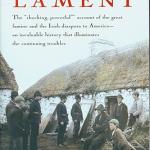
“Wear green on St. Patrick’s Day or get pinched.” That pretty much sums up the Irish-American “curriculum” that I learned when I was in school. Yes, I recall a nod to the so-called Potato Famine, but it was mentioned only in passing.
Sadly, today’s high school textbooks continue to largely ignore the famine, despite the fact that it was responsible for unimaginable suffering and the deaths of more than a million Irish peasants, and that it triggered the greatest wave of Irish immigration in U.S. history. Nor do textbooks make any attempt to help students link famines past and present.
Yet there is no shortage of material that can bring these dramatic events to life in the classroom. In my own high school social studies classes, I begin with Sinead O’Connor’s haunting rendition of “Skibbereen,” which includes the verse:
… Oh it’s well I do remember, that bleak
            December day,
The landlord and the sheriff came, to drive
            Us all away
They set my roof on fire, with their cursed
            English spleen
And that’s another reason why I left old
            Skibbereen.

Monday, March 03, 2014

Boasts About Textbooks Aligned to Common Core a 'Sham,' Say Researchers

Boasts About Textbooks Aligned to Common Core a 'Sham,' Say Researchers
Also see. http://www.nytimes.com/2014/03/03/education/new-all-digital-curriculums-hope-to-ride-high-tech-push-in-schoolrooms.html

Friday, January 24, 2014

When Young People Don't Vote

by Duane Campbell
When young people don’t vote. The “Policy Experts”  Just Don’t Get It
I watched the Public Policy Institute  Sacramento Forum on the California Voter Turnout on January 23.  A series of speakers presented technical issues on why many Californians don’t vote- but they missed the big picture.
It is good that they studied the small issues, such as on-line voter registration.  However, as is clear, minority young people are not registering and voting at representative numbers.
The problem is that these young people have just completed 12 years of education in California schools where the curriculum and textbooks  tell that they don’t exist. The situation in California is as bad or worse than in Arizona and Texas. 
Latino and Asian American students have been absent from the curriculum since 1986. When the 48.72 % of students who are Latino , and the 11.5 % who are Asian do not see themselves as part of the community, as a part of  history,  for many their sense of self is marginalized.   Marginalization negatively impacts their connections with school, their success in school, and their commitment to  democratic institutions  such as voting and to a democratic society.
History classes  and textbooks  should help young people acquire and learn to use the skills, knowledge, and attitudes that will prepare them to be  find a good job and to be a competent and responsible  citizens, but they don’t.  

Wednesday, September 11, 2013

California must change its history books before adopting Common Core.


    California  is  at an important tipping point.  I and my graduate students  participated in the 2009  efforts to revise the History/Social Science  curriculum frameworks and frankly the issue of Mexican American history was marginalized.  It will require  some effort to change this.  It is important to intervene soon.  Once the national common core standards begin adopting History/ Social Science, the new standards  will  most likely integrate the existing state  standards- which ignore Mexican American/Latino history.  The inadequate 1986 History/ Social Science Framework  will become the national standards and will continue for another decade.  New York is currently revising their civic standards to prepare for inclusion in the common core. To this date we have been unable to interest legislators in responding to this problem.  See more here https://sites.google.com/site/chicanodigital/home/why-california-students-do-not-know-chicano-history
    Students need to see themselves in the curriculum in order to believe they have a stake in the society. Textbooks for  California schools are selected by the State Board of Education based upon recommendations of their Curriculum Committees and the state frameworks and standards.   The current Framework reflects the historiography of the 1950’s. It was written in 1986 by senior scholars, they in turn were educated in the early 1970’s or before. It is substantially out of date. 

Monday, July 29, 2013

Why California textbooks ignore Chicano/ Mexican American history


 And what you can do about it.
Textbooks for  California schools are selected by the State Board of Education based upon recommendations of their Curriculum Committees and the state frameworks and standards.   The current Framework was written in 1987 – before the fall of the Soviet Union. It is urgent that the History-Social Science Framework be revised to provide an accurate history of the contributions of Mexicans, Mexican Americans, Latinos and Asians to the history of the state and of the nation. The current Framework reflects the historiography of the 1950’s. It was written in 1986 by senior scholars, they in turn were educated in the early 1970’s or before. It is substantially out of date. For a more detailed description of this issue see https://sites.google.com/site/chicanodigital/home/why-california-students-do-not-know-chicano-history
Unfortunately this existing, outdated, biased  document could well become the template for schools throughout the nation as a part of the Common Core Standards efforts.
Here is the problem. The  Democracy and Education Institute and the Mexican American Digital History Project  has  been working for the last  three  years to change the California History/Social Science Framework for California Public Schools to include the significant contributions of Mexicans and Chicanos to the history of the state. 
At the same time, the U.S. is moving toward Common Core standards for all schools in the nation.   The Common Core is well along its way in math and English (reading).  History, Civics and Social Studies will follow soon. The development of a common core  usually proceeds from a state’s existing standards.  The existing California standards are based upon the existing biased and insufficient  1987 History Social Science Framework.  Unless there is change, California will be advocating for a set of Common Core standards that ignore Chicano ( and Asian) history.  Other states including Texas and Arizona have similarly biased and insufficient standards.  Thus, unless there is a change in the California standards, the Common Core effort  could well lock in the 1987 standards for another decade.  An unnecessary shame.

Tuesday, May 28, 2013

How History is Socially Controlled in k-12 - Rodolfo Acuña


How History is Socially Controlled in K-12
Setting Standards :Serfs and Lords
By
Rodolfo F. Acuña

People ask me if the banning of books is actually a blessing in disguise because it calls attention to the banned books. I respond, “Hell No!” Censorship threatens our freedom of speech, and it is the final step toward a totalitarian state. 

In the guise of security, our emails and our phones are tapped. Anyone using a Wi-Fi can be spied on at will. What is happening today pales George Orwell’s 1984; it is as insidious as the methods used by the Nazis, the Stasi and the Russians.

The fallout of the banning of books affects all of us. In the future, it will negatively affect the publication of Latino books. What makes it so dangerous is that most of us are oblivious to this threat to our liberties. We are like the serfs in the Middle-Ages who were willing surrender their freedoms and their properties to the feudal lords in return for protection.

The first fatality of censorship is the truth. In the case of the censorship of books by the Tucson Unified School District, it was not just the books that were banned, it is also what will be published in the future. The banning of books did not affect the sales of Occupied America or the other banned books – the banning certainly did not hurt Shakespeare’s The Tempest

Thursday, January 03, 2013

Mexican American History Again Left Out


Mexican Americans will be left out – again.  When the  teachers and the profession gets around to writing Common Core Standards in History and Social Studies we can anticipate that they will again fail to include Mexican American history.  How do we know this?
 Major discussions in education circles now focus on Common Core Standards which are an attempt to get some agreements on what level of achievement all states can expect from their students.  Until now, all such standards were in the states.  There was no national common core. ( See ASCD)
Common core standards  have been established in Math and Literacy and are producing major changes in curriculum across the nation.  There are no Common Core standards in History or Social Studies. In these disciplines we continue to have state standards only.
History standards in Texas, Arizona, and California, among others, lack the inclusion of even the most minimal history of Mexican American people.  In California the state standards are based upon the state History/Social Science Framework which was drafted in 1986 and is nearly totally devoid of Mexican American History.  (Campbell ,2012)

Mexican American have been left out up to this date (2013), and the history profession has less diversity and less inclusion in their course work than they did in the 1990s.  Ethnic studies and Mexican American history has less influence.  We can therefore predict that when committees get together they will continue the practices of the past- that is exclusion.
  Lets look at California.   California has the largest population of any state, with more than 6,191,000  students  in school in 2009. 

Wednesday, March 14, 2012

The Irish Famine in history textbooks


by Bill Bigelow 
 So go ahead: Have a Guinness, wear a bit of green, and put on the Chieftains. But let's honor the Irish with our curiosity. Let's make sure that our schools show some respect, by studying the social forces that starved and uprooted over a million Irish -- and that are starving and uprooting people today.
"Wear green on St. Patrick's Day or get pinched." That pretty much sums up the Irish American "curriculum" that I learned when I was in school. Yes, I recall a nod to the so-called Potato Famine, but it was mentioned only in passing.
Sadly, today's high school textbooks continue to largely ignore the famine, despite the fact that it was responsible for unimaginable suffering and the deaths of more than a million Irish peasants, and that it triggered the greatest wave of Irish immigration in U.S. history. Nor do textbooks make any attempt to help students link famines past and present.
Yet there is no shortage of material that can bring these dramatic events to life in the classroom. In my own high school social studies classes, I begin with Sinead O'Connor's haunting rendition of "Skibbereen," which includes the verse:

Wednesday, September 07, 2011

Text books ignore Labor


Report: Textbooks Ignore Union Contributions
Posted By James Parks On September 6, 2011 @ 1:37 pm In Other | 3 Comments
 
Most American children never receive any education about the union movement’s proper place in our country’s history and its many contributions to the nation’s development, according to a new report [1].
American Labor and U.S. History Textbooks: How Labor’s Story Is Distorted in High School History Textbooks [1],” sponsored by the Albert Shanker Institute [2] in cooperation with the American Labor Studies Center [3], surveys four major textbooks that together account for most of the market in U.S. history textbooks. The report found that these textbooks often present labor history in a biased, negative way, focusing on strikes and strike violence while giving little or no attention to the employer abuse and violence that caused the strikes.
In addition, it notes that the textbooks virtually ignore:

  • The role of unions in passing protections and reforms such as the eight-hour work day, Social Security, Medicare, Medicaid, occupational safety and health, the end of abusive child labor, and environmental protection;
  • Unions’ strong support for the civil rights movement; and
  • The role unions played in the 1960s in particular, when the rise of public sector unions brought many more Americans into the middle class and gave new rights to public employees.
AFT [4] President Randi Weingarten said the report “explains why so few Americans know much about labor’s history and contributions.”
It paints a devastating picture of distortion and omission. Too often, labor’s role in U.S. history is misrepresented, downplayed, or ignored. The result is that most American students have little sense of how the labor movement changed the lives of Americans for the better. A vital piece of U.S. history is disappearing before our eyes.
Weingarten also is president of the Albert Shanker Institute.
BTW. California textbooks also ignore Latinos. 

Friday, May 20, 2011

State history textbooks ignore Mexican American/Latino history


Why California students do not understand Chicano/Latino history. 1987- 2011. By Duane Campbell
The morning paper includes an article by Jim Sanders entitled in the print edition, Schools’ history books are so 1998.  Good article. Actually, the books are more like 1986. Assembly bill 1033 by Feuer (D- Los Angeles) encourages a small modification.http://www.sacbee.com/2011/05/20/3640800/assemblyman-mike-feuer-urges-upgrading.html  According to the testimony, his position was opposed by some Elk Grove teachers of Science. That is not even a start of the problem.
Textbooks for  California schools are selected by the State Board of Education based upon recommendations of their Curriculum Committees and the state frameworks and standards.  It is urgent that the History-Social Science Framework be revised to provide an accurate history of the contributions of Mexicans, Mexican Americans, Latinos and Asians to the history of the state and of the nation. The current Framework reflects the historiography of the 1950’s. It was written in 1986 by senior scholars, they in turn were educated in the early 1970’s or before. It is substantially out of date.  Because the Framework is out of date- the text books are out of date.  And, Mexican American/Latino history is not being taught.
 Standards and frameworks are products of the people who make the decisions. Frameworks like  standards pick winners and losers;  the choices which committees make favor one group over another group- choices are based upon the political power of those represented on the committees.  The Framework is  supposed to be revised each 7 years but it has not been revised.  The current Framework reflects the historiography  of the 1970’s  and the political balance of power of the 1980’s.
 
Creative Commons License
This work is licensed under a Creative Commons Attribution-NonCommercial 3.0 Unported License.