| ||
| ||
| ||
|
| ||
| ||
| ||
|
|
Texas Governor Ready to Challenge Schooling of Migrant Children
Gov. Greg Abbott may target a 1982 Supreme Court ruling that requires schools to educate undocumented children. Some conservatives see an opening for a fresh look at old precedent.
Gov. Greg Abbott of Texas has taken a hard stance on immigration, using the issue to beat back challengers in the Republican primary.Credit...Brandon Bell/Getty Images
May 5, 2022
Sign Up for the Education Briefing From preschool to grad school, get the latest U.S. education news. Get it sent to your inbox.
HOUSTON — With the Supreme Court signaling a willingness to reverse decades-old precedents like the Roe v. Wade decision on abortion, Gov. Greg Abbott of Texas said on Thursday that he would seek to overturn a 1982 court decision that obligated public schools to educate all children, including undocumented immigrants.
Mr. Abbott’s comments opened a new front in his campaign to use his powers as governor to harden Texas against unauthorized migration. And they demonstrated just how expansively some conservatives are thinking when it comes to the kinds of changes to American life that the court’s emboldened conservative majority may be willing to allow.
The latest proposal for closing public schools to undocumented children significantly widens the range of precedents up for debate. After a draft opinion that would overturn Roe v. Wade leaked this week, focus had been primarily on other rights that could be legally linked to the 1973 decision, such as access to contraception and same-sex marriage.
Little has changed in the legal landscape surrounding the education of undocumented children since 1982, when the court issued a 5-to-4 decision to strike down a Texas law allowing schools to refuse admission to unauthorized migrant children, legal experts said. Several attempts over the years to chip away at the decision in the case known as Plyler v. Doe have been unsuccessful, including an effort by Alabama more than a decade ago and in California in the 1990s.
Dear Friends,
Let me take this opportunity to wish each and every one of you a very happy May Day.
The concept behind May Day is extremely profound. It is the understanding that real power lies in solidarity, and that when working people in our country and around the world come together, there is nothing that can stop us in the struggle for justice.
It is also a day in which we recommit ourselves to take on the incredible greed and power of the corporate elite and the exploitation and misery they create — not just here in the United States, but internationally.
Clearly, one of the great crises facing the global community today is that the basic right of ordinary people to control their own lives at home and at the workplace is on the defensive.
And the root of this crisis is the fact that a handful of incredibly wealthy people are exerting enormous economic and political power over the planet.
These are people who are so addicted to greed that they are willing to step over working people, many with families and young children, in order to satisfy a pathological desire for more, more and more wealth.
Unbelievably, in the global economy today, the top 1 percent owns more wealth than the bottom 99 percent, and a handful of billionaires own more than the bottom half of the people around the world — and that is more than 3.7 billionpeople.
And things have only gotten worse during the pandemic.
We Need to Take a Stand
https://www.aol.com/photojournalist-describes-russia-left-behind-090001497.html
By Van Gosse and Bill Fletcher, Jr.
Portside
April 19, 2022 - Whose side are we on? That is the question that anyone professing a commitment to anti-imperialism should be asking, when a sovereign nation is invaded by a Great Power.
Blinded by American Exceptionalism, however, many of the U.S. Left are not able to answer the question, and their silence speaks.
We must always oppose empire, under any heading. No nation has the right to dominate another, let alone invade and occupy it. That was the principle we as leftists affirmed in 2003, when George W. Bush led the United States into a war of aggression against Iraq.
We should state it plainly, in terms of international law. Aggressive war is the first crime of war, from which all the others flow. As the International Military Tribunal at Nuremberg stated, “To initiate a war of aggression, therefore, is not only an international crime; it is the supreme international crime differing only from other war crimes in that it contains within itself the accumulated evil of the whole.”
Vladimir Putin has now committed this crime of war, and that is the premise from which we should analyze the crisis in Ukraine: Whose side are we on? That of the war criminals who started the war, or those who are defending their sovereignty?
For ourselves, we are on the side of the Ukrainian people against an unprovoked war of aggression by an imperialist Great Power demonstrating in unmistakable terms what V.I. Lenin denounced as “Great Russian chauvinism.”
Here are some questions to consider.
Does Russia have “legitimate security interests” in Ukraine and other nations bordering it?
That premise has been affirmed repeatedly by various antiwar organizations, so we need to underline: states large and small have one legitimate security interest, which is to have their sovereignty respected—not to be invaded, bombed, blockaded, or subverted.
That is the limit of Russia’s security interest regarding Ukraine. It has no “legitimate interest” in dominating, controlling, or dictating policy to the states bordering it, any more than the U.S. does. Many of us have spent decades denouncing the politics of the Monroe Doctrine, what Theodore Roosevelt defined in 1904 as the U.S.’s right to “the exercise of an international police power” in the Americas, which led to military occupations all over the Caribbean and Central America between 1898 and 1934, the CIA-organized coup in Guatemala in 1954, and the invasions of Grenada in 1983 and Panama in 1989. That is what it looks like when a Great Power claims “a sphere of influence.” No one claiming to be anti-imperialist should concede any legitimacy to a Russian “sphere of influence.”
But hasn’t NATO expansion threatened Russia?
As anti-imperialists we oppose militarism in any form, including permanent military pacts, and the aggressive militarism promoted by the U.S.-led NATO alliance. The best way to protect the rights of small nations is to seek demilitarization in Europe and everywhere else. But it is utterly wrong for us to dictate to nations in Eastern Europe whether or not they join an alliance because of the concrete threat that Russia poses to their sovereignty. This is the message the Left in those countries has sent us, and we must respect it as a basic principle of internationalist solidarity. We have no more right to tell them what to do than the U.S. does to pressure or subvert the government of Canada if it chose to leave NATO and conclude a treaty of friendship with China.
Doesn’t the United States share responsibility for this war?
Like all major historical events, the war in Ukraine has many causes, and many actors were involved. Focusing on what the U.S. did or didn’t do takes the focus off who started it, and absolves Russia from its sole responsibility for initiating a war of aggression. Beyond that, it betrays an Americo-centric view of the world that is at odds with reality. The United States is no longer a world hegemon, it does not determine the course of history, and presuming its centrality makes the U.S. into an exception, standing outside and above the normal relations between states.
Shouldn’t we focus on peacekeeping by opposing all weapons transfers to Ukraine?
The Ukrainians have a right to defend their country, and that includes the right to seek aid from anywhere they see fit. It is everyone’s interest to keep this war from spreading, so we should oppose any measures, such as a no-fly zone, that would widen the zone of war across international borders and draw in more nations.
We are not pacifists. The Left should avoid confusing pacifism, as in opposition to war in any form, with anti-imperialism. We cannot stand aside and simply condemn the violence. It is in Putin’s hands to stop the war now; until then, we take the side of the Ukrainians.
[Van Gosse is a Professor of History at Franklin & Marshall College, and Co-Chair of Historians for Peace and Democracy.
Bill Fletcher, Jr. is a past president of TransAfrica Forum and a longtime trade unionist and writer.] .
Oligarchy and Corporate Welfare in the U.S. – Sanders April 20,2022.
Today in America, the unfortunate reality is that the rich continue to get much richer while the working class is struggling to get by.
Oligarchy and massive income and wealth inequality are on the rise. The billionaire class has seen its wealth explode during the pandemic. Meanwhile, half of our people continue to live paycheck to paycheck and the high inflation rate is making life for the working class even more difficult.
Yet in the midst of all of the crises we currently face, Congress will likely be voting next week on a bill that provides tens of billions in corporate welfare to some of the most profitable corporations and wealthiest people on the planet. This bill provides $53 billion to the profitable microchip industry with no taxpayer protections and, if you can believe it, another $10 billion to Blue Origin, a space company owned by Jeff Bezos.
Amazon, which is owned by Bezos, is a company which, in a given year, pays nothing in federal income taxes after making billions in profits. And, by the way, in a given year Bezos has himself paid nothing in federal income taxes despite being worth nearly $200 billion.
Jeff Bezos has enough money to buy a $500 million yacht.
Jeff Bezos has enough money to buy a $23 million mansion with 25 bathrooms in Washington, D.C.
No. I do not think that the taxpayers of this country need to be providing a $10 billion bailout to Jeff Bezos to fuel his space hobby.
This upcoming legislation is related to an extremely important issue that is rarely discussed in the corporate media or on the floor of the U.S. Senate, and that is how we proceed with industrial policy in this country.
Now, let me be clear. I believe in industrial policy. And I believe that it makes sense, in certain circumstances, for the government and the private sector to work together to address a pressing need in America.
But industrial policy means cooperation between the government and the private sector. It does not mean the government providing massive amounts of corporate welfare to profitable corporations without getting anything in return.
In other words, will the United States government develop an industrial policy that benefits all of our society, or will we continue to have an industrial policy that benefits the wealthy and the powerful?
In 1968, Dr. Martin Luther King, Jr. said: “The problem is that we all too often have socialism for the rich and rugged free enterprise capitalism for the poor.” I am afraid what Dr. King said 54 years ago was accurate back then, and it is even more accurate today.
Statement from the Sacramento Poor People's Campaign ( Sac PPC) regarding the Mass Shooting in Sacramento

It is with grief and concern that the Sacramento Poor People's Campaign: A National Call for Moral Revival learned the news that 6 people had died, and many more wounded, in downtown Sacramento in the early morning hours of Sunday, April 3, 2022. It was a chaotic scene of a conflict and gunfire after the nightclubs closed around 2 am. We know that as many as 100 shots were fired.
Of course, we support more effective legislation to control firearms, such as automatic weapons, but these types of laws do not reach the root causes that bring violence to our communities. The root cause of the rising violence around us is the failure of our society -- at every level of government -- to address the basic needs of our people and to end the scourge of poverty.
We need good schools, actually great schools, and community centers, playgrounds, sports, and opportunity -- as well as every other form of support for families. We must make sure that each and every family is economically secure, well nourished, and well housed, with access to health care. We must open the way for all to go on after high school to higher education or training so that all can experience the fulfillment of a meaningful life and work and make a contribution to society in the way that best suits them. This is the only way we can free ourselves from the stress and desperation that haunts our neighborhoods and spurs our people to turn to gun violence because they can see no other kind of life.
We can do this. We can heal our communities and end the culture of violence and destruction. We must invest in our communities and our people's lives. It's not a dream -- it's a vision of the future that we can make happen if we unite and work together for that moral revival that we so urgently need. Join the Poor People's Campaign as it mounts a massive campaign in Washington D. C. on June 18,2022 to make our voices heard!
Thank you and Ashe
Sacramento Poor People's Campaign: A National Call for Moral Revival
Breaking the Silence: An Intergenerational Call for Unity and Action
April 4, 2022, is the 54th anniversary of Rev. Dr. King’s assassination, and the 55th anniversary of his historic "A Time to Break Silence" speech delivered at Riverside Church in New York City. Register to join this national webinar on Monday, April 4th at 7:15pm ET, which will include a pre-recorded reading of the speech and a live panel discussion with well-known activists hosted by a broad coalition of civil and human rights, peace, and justice organizations.
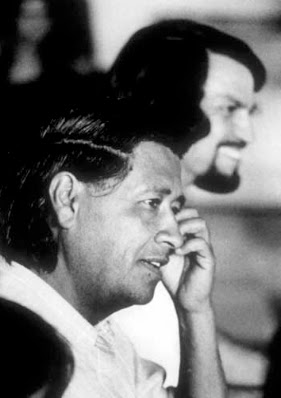 |
| Chavez and author Campbell ,1972. |
Let us be clear. Chavez was religious, but he was not a saint. Neither were the growers, their Teamster collaborators, nor corporate agribusiness saints. Celebrations should not be about hero worship or uncritical praise, nor should we ignore the present oppression of farm workers in the U.S.
What they did accomplish along with Philip Vera Cruz , Marshall Ganz, LeRoy Chatfield, Gil Padilla, Eliseo Medina and hundreds of others was to organize in California the first successful farm worker union against overwhelming odds.
Each of the prior attempts to organize a farm worker union had been destroyed by racism and corporate power.Chavez, Huerta, Philip Vera Cruz, and the others deliberately created a multiracial union; Mexican, Mexican American, Filipino, African-American, Dominican, Puerto Rican and Arab workers, among others, have been part of the UFW. This cross racial organizing was necessary in order to combat the prior divisions and exploitations of workers based upon race and language. Dividing the workers on racial and language lines, as well as immigration status always left the corporations the winners.
The violent assaults on the farmworkers and UFW from 1960- 1980 along with the current reconquest of power in the fields by corporate agriculture are examples of strategic racism, that is a system of racial oppression created and enforced because it benefits the over class- in this case corporate agriculture and farm owners. Strategic racism as described by Ian Haney López in Dog Whistle Politics: How Coded Racial Appeals Have Reinvented Racism & Wrecked the Middle Class ( 2014) is the development and implementation of racial practices because they benefit a group or a class.
Chávez chose to build a union that incorporated the strategies of social movements and community organizing. They allied the union with churches, students, and organized labor. The successful creation of the UFW changed the nature of labor organizing in the Southwest and contributed significantly to the growth of Latino politics in the U.S.
The UFW and Chavez and Huerta have always had severe critics from the Right and from corporate agriculture. Dolores Huerta has been banned from the history text books in Texas and Arizona as too radical. Both also have critics from the left.
Miriam Pawel in The Union of Their Dreams: Power, Hope, and Struggle in Cesar Chavez’s Farm Worker Movement(2009) uses individualist, personality driven reporting to assert that Chavez himself organized “Witch hunts” to expel union staff who disagreed with his leadership. See Steve Early’s essay non Talking Union. http://talkingunion.wordpress.com/2011/05/17/a-union-of-their-dreams-becomes-a-nightmarehas-ufw-history-been-replayed-in-seiu/
What the left critics allege,
Frank Bardacke’s Trampling Out the Vintage: Cesar Chavez and the Two Souls of the United Farm Workers. (2011), Verso. is the view of a well- informed observer who worked in the lettuce fields near Salinas as is Lettuce Wars: Ten Years of Work and Struggle in the Fields of California (2012) by Bruce Neuberger. These books, along with Pawell’s have been reviewed in prior posts on Talking Union. See review here. http://talkingunion.wordpress.com/2011/05/17/its-a-long-way-from-delano-to-watsonville-a-review/
These books argue a peculiar point of view: they strongly and persistently imply that the current problems of exploitation of workers in farm labor was caused by the destructive behavior of Cesar Chavez, his instability, and his ego - not by corporate agriculture; not by the racist state in rural California
On the other hand Cesar Chavez was given the U.S. Presidential Medal of Freedom posthumously in 1994, and Dolores Huerta ( A DSA Honorary Chair) was given the Medal of Freedom in 2012. Teaching materials and videos have been made recording their work. Schools, scholarships, foundations, organizing institutes and political organizations have been named after them. Few labor or Latino leaders have achieved such positive recognition.
I, for one, wonder why these authors and some other left writers see the major problem as the growth of what they see as a legend and myths about Cesar Chavez ( and recognition of the UFW) rather than the major problem being the role of corporate agriculture, exploitation and racism.
When writers take this view, they then need to explain why and how the parallel decline of the Teamsters, the ILGWU, the Auto Workers , the Steelworkers, the IAM, and other unions occurred during this same era. Compare the period of decline of 1977-1986 in the UFW to the complex battles of the Reuther Brothers to gain control and to keep control of the United Auto Workers, including the UAW’s relationship with the AFL-CIO . (1949-1970). The UAW went from 1.5 million members in 1979 to 390,000 in 2010, and the United Steelworkers and other unions suffered similar declines.
It doesn’t require a theory of emotional instability and personal interventions to explain that the smaller, less established, less well funded union – the UFW- suffered dramatic declines from racial oppression and the brutal assault on the union in the fields of Texas, Arizona and California.
The above critics under play the role of the corporate assault on unions, and in particular the assault on a union led by Mexican American leaders. This was, after all, the era when Ronald Reagan came to power in California along with the organization of the forces that came to be called neo-liberalism. It was also a time of consolidation of racial power in agriculture.
Marshall Ganz, who was a leader in the union and a participant in the internal struggles, tells a more complex and more complete story in his book, Why David Sometimes Wins. (2009) See the review in Talking Union http://talkingunion.wordpress.com/2009/10/16/why-david-sometimes-wins-marshall-ganz/
This isn’t to say that Chavez, Huerta and many on the UFW Executive Board did not have shortcomings. They did. Ganz describes several of these in his book and in interviews he participated in for the new book, From the Jaws of Victory by Matt Garcia (2012). Ganz provide some well researched and insightful observations on the dynamics of a union trying to transition from a movement to a union- or to something else. This analysis is helpful to organizers trying to build unions.
There were conflicts and internal contradictions. Not many movements last for even ten years let alone thirty. In addition to the assault from corporate agriculture, the Republican Party, Ronald Reagan, neoliberalism and racism, the UFW was confronted with internal union struggles for democracy, an intra union assault by the Teamsters, and with the tumultuous and disruptive politics on the left in the 60’s and 70’s.
In my opinion, Bardacke, Pawell, and Neuberger under analyze the nature of the racial state and the interaction of racial and economic oppression in the fields. And, these critics significantly failed to see the they dynamics of the struggle for Chicano/Mexican American self determination within the UFW.
The role of racism, and the individual reactions to systemic structural racial oppression are complex and vary in part based upon the differences in experiences of the participants. As the Chicano movement argued at its core- the experiences of U.S. born and reared Mexican Americans and Chicanos were different than the experiences and the perceptions of racism of Mexican immigrants, both documented and undocumented. There are a diversity of racisms and a diversity in the manner in which workers learn to respond to oppression. Chicanos and Mexican Americans grew up, were educated, and worked in an internal colony. Their schools, their unions, and their political experiences were structured along racial lines. They learned colonized structures. The authors do not sufficiently acknowledge the struggle of the UFW and the Chicano Movement in breaking this colonial legacy.
Marshall Ganz in Why David Sometimes Wins, does a better job of describing the internal dynamics of UFW organizing- after all he was there. He describes some of the racial fault lines of farm worker organizing. Ganz was the director of organizing for the UFW in Salinas and a long time member of the UFW executive board.
Chavez knew well some of the failings of unions in the 1960’s, including the problems of a growing internal bureaucracy, but the UFW in the 1980’s was not able to create a viable democratic union movement. Marshall Ganz argues that Chavez deconstructed the organizational strength of the UFW in the 1979 -1981 period in an effort to keep personal control of the union. (Ganz, p. 247 )
The critics who blame individuals for the union’s decline also miss the important rise of Latino politics in the Southwest today. Chavez and the UFW played a significant role by training generations of future leaders as organizers as is well described in Randy Shaw’s, Beyond the Fields: Cesar Chavez, the UFW, and the Struggle for Justice in the 21st. Century. The UFW was a place where hundreds learned organizing skills, politics, discipline, and how to work in multi racial movement politics – skills needed by many on the left. Today hundreds of union and community leaders, particularly in California are veterans, trained in for the long distance struggle of the UFW.
The Current Situation – Strategic Racism
The movement led by Cesar Chavez , Dolores Huerta and others created a union and reduced the oppression of farm workers for a time. Workers learned to not accept poor jobs, poor pay, unsafe working conditions as natural or inevitable. Then the corporations and the Right Wing forces adapted their strategies of oppression.
The assault on the UFW and the current reconquest of power in the fields are examples of strategic racism, that is a system of racial oppression created and enforced because it benefits the over class- in this case corporate agriculture and farm owners. The current renewed oppression is a product of strategic racism including a complex structure of institutions and individuals from police and sheriffs, to immigration authorities and anti immigrant activists, and elected officials and their support networks. These groups foster and promote inter racial conflict, job competition, and anti union organizing, as strategies to keep wages and benefits low and to promote their continuing white supremacy in rural California.
As the union was weakened by the Right Wing corporate assault, the conditions in the fields returned almost to their prior level of exploitation. The Agricultural Labor Relations Act had it budget cut by 30 % for years under Governor Deukmejian in 1982- 1986 along with other assaults on the law. Now, thousands of new immigrants harvest the crops and only a small percent are protected by union contracts. Over 200,000 indigenous workers, mostly from Mexico, harvest the crops in the Southwest. They are Mixtec, Zapotec, Triqui and more. They do have a few health, safety and wage protection by California labor laws, along with the right to farm worker collective bargaining elections and binding arbitration established significantly by the political activity of the current UFW – more than farm workers have in any other state. For a record of this period see David Bacon’s, The Right to Stay Home: How US Policy Drives Mexican Migration (2013).
Duane Campbell is a professor emeritus of bilingual multicultural education at California State University Sacramento, a union activist, and a former chair of Sacramento DSA. He was a volunteer for the UFW from 1972- 1977. He is the Director of the Mexican American Digital History project. www.MexicanAmericanDigitalHistory.org
BY
The Sacramento school district is pleading poverty in the face of demands for more student support and a pay raise to keep up with inflation. Teachers and school workers aren’t buying the district’s excuses — and now they’re on strike to change its priorities.

Teachers and school workers attend a rally in Sacramento, California. (Ian Lee / Jolie Media
Three years after a one-day strike, Sacramento teachers are back on the picket line — this time for however long it takes to win a new contract.
The 2019 demonstration was unique in that it was not over unaddressed workplace issues or to reach a deal on an upcoming contract. Instead, teachers walked out to defend their already agreed-upon contract, which the district reneged on after its signing. That one-day strike culminated in a rally at the district building where thousands of educators, school workers, and community supporters gathered to demand the district honor the contract.
Now, almost three years later, teachers have walked out again — but this time they don’t know when they’re going back. Sacramento teachers are on an open-ended strike to demand pay that reflects the cost of living under inflation, more support for students, and the preservation of their health care plan.
The Sacramento City Teachers Association (SCTA) announced the strike date at a rally last week attended by an estimated twenty-five hundred people, including teachers, school staff, and supporters. Among them was Sacramento City Council Representative and Democratic Socialists of America (DSA) member Katie Valenzuela.
“The district’s messaging — implying that teachers are putting students at risk by striking — is disgusting.” Valenzuela, who previously worked in education policy, told Jacobin. “No one cares more [about students] than the school workers.”
Roughly eighteen hundred classified school staff — including bus drivers, cafeteria workers, yard monitors, and custodians — represented by the Service Employees International Union (SEIU) Local 1021 are also striking.
Olivia Minor has worked transportation services in Sacramento City Unified School District’s (SCUSD) for ten years — nine as a bus driver before getting promoted to dispatcher last year. Her kids also attend SCUSD schools. When asked about her working conditions she told Jacobin, “Things are getting out of control. I have to call more and more parents to say their bus route is getting canceled because there isn’t enough staffing.”
According to Minor, 25 percent of the district’s drivers have left over the past eighteen months. “Given all the requirements and restrictions to be a driver — including [monitoring] the medication someone takes — it’s such a stressful job for not enough pay.”
The school workers’ contract expired in June of 2020, but the district has not responded to proposals made in bargaining back in October, according to the union. The union also claims that requests to bargain throughout the past weekend have been ignored. Instead the district offered a bargaining date of March 30 — which will be six days into the strike.
Striking teachers and school workers on the picket line in Sacramento, California. (Ian Lee / Jolie Media)
On Tuesday, the United Public Employees (UPE), representing principals, vice principals, and other administrators in Sacramento schools, sent out a letter claiming that its members have “lost confidence in the district’s ability to provide effective leadership.” The letter includes a survey that shows more than 70 percent of its members believe the union should take a vote of no confidence in the superintendent Jorge Aguilar, and that more than 40 percent of UPE members support the SCTA strike.
Aguilar recently received a raise of $34,126, earning him a total salary of $414,818 — at a time when the district is pleading poverty when teachers demand equitable pay. Since Aguilar became superintendent of SCUSD in 2017, SCTA has filed eighteen unfair labor practice charges against the district.
Nate Starace, who has been teaching at McClatchy High School for almost twenty years, says the letter bodes well for SCTA. In addition to the encouraging support from admin — which has typically sided with the district on workplace issues — Starace says the fact-finding report has bolstered their case. The report, which was conducted under the the California Public Employment Relations Board after the district declared an impasse and whose findings were unanimously endorsed by SCTA, concluded that the district ought to provide employees with a retroactive across-the-board cost-of-living increase.
Belén Moreno, who is in her first year of teaching in SCUSD, explained why she is walking off the job despite not having been in the district for long:
My students and my coworkers have inspired me. My students deserve the very best from their teachers which means their teachers have to be treated like humans. A stronger contract would provide us with enough security — a fair salary that reflects the market — to allow me to catch my breath and refocus, spend more time on teaching than figuring out how to live on month-to-month pay, and attract more qualified teachers to a district that is suffering from a shortage.
https://jacobinmag.com/2022/03/sacramento-city-teachers-association-strike-fair-pay-student-support


