Showing posts with label Dr. Martin Luther King Jr.. Show all posts

Thursday, January 11, 2024

Martin Luther King Jr. - Video Collection


Martin Luther King – a Video Selection 1954 – 1968


Portside


Martin Luther King's speeches from 1954's Montgomery Bus Boycott to the 1968 Memphis Sanitation Strike. Compiled by Abdul Alkalimat, Prof Emeritus Dept of African American Studies and School of Information Sciences, Univ of Illinois, Urbana-Champaign


https://portside.org/2024-01-11/martin-luther-king-video-selection-1954-1968?


 Excellent videos.
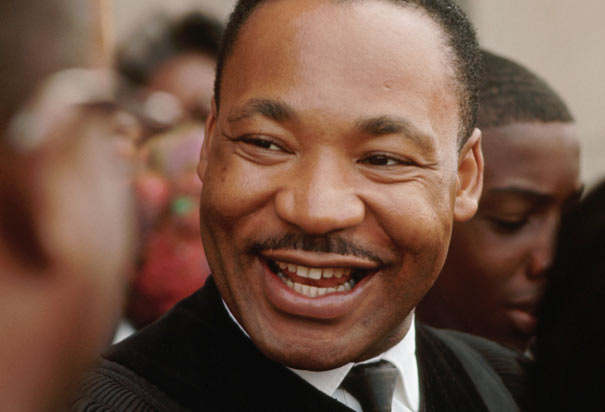
  

Saturday, January 14, 2023

Martin. Luther King Jr. Remembrance


Martin Luther King : Remembrance 

By Jamelle Bouie

NYT Opinion Columnist

The way most Americans talk about the Rev. Dr. Martin Luther King Jr., more than 50 years after his assassination, you might think that he gave exactly one speech — on Aug. 28, 1963, in Washington — and spoke exclusively about racial harmony and his oft-mentioned dream of integration.

But King, of course, is a more complicated figure than his sanctified image would suggest, and his body of work — his writings, speeches and interviews — is deeper and more wide-ranging than most Americans might appreciate. With our annual celebration of King’s life on the immediate horizon, I thought it would be worthwhile to look at one of his lesser-known, although by no means obscure, speeches, one in which he discusses the struggle for global peace.

Our loyalties must transcend our race, our tribe, our class and our nation; and this means we must develop a world perspective. No individual can live alone; no nation can live alone, and as long as we try, the more we are going to have war in this world.

“We must either learn to live together as brothers,” he says, “or we are all going to perish together as fools.”

This sets up the main message of the sermon, which is that all life is interrelated and interconnected. “We are all caught in an inescapable network of mutuality, tied to a single garment of destiny,” King says. “Whatever affects one directly, affects all indirectly. We are made to live together because of the interrelated structure of reality.”

This isn’t an idle call for personal decency; it is a reminder that in pursuit of justice, how we relate to each other in our means will affect our eventual ends.

“We will never have peace in this world,” says King, “until men everywhere recognize that ends are not cut off from means, because the means represent the ideal in the making, and the end in process, and ultimately you can’t reach good ends through evil means, because the means represent the seed and the end represents the tree.”

Nonetheless, King concludes his sermon by reaffirming the dream of his 1963 speech, that “every man will respect the dignity and worth of human personality,” that “the empty stomachs of Mississippi will be filled,” that “men will beat their swords into plowshares” and “justice will roll down like water.”

I think that this is among King’s most powerful sermons, both rhetorically and in the radical humanity of its message. And although he is speaking to questions of war and peace that may not be as acute to Americans in 2023 as they were to Americans in 1967, I think the larger message of obligation and interconnectedness is as relevant today as ever.

Our problems are global problems: a rising tide of chauvinism and authoritarianism; corruption that touches and distorts representative institutions around the world; and, of course, climate change. King’s observation that for any of us to do anything we must rely on the work and labor of someone halfway around the world — “You go into the kitchen to drink your coffee for the morning, and that’s poured into your cup by a South American” — is truer now than it was then, and demands that we recognize the fact, not for self-flagellation but for solidarity.

To connect to laborers around the world, to see that their struggles relate to ours and ours relate to theirs, is to begin to forge the “network of mutuality” that we will need to tackle our global problems as well as to confront the obstacles to our collective liberation from domination and hierarchy.

Most Americans do not think of Martin Luther King Jr. as a democratic theorist, but he is exactly that. And here, in this sermon, he makes clear that what a peaceful and equal society demands — that is, what a truly democratic society demands — is our mutual recognition of each other, here and everywhere.


https://www.nytimes.com/2023/01/14/opinion/martin-luther-king-jr-speech.html?


 building on the democratic socialists tradition, 


Saturday, January 13, 2018

New Poor People's Campaign

In Celebration of the Life and Contributions of Dr. Martin Luther King Jr.
The new Poor People’s Campaign: A National Call for Moral Revival is an outgrowth of Rev. William J. Barber II’s “Forward Together, Not One Step Back”/ Moral Monday campaigns that confronted the conservative North Carolina legislature during 2013- 2016 and became a model for similar campaigns in several other states.   The new Poor People’s campaign was organized nationally in 2017.  The campaign website provides a good description of the progressive principles on which it is based.  The following history of the 1968 Poor People’s Campaign is from their website – edited for length. - 

Dr. King’s Vision: The Poor People’s Campaign of 1967-68

slack-imgs.jpg
Why a Poor People’s Campaign?
Just a year before his assassination, at a Southern Christian Leadership Conference staff retreat in May 1967, Rev. Dr. Martin Luther King, Jr. said:
I think it is necessary for us to realize that we have moved from the era of civil rights to the era of human rights…[W]hen we see that there must be a radical redistribution of economic and political power, then we see that for the last twelve years we have been in a reform movement…That after Selma and the Voting Rights Bill, we moved into a new era, which must be an era of revolution…In short, we have moved into an era where we are called upon to raise certain basic questions about the whole society.
Later that year, in December 1967, Rev. Dr. King announced the plan to bring together poor people from across the country for a new march on Washington. This march was to demand better jobs, better homes, better education—better lives than the ones they were living. Rev. Dr. Ralph Abernathy explained that the intention of the Poor People’s Campaign of 1968 was to “dramatize the plight of America’s poor of all races and make very clear that they are sick and tired of waiting for a better life.” Rev. Dr. King proposed;
If you are, let’s say, from rural Mississippi, and have never had medical attention, and your children are undernourished and unhealthy, you can take those little children into the Washington hospitals and stay with them there until the medical workers cope with their needs, and in showing it your children you will have shown this country a sight that will make it stop in its busy tracks and think hard about what it has done.

Friday, January 16, 2015

Saturday, January 18, 2014

Martin Luther King Jr. Economic Justice and Workers' Rights

by Thomas F. Jackson
In 1968, a united black community in Memphis stepped forward to support 1,300 municipal sanitation workers as they demanded higher wages, union recognition, and respect for black personhood embodied in the slogan “I Am a Man!” Memphis’s black women organized tenant and welfare unions, discovering pervasive hunger among the city’s poor and black children. They demanded rights to food and medical care from a city and medical establishment blind to their existence.
That same month, March 1968, 100 grassroots organizations met in Atlanta to support Martin Luther King’s dream of a poor people’s march on Washington. They pressed concrete demands for economic justice under the slogan “Jobs or Income Now!” King celebrated the “determination by poor people of all colors” to win their human rights. “Established powers of rich America have deliberately exploited poor people by isolating them in ethnic, nationality, religious and racial groups,” the delegates declared.

Wednesday, January 16, 2013

Martin Luther King Jr. and Economic Justice


Martin Luther King, Economic Justice, Workers’ Rights,
and Multiracial Democracy
by Thomas Jackson
In 1968, a united black community in Memphis stepped forward to support 1,300
municipal sanitation workers as they demanded higher wages, union recognition, and respect for
black personhood embodied in the slogan “I Am a Man!” Memphis’s black women organized tenant
and welfare unions, discovering pervasive hunger among the city’s poor and black children. They
demanded rights to food and medical care from a city and medical establishment blind to their
existence. That same month, March 1968, 100 grassroots organizations met in Atlanta to support
Martin Luther King’s dream of a poor people’s march on Washington. They pressed concrete demands for economic justice under the slogan “Jobs or Income Now!” King celebrated the “determination by poor people of all colors” to win their human rights. “Established powers of rich America have deliberately exploited poor people by isolating them in ethnic, nationality, religious and racial groups,” the delegates declared.
So when King came to Memphis to support the strike, a local labor and community struggle became intertwined with his dream of mobilizing a national coalition strong enough to reorient national priorities from imperial war in Vietnam to domestic reconstruction, especially in America’s riot-torn cities. To non-poor Americans, King called for a “revolution of values,” a move from self-seeking to service, from property rights to human rights.
King’s assassination—and the urban revolts that followed—led to a local Memphis settlement that furthered the cause of public employee unionism. The Poor People’s March nonviolently won small concessions in the national food stamp program. But reporters covered the bickering and squalor in the poor people’s tent city, rather than the movement’s detailed demands for waging a real war on poverty. Marchers wanted guaranteed public employment when the private sector failed, a raise in the federal minimum wage, a national income floor for all families, and a national commitment to reconstruct cities blighted by corporate disinvestment and white flight. And they wanted poor people’s representation in urban renewal and social service programs that had customarily benefited only businesses or the middle class. King’s dreams reverberated back in the movements that had risen him up.

Sunday, January 15, 2012

Remember Dr. Martin Luther King Jr.


As a part of the King Holiday efforts, Tavis Smiley moderated a conversation on solutions for restoring America's prosperity. Topics included the white paper from Indiana University's School of Public and Environmental Affairs (SPEA), released the previous day, titled At Risk: America's Poor During and After the Great Recession, which reveals the "new poor" and how the face of poverty in America has changed.


"Remaking America: From Poverty to Prosperity", was held at George Washington University's Lisner Auditorium,.
2 hours, 37 minutes

Here: http://www.pbs.org/wnet/tavissmiley/interviews/remaking-america-panel-discussion-part-1/
 
Creative Commons License
This work is licensed under a Creative Commons Attribution-NonCommercial 3.0 Unported License.