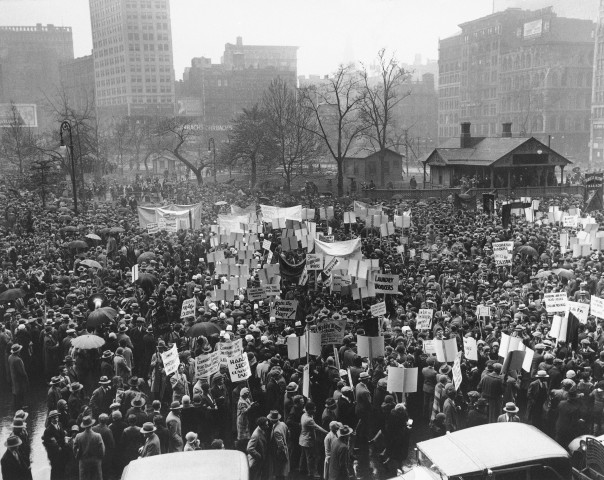
On May 1, 1886, hundreds of thousands of railroad, mine, and factory workers in the United States put their livelihoods on the line and participated in a national strike to demand an eight-hour workday. They were attacked by strikebreakers and police, but their uprising led to the creation of a holiday to honor workers—May Day—now known as International Workers Memorial Day in many countries around the world.
These working men and women also achieved their immediate demand: a standard workday limited to eight hours. And while it took several more decades of struggle, the U.S. labor movement eventually won a much bigger victory: the legal right to form unions and collectively negotiate with their employers.
Today, this right is under attack in the face of some employers’ and lawmakers’ successful efforts to undercut unions through legal restrictions, retaliation, and intimidation. Indeed, only a small share of the U.S. workforce retains the right to consistently negotiate binding contracts.
Yet collective bargaining remains workers’ best weapon to fix an out-of-balance economy. According to the International Monetary Fund, the decline in unionization in the United States and many other countries over the past few decades is directly associated with an increase in the share of national income going to the top 10 percent of the population. Most CEOs are free to negotiate their own salaries and bonuses. Working people deserve the same freedom to engage in negotiations over how they will be compensated for their hard work. |