Reclaim School Reform
The Nation
One of the greatest challenges facing American education today is a fantasy, spun by billionaire-funded “think tanks” and often repeated uncritically by
politicians and pundits, that our schools are failing, that teachers are shirking their responsibilities and that unions are
the root of the problem. Unfortunately, the peddlers of these distortions have held the microphone for so long that the word “reform” is now associated with the crudest assaults on the very infrastructure of public education.
It’s not that reform isn’t called for. Schools are beset with difficulties, mostly born of the inequalities rampant in the larger society. But, as ought to be obvious, education reform must be in the public interest—on behalf of public schools and the children who attend them—rather than private interests, furthering “the corporate agenda for public schools, which disregards our voices and attempts to impose a system of winners and losers,” to quote the mission statement of a new coalition of teachers and their unions, along with parent, student, religious and community groups. This coalition has set itself the task of nothing less than reclaiming “the promise of public education as our nation’s gateway to democracy and racial and economic justice.”
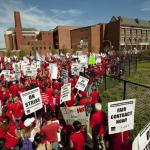
Backed by the American Federation of Teachers and the National Education Association, as well as national groups like the League of United Latin American Citizens and local organizations like the Philadelphia Student Union and the Boston Youth Organizing Project, this coalition effort—beginning with a national day of action on December 9—picks up the themes of the Chicago Teachers Union strike of 2012, which saw educators and parents unite against school closings. It highlights concerns about resources and classroom energy being diverted to standardized testing instead of kids, concerns that have become a focus of the New York State United Teachers. And it embraces the message of Diane Ravitch, former assistant secretary of education, who argues that the right response to much of what ails public education is a comprehensive anti-poverty agenda that addresses racial and economic inequality [1] by providing healthcare, food and nutrition, and preschool programs that enable teachers to teach and students to learn.


