Showing posts with label government. Show all posts

Sunday, October 05, 2025

Dealing with our national trauma.

The Trauma is real.   

The suffering is real.

We need to take care of ourselves - and support one another.


https://robertreich.substack.com/p/sunday-thought-a-national-trauma?


Tuesday, August 27, 2013

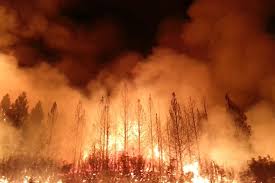
Support Firefighters in California


     This is a good time to thank all of those public workers – the Firefighters ( men and women) and their support crews who are fighting the fires in the California mountains. And, we should thank the public who fund the fire fighting efforts through their tax dollars. Currently the cost is $44 million. This is how government works.
Unfortunately a minority living in the mountains tend to be anti government and anti tax.  Well- someone needs to promote a democratic society in opposition to the political project of the Tea Party and Right Wing Congressmen and elected officials like Mc Clintock.
Update: Sacramento Bee
On Sunday, President Barack Obama called Gov. Jerry Brown and committed federal resources to help the state, according to a statement form the White House.
Following that telephone call, the Federal Emergency Management Agency announced today it had authorized federal funds to help fund the firefight. The agency said it would reimburse the state for as much as 75 percent of eligible costs, including expenses for field camps, materials and supplies and mobilization and demobilization efforts.

Read more here: http://blogs.sacbee.com/capitolalertlatest/2013/08/californias-firefighting-costs-hit-44-million.html#MTRecentEntries#storylink=cpy


Sunday, July 17, 2011

The Federal Deficit Crisis


Fact Sheet
Questions and Answers on the Federal Budget


Q: Why do we now have such a large federal budget deficit?

A:    1. Ten years of the Bush tax cuts enacted in 2001 and 2003 have accumulatively cost $2.5 trillion dollars in federal revenues.  The tax cuts primarily benefited wealthy individuals and corporations, turned the modest budget surpluses under the Clinton administration into growing deficits, but failed to promote economic growth. Tax revenues remain depressed as even fewer workers are employed at decent wages following the onset of the Great Recession.

2. The costs of the lengthy wars in Afghanistan and Iraq are being paid for by borrowed money rather than taxes.   See also; http://www.commondreams.org/view/2011/07/12-3 by James Gailbraith. 

3. When the great recession broke out following the financial collapse caused by reckless speculation on the housing derivative markets, the federal government borrowed more money to bail out banks and other financial institutions.  The Obama Administration also administered a modest but costly economic stimulus program that alleviated the worst consequences of the crisis, especially for state and local governments and for the unemployed.  However that stimulus funding has lapsed, threatening millions of vital jobs in education and other public services at the state and local levels.

Q: What is really at stake in the Budget Debate in DC?

A: A manufactured crisis over raising the debt ceiling is being used by Republicans and conservative Democrats to attack Social Security and Medicare, which are highly popular, cost efficient and vitally needed government “entitlement” programs. Our values as a nation are expressed in the national budget, in how we raise our national revenues and prioritize our spending. 

Q: What are Republicans Up To in DC?

A:  Republicans are holding the country hostage by refusing to raise the debt ceiling; they will only do so if the federal government caps domestic spending at a fixed percentage of GDP and passes a balanced budget amendment. Both of these policies would have disastrous long-term results for the U.S. economy.  The Republicans also refuse to raise taxes, even by permitting the last set of “temporary” Bush-era tax cuts to lapse.  Their real aim is to hamstring government from having any positive role in society.

The Republicans’ concern for the “deficit crisis” is hypocritical. Conservative policies of tax cuts for the rich and deficit-financed military expenditure are the real causes of our deficit problem, not excessive government spending on health, education, and child care. Nearly half of the total $14.2 trillion total debt owed by the United States government derive from loss in government revenue due to the Reagan and Bush tax cuts for the wealthy and corporations and by their administration’s huge increases in military spending.

Friday, April 08, 2011

Government shut down


Government Shutdown Looms as Congress Fails to Reach Budget Compromise
With the federal government on the verge of shutting down at midnight on Friday, budget negotiations intensified between President Obama, House Speaker John Boehner (R-OH), and Senate Majority Leader Harry Reid (D-NV) in the hopes of reaching an agreement on a substantial reduction in spending for the remainder of the 2011 fiscal year. The three leaders have held a series of meetings this week in the Oval Office with increasing urgency as the deadline draws ever nearer.
House Republicans, lead by their tea party contingent, seek $61 billion in cuts to the FY11 budget, a figure that is substantial in its own right but whose impact would be significantly magnified because the 2011 fiscal year is half over (effectively doubling the impact). The White House and Senate Democrats have reportedly countered with an offer of $33 billion in cuts. Already, Congress and the White House have cut $10 billion in FY11 as part of the series of temporary funding extensions known as continuing resolutions (CR) that kept the government operating while work continued on a final budget plan. Among those earlier reductions that have gone into effect are $891 million in cuts to education programs that completely eliminated funding for Striving Readers ($250 million), Even Start ($66 million), and the National Board for Professional Teaching Standards ($10 million) among other programs.
Indeed, House Republicans passed another one-week CR late this week in the event negotiations fail. But the price for the one-week extension is $12 billion in additional cuts to federal spending, including $391 million from education programs such as Education Technology State Grants ($100 million) and Teaching American History ($119 million). Such a CR has little chance of being approved by the Senate or president.
Complicating a final deal is the insistence of House Republicans that several policy changes be included in any funding compromise, notably eliminating funding for Planned Parenthood and language prohibiting the EPA from enforcing certain Clean Air and Clean Water Act rules.

Saturday, January 15, 2011

Reading Obama

Duane Campbell
            The book Reading Obama: Dreams, Hope, and the American Political Tradition, may well offer some significant insights into the political viewpoints of President Obama.   In addition, it is a prolonged essay concerning how the author sees the political philosophy of pragmatism and a history of how pragmatism has served in the U.S.
            I found the book delightful in a number of ways.  I particularly enjoyed Prof. Kloppenberg’s descriptions of the development of pragmatism as a political philosophy.    The book is as much an essay on pragmatism as it is a description of the Obama philosophy.  That is, the author is promoting intellectual pragmatism as a preferred philosophy and using the Obama experience as device to describe concrete implementation issues of pragmatism and the ascendance of pragmatism as a philosophy.
There are several interesting issues.  Can a scholar describe well the political philosophy of an important leader by reading books by the President and reading the transcripts of his speeches?   Is it far too early to be describing the philosophy of Barack Obama after only two years in office?
The  book describes the detailed and interesting debates on philosophy, pragmatism,  the role of  Dewey,  John Rawles,  Kuhn, and others, critical legal theory, communitarianism,  and the several major intellectual debates that were vigorous while Obama was at Harvard, and some of the debates today.  Kloppenberg does not  the examine a closely related question. An implied thesis of Reading Obama is that the intellectual fervor shaped Barack Obama, and now that he is President, these intellectual debates guide and influence public policy. 
            Certainly Barack Obama, as described by Kloppenberg, is a significant intellectual.  I am not satisfied with the device of describing a viewpoint held by one or another of Obama’s professors at Harvard and then asserting that Barack Obama learned and adopted this particular position., or the summary of a position taken by a professor in the Harvard Law Review while Obama was editor and assuming that Obama adopted this particular nuanced position.   This seems to me over interpretation. 

Thursday, March 01, 2007

Legislation seeks to take back the CSU

Capitol bid to rein in CSU execs
Legislation would add oversight of the state university system

Jim Doyle, Chronicle Staff Writer
Thursday, March 1, 2007
State lawmakers have introduced legislation calling for more governmental oversight of the California State University system, which has come under criticism after reports that some of its top executives were receiving hundreds of thousands of dollars in extra compensation without public disclosure.

The oversight plan, which includes adding two legislators or their appointees to the CSU Board of Trustees and requires that executive contracts be approved in public session, comes in response to The Chronicle's reports on special compensation packages for current and former executives of the nation's largest university system.

"This is an effort to earn back the public's trust," said state Assemblyman Anthony Portantino, D-La CaƱada Flintridge (Los Angeles County), during a news conference Wednesday at the Capitol in Sacramento. "The general public must have trust in the institutions of higher learning where we put our children."

Portantino, the bill's author, cited the newspaper's two-day series in July as the genesis of his legislation. The stories revealed that as much as $4 million in special perks and extra compensation has been paid to departing CSU officials during the past decade without public disclosure by the chancellor or Board of Trustees.

Beneficiaries included those who remain on the payroll while taking jobs elsewhere and others who receive hundreds of thousands of dollars in consulting contracts from the CSU after their retirement. For example, former executives Peter P. Smith of CSU Monterey Bay and CSU Executive Vice Chancellor David Spence took paid transitional leaves in 2005, a perk that enabled them to receive most of their six-figure salaries for a year after they left office and took six-figure jobs elsewhere.

The legislation, introduced last week as The California State University Reform, Trust and Responsibility Act, would authorize the appointment of two state legislators or their designees to the CSU Board of Trustees. The additional two members would be appointed by the state Senate and Assembly.

Clara Potes-Fellow, a CSU spokeswoman, said the university system has not yet taken a position on the bill.

Portantino, who chairs the Assembly Higher Education Committee, said the bill would restore confidence in the CSU by "giving the Legislature a voice on the Board of Trustees, open up future meetings on executive compensation and eliminate any suggestion of impropriety ..."

It would also give the governor and lieutenant governor -- who hold ex officio positions on the 25-member board -- seats on the board. Each could designate someone to attend CSU meetings on their behalf.

The bill calls for the trustees to approve all executive contracts in public session and reveal all benefits, not just salaries and housing. It also requires CSU executives who are paid for professorships to actually teach classes, and that their compensation could not exceed the amount a full-time professor in the CSU system would be paid for similar teaching duties.

"The priorities are upside down when a handful of top executives are receiving record raises at the same time that faculty are struggling to negotiate fair contracts and students are being hit with tuition increases," said Assemblywoman Julia Brownley, D-Santa Monica, a co-author of the bill. Brownley, who chairs the Assembly Budget Subcommittee on Education, served 12 years on a school board.

State Sen. Gloria Romero, D-Los Angeles, the majority leader and a CSU professor on leave, called the legislation a "very direct and clear message to the chancellor of this university ... the students, and the citizens who share their outrage. Quality education begins in the classroom, not the upper echelons of the ivory tower. The days of trustees operating in the dark of night, giving away additional perks to executives, are over. This is a sunshine bill."

Sen. Leland Yee, D-San Francisco, introduced a bill last month that also aims to compel CSU trustees to meet in public when discussing and deciding executive compensation issues.

Susan Meisenhelder, a CSU professor and statewide political action chairwoman of the California Faculty Association, said the university system's faculty union supports the bill because it will make it more difficult for CSU executives "to further pad their compensation."

She cited a provision of the bill that would require the California Post-Secondary Education Commission to track certain data and report regularly on state funds going toward instruction compared to administration in the CSU system. She said the faculty union has tracked some of these dollars and found that in recent years the percentage of state funds used to pay for CSU instruction has declined while the percentage for CSU administration has increased.

"This is a bill about good government. It's not a partisan bill," Portantino said.

E-mail Jim Doyle at jdoyle@sfchronicle.com.

http://sfgate.com/cgi-bin/article.cgi?f=/chronicle/archive/2007/03/01/BAGO7ODAAF1.DTL
 
Creative Commons License
This work is licensed under a Creative Commons Attribution-NonCommercial 3.0 Unported License.