Showing posts with label teaching. Show all posts

Saturday, June 06, 2026

Join the Effort to Protect Public Education and Democracy


Randi Weingarten, President of the American Federation of Teachers describes the problem well.

Why Do Authoritarians Fear Teachers?

Because We Teach Critical Thinking

Randi Weingarten, President, American Federation of Teachers. 2025. 

“Critical thinking is the heart of democracy, the muscle at the core that keeps democracy healthy and strong. We don’t tell our students who to vote for; we don’t tell our students what to believe. We teach them how to think for themselves, why democracy is important, and how they’re an important part of making it work and making it better. But rather than help teachers build a stronger America based on knowledge and truth and freedom of thought, fascists use fear, bullying, and culture wars to try to shut down teaching and democracy.

Ironically, there is one thing fascists and teachers agree on—that we cannot create a truly democratic, inclusive nation committed to opportunity for all without public schools. Fascists fight against public education because they want to control our minds, control our ideas, and control the future. And what do teachers do? We teach. It’s that simple. Class after class, year after year, we equip the next generation to think for themselves and preserve our nation’s precious bond between individual liberty, opportunity, and the common good.”

We Want Kids to Think—and Read—for Themselves

Excerpt from  Why Do Fascists Fear Teachers?

https://www.ahttps://www.aft.org/ae/spring2026/weingarten_wolfsonft.org/ae/spring2026/weingarten_wolfson


Read the book. Why Fascists Fear Teachers.  Public Education and The Future of Democracy. 2025

A project to organize and support efforts to Defend Democracy with a focus on public education is developing.  Watch this blog for more.  There is a place for you- dear reader. 

America’s colleges and universities are the “envy of the world,” driving economic growth and providing better lives for students and their families, said AFT President Randi Weingarten at a launch of the blueprint April 15 in Texas.

“But instead of investing in the next generation, the federal government is stripping hundreds of millions of dollars in research grants, attacking diversity, saddling millions of borrowers with student debt and abolishing minority-serving institutions—all in a cynical attempt to punish political enemies and control knowledge.”

The new policy platform, “A Blueprint for Strengthening and Transforming Higher Education,” details a vision where colleges and universities, not corporations, are treated as key forces in creating a functional democracy.


Teaching Democracy Through Critical Thinking, Civic Participation, and Democratic Engagement

Democracy depends upon an informed, thoughtful, and engaged citizenry. Public education plays a central role in preparing students not only for careers and personal success, but also for meaningful participation in democratic society.

Goal:  to assist teachers to shape their teaching toward preserving democracy.  To  encourage teachers to teach about and encourage democracy in our nation, state, and local institutions, including schools

To assist teachers  and faculty in resisting the increasing demands from the authoritarian right  that  right wing ideology be taught as truth or normal  in our schools. 

Educate yourselves because we will need all of your intelligence.” Antonio Gramsci.

.


Thursday, May 30, 2024

MAGA ATTACKS on Teachers and Schools


Show your solidarity with teachers in the face of Republican attacks on public education!


This week, the Utah Education Association, the state's largest teachers union, sued the state in hopes of shutting down a Republican-led voucher program that could reroute more than $82 million of taxpayer money away from public schools and Utah's students. The union president called it a "deliberate undermining of public schools." Before 2021, Utah ranked last in the country for its per-student spending. Now, it's second to last.2 

For decades, Republicans across the country have worked to decimate public education and villainize public school teachers. Now, their most extreme plan for public education is laid out in Project 2025, the MAGA agenda for a second Trump presidency. 

The Project 2025 manifesto has an entire section focused on reshaping—or, more accurately, dismantling—our public education system and has a plan to drain all of our resources to reroute them to private education, like what is happening in Utah. The plan includes eliminating the Department of Education, getting rid of teachers unions, ending federal funding, and gutting any programs that support equity and inclusion, even free school lunch programs and Head Start.3

For many communities across the country, teachers are wrapping up after another year of serving and educating our communities. Will you print out a few of these cards to thank the teachers in your life for all they do for your kids or your community? Taking a moment to write a note to thank them for all they do is an act of solidarity during a challenging time for public educators.

It's no surprise that Moms for Liberty, a far-right "parental group" best known for their support of book bans and opposing LGBTQ+ inclusion in schools, sits on the Project 2025 advisory board and were influential in drafting the educational policies within the Project 2025 proposal.4 While under the guise of protecting kids and family values, they aim to strip us of our freedoms, deny the truth of our history, and push their ultra-conservative agenda into every aspect of our lives. 

Authored by the far-right Heritage Foundation, backed by more than 100 conservative organizations, and funded by dark money, Project 2025 is a 920-page detailed presidential transition plan to consolidate power and force the MAGA agenda into every aspect of our lives. In addition to undermining public education, the agenda aims to eliminate Social Security and Medicare, roll back climate initiatives, revoke protections for LGBTQ+ people, and ban abortion.5 

This is the agenda Trump and Republican leaders will pursue if they seize power in this election. No wonder the stakes are so high. As we fight to defeat this MAGA threat in November, we also need to make sure American voters know about Project 2025 and all the unpopular, damaging policies it includes. And we need to do what we can to show solidarity with those who would be targeted the most—such as public school teachers who, day in and day out, make an important difference in the lives of our kids.

Together we can defend public education and the teachers who give so much to our kids and community. Start by thanking them for another year of teaching!

Thanks for all you do.

Sources:

1. "Utah teachers union sues over state's $82 million school voucher program," The Salt Lake Tribune, May 29, 2024
https://act.moveon.org/go/193597?t=6&akid=391408%2E22927824%2EQsn0IW 

2. "Utah has no plans to change lowest-in-nation education spending, officials say," The Salt Lake Tribune, January 28, 2024
https://act.moveon.org/go/193598?t=8&akid=391408%2E22927824%2EQsn0IW

3. "A guide to Project 2025, the extreme right-wing agenda for the next Republican administration," Media Matters, March 20, 2024
https://act.moveon.org/go/189537?t=10&akid=391408%2E22927824%2EQsn0IW

4. "Project 2025 Tapped Known Hate, Extremist Groups For Advisory Board," Accountable.US, May 20, 2024
https://act.moveon.org/go/193620?t=12&akid=391408%2E22927824%2EQsn0IW

5. "A guide to Project 2025, the extreme right-wing agenda for the next Republican administration," Media Matters, March 20, 2024
https://act.moveon.org/go/189537?t=14&akid=391408%2E22927824%2EQsn0IW

PAID FOR BY MOVEON POLITICAL ACTION, https://pol.moveon.org/. Not authorized by any candidate or candidate's committee. MoveOn Political Action - PO Box 96142, Washington, D.C. 20090-6142.


Thursday, June 22, 2023

Teacher Banned from Teaching About Racism

 In February, as part of Black History Month, a high school teacher in South Carolina had to stop using Ta-Nehisi Coates’ memoir “Between the World and Me” in a lesson plan about systemic racism — because teachers are prohibited from making students feel uncomfortable about their race or gender in the state. 

Students complained after Mary Wood, who teaches Advanced Placement Language Arts at Chapin High School in Chapin, South Carolina, included the book in a lesson intended to guide students through participating in civil debate, local news outlet The State first reported


Wood’s lesson plan was a part of preparing for Advanced Placement tests and involved watching two videos about systemic racism, reading Coates’ memoir and doing research with a variety of sources. Then, students were meant to write essays on their understanding of the book and make an argument about whether they agreed with Coates that systemic racism is a problem in the U.S. 

“This wasn’t one side or the other,” Wood, who has been teaching for 14 years, told HuffPost. “I wanted them to develop their own understanding.”

Students complained that the lesson made them feel ashamed to be white and were successful in blocking the section on systemic racism entirely. 

“Hearing (Wood’s) opinion and watching these videos made me feel uncomfortable,” one student said in their complaint. “I actually felt ashamed to be Caucasian. These videos portrayed an inaccurate description of life from past centuries that she is trying to resurface.”


In 2021, South Carolina Republicans included a provision in the state budget stipulating that taxpayer dollars may not be used to teach lessons suggesting that any race or sex is inherently “racist, sexist, or oppressive whether consciously or unconsciously” or that cause anyone to feel “guilt, anguish or any other form of psychological distress on account of his race or sex.” 

“If the goal is to undermine public education, they’re doing a good job of it,” Wood said of the lawmakers who passed the policy. “You cannot talk about glitter and rainbows and still get students to engage with differing viewpoints.”

Once the lesson, which Wood had taught the previous year without issue, was axed, she said she kept her head down and proceeded with an improvised lesson plan using AP tests from the past.

“I was mortified professionally and I felt my hands were tied,” she said. “I certainly didn’t want to use anything self-selected.”

“If the goal is to undermine public education, they’re doing a good job of it.”


Saturday, February 25, 2023

Who Wants to Teach in Florida?

Who Wants to Teach in Florida?: Gov. Ron DeSantis’s culture warmongering has helped produce the highest teacher vacancy rates in the country.

Wednesday, February 08, 2023

You have got to be carefully taught !


Stephen Rohde 
January 25, 2023
Truthdig
How U.S. history textbooks and prominent American universities justified slavery, perpetuated racial stereotypes and promoted white supremacy.

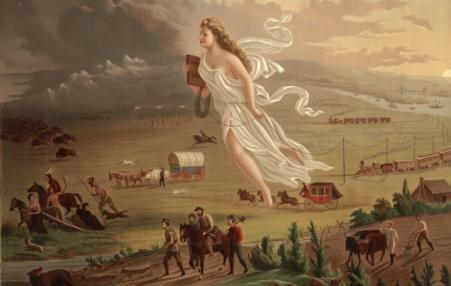
John Gast's 1872 painting "American Progress," seen as an allegory for Manifest Destiny and American westward expansion. The painting serves as the cover for Donald Yacovone's “Teaching White Supremacy: America’s Democratic Ordeal and the Forging of Our N, 


You’ve got to be taught to hate and fear

You’ve got to be taught from year to year

It’s got to be drummed in your dear little ear

You’ve got to be carefully taught

You’ve got to be taught to be afraid

Of people whose eyes are oddly made

And people whose skin is a diff’rent shade

You’ve got to be carefully taught

You’ve got to be taught before it’s too late

Before you are six or seven or eight

To hate all the people your relatives hate

You’ve got to be carefully taught

With these haunting words from the 1949 Broadway musical “South Pacific” by Richard Rodgers and Oscar Hammerstein II, Donald Yacovone opens his startling new book “Teaching White Supremacy: America’s Democratic Ordeal and the Forging of Our National Identity” (Pantheon). Equally revealing, and an important partner to Yacovone’s book, is Jessica Blatt’s “Race and the Making of American Political Science” (University of Pennsylvania). These impressive books describe how the institution of American education trained its teachers and taught its students to believe slavery was good for the enslaved, that Reconstruction was a disaster, that African Americans were innately inferior and that the destiny of the United States was to be ruled by the descendants of White Europeans.

These books would have been welcome whenever they appeared, but they take on added urgency today as Republicans in Congress and several state legislatures across the country actively seek to turn back the clock by passing new laws to erase history and reimpose  a white supremacist narrative in American education and by banning certain books and curriculums because they offer a thorough account of the ongoing struggle throughout American history to overcome racism, sexism, homophobia and bigotry.

On January 12,  the Florida Department of Education informed the College Board, which administers Advanced Placement exams, that Florida would not allow a new A. P. course on African American studies to be offered in its high schools, claiming the course is not “historically accurate,” “significantly lacks educational value” and violates state law.  Last year, Gov. Ron DeSantis, a Republican, signed legislation that restricted how racism and other aspects of history can be taught in schools and workplaces. The law’s sponsors called it the Stop WOKE Act. Among other things, the act prohibits instruction that could make students feel responsibility for or guilt about the past actions of other members of their race. The College Board said the course, a multiyear pilot program that has been used in 60 high schools across the country, including at least one in Florida, is multidisciplinary and addresses not just history but civil rights, politics, literature, the arts and geography.

Florida law prohibits schools from teaching “critical race theory,” an academic framework for understanding racism in the United States, and does not allow educators to teach The 1619 Project, a classroom program developed by The New York Times that seeks to reframe the country’s history by putting the consequences of slavery and the contributions of Black Americans at the center of the national narrative.  Henry Louis Gates Jr., a former chair of Harvard’s Department of African and African American Studies and director of the Hutchins Center for African & African American Research, who was a consultant to the College Board as it developed the A.P. course, said last year that he hoped the curriculum would not shy away from such topics that spur debate, not as a framework, but as a way of studying different theories of the African American experience.

Thursday, October 20, 2022

Teaching about Race and Racism


Ursula Wolfe-Rocca and Christie Nold 
August 2, 2022
The Heckinger Report
Our classrooms are not sites of demoralized children who hate themselves and their country. Students are hungry for explanations — real explanations — for the world they have inherited.


The wave of state legislation and school board policies restricting what educators can and can’t teach shows no signs of slowing. These efforts rely on a narrative that learning about the history of racism and white supremacy harms students — particularly white students, leaving them feeling guilty and ashamed. We emphatically reject this narrative; it in no way matches our combined 30-plus years of experience as public school teachers.

It is not teaching about racism that endangers our students, but the curricular gag-rules that seek to perpetuate their miseducation.

Our use of the term “miseducation” comes from the 1933 Carter G. Woodson text, “The Mis-education of the Negro.” Woodson argued that the struggle for education was not just about access, but also curricula. How could formal education be liberatory for a child if “the inferiority of the Negro is drilled into him in almost every class he enters and in almost every book he studies?” Woodson was also clear that racist curricula affect Black and white children. To those who claimed children were too young to confront the history of racism in the classroom, Woodson replied:

These misguided teachers ignore the fact that the race question is being brought before Black and white children daily in their homes, in the streets, through the press and on the rostrum. How, then, can the school ignore the duty of teaching the truth while these other agencies are playing up falsehood?

We are white women, who teach mostly white kids, in two of the whitest states — Oregon and Vermont — in the country. Woodson’s argument — that all children deserve a curriculum that challenges the lie of white supremacy — has deeply shaped how we view our role as educators. Our identities and educational genealogies have made us particularly alert to the way white children have become props in the recent onslaught of miseducation policies. 

Woodson asserted that the prevailing narratives in too many U.S. schools harmed Black and white children, albeit differently. Both groups were inculcated with scripts of Black racial inferiority and white racial superiority. Two sides of the same old and ugly lie.

To avoid confronting this lie, the narrative of history lessons making white kids feel guilty has taken hold. Many of the recent “anti-CRT” bills ban any curricula that could lead an individual to “feel discomfort, guilt, anguish or another form of psychological distress solely because of the individual’s race or sex.” A Heritage Foundation commentary endorsing the laws asked, “How would you feel if your child came home from school and said her teacher had told her that everything that happens in the world is ‘racist’ and that she’s part of the problem because of the color of her skin?” The universal language here only thinly veils the assumed white subject for whom this concern is whipped up.

Former Secretary of State Condoleezza Rice was more explicit in an appearance last fall on ABC’s “The View”:

"One of the worries that I have about the way that we’re talking about race is that it . . . seems so big that somehow white people now have to feel guilty for everything that happened in the past. . . . What we don’t do is make seven- and 10-year-olds feel that they are somehow bad people because of the color of their skin."

We have been among those amplifying the now-common retort: “If kids of color are old enough to experience racism, white kids are old enough to learn about it.” But this formulation has limitations.

Early in their encounters with the history of systemic oppression, white students sometimes express denial, disbelief, anger and yes, guilt. But the right would have you believe that those feelings are the end of the story rather than its beginning. We are lucky to work with students over the course of a school year or longer. Our lessons are not one-offs. There is space and time for students’ initial reactions to be named, understood and analyzed — and often transformed. In our experience, for many white students, learning about systemic racism is in fact not harmful, but generative.


When students express denial or disbelief, we assist them in finding the resources they need to verify facts. We might ask, “I wonder why some of us struggled to believe this was true? Any ideas?” Through discussion, it is possible for students to understand that what they have been taught — and not taught — shapes their feelings about what they are learning now. We can also introduce a key idea for all critical consumers of information: Knowledge is contested. There are dominant narratives and counternarratives, state-sanctioned history (i.e., textbooks) and marginalized histories.

When students understand that there is a struggle to define the past, they are less likely to deny history and more likely to investigate with curiosity why they know what they know and how they came to know it. When students respond with anger — “How could this have happened?” “Why did I never know about this before now?” — we again lean on questions. We might ask, “How would the world be different if more children were learning this history earlier and more fully?” and “So now that you know this history, what do you want to do with it?”

When young white people display signs of guilt or shame — we have had students say things like “white people suck” or “I am embarrassed to be white” — our job is to help them process those feelings and foster a healthier sense of self and identity.

In a recent podcast, the writer Clint Smith suggested that it is possible to reckon with the truth without allowing it to define your present beliefs. “You are not defined by the decisions that your great-great-grandfather made,” he said. “What would it look like to say, ‘My great-great-grandfather fought in this [Civil] War for a cause that runs counter to everything that I believe in today. And my family is not defined by that’?”

Not only can this create a healthy separation between the actions of our ancestors and ourselves, but it also invites us to look for models of white people throughout history who acted for justice. These examples help students imagine and build an identity untethered from the perpetuation of racism.

If one were to believe Fox News, a curriculum like ours — one that regularly and explicitly examines white supremacy’s manifestations, past and present — is a recipe for demoralized children who hate themselves and their country. But our classrooms are not sites of doom and gloom. Students are hungry for explanations — real explanations — for the world they have inherited, and in our experience, they often feel relieved to gain insight into why things are the way they are. Moreover, our curriculum emphasizes the varied, powerful and creative ways that people have resisted oppression and built justice. We are careful to offer students models of action, examples of people just like them who have tried to change the world and sometimes succeeded. No, our classrooms are not incubators of cynicism. They are brimming with curiosity, conversation and, yes, joy.

To defeat the efforts to miseducate our children, we will all need to do our part: teachers, school administrators, school boards, labor unions, professional and community organizations, elected officials, parents, caregivers and students. We need to testify at school board meetings and state department of education hearings, write letters to the editor and op-eds and advocate to unseat the elected officials who are the architects of these attacks. And for those of us who are white, we need to know that when we emphatically reject the narrative of the guilty white child by telling our stories, the right’s lie will be obvious: Their concern is not that children will feel bad when learning about the fight for racial justice, but that children will feel good. Young white people with the capacity to act in solidarity with movements for justice are dangerous to white supremacy and its guardians. Those are the real stakes — not white children feeling guilty, but white children armed with truth, history and a righteous desire to work with others to change the world.

Christie Nold (she/her) has been teaching in Vermont public schools for eight years. Prior to her experience in public education she worked at Shelburne Farms, an organization dedicated to education for sustainability, and taught in a village school in Nedryhailiv, Ukraine.

Ursula Wolfe-Rocca (she/her) taught high school in a suburb of Portland, Oregon for 20 years. She is an organizer and writer with the Zinn Education Project and on the editorial board of “Rethinking Schools” magazine.

This story about critical race theory was produced by The Hechinger Report, a nonprofit, independent news organization focused on inequality and innovation in education. Sign up for Hechinger’s newsletter.

Wednesday, February 16, 2022

TEACHING FOR RACIAL JUSTICE


Rethinking Schools Editors 
August 15, 2021
Rethinking Schools
These laws require educators to lie to students through omission, euphemism, and sanitized accounts of the past and present. Wherever possible, educators should challenge them and, if necessary, defy them.


As of the middle of August, more than two dozen states have introduced — and 11 states have enacted — bills or rules to restrict the teaching of history and contemporary social realities. Right-wing activists have mounted similar attacks at school board meetings throughout the country. This stunning barrage of legislation and policies aims to ban teaching critical race theory (CRT), and supposedly “divisive topics” in the curriculum.

But the real target is the truth.

The anti-CRT campaign echoes the Big Lie that Trump won the election. It is the curricular counterpart to the wave of voter suppression laws promoted by the same far-right political forces that have tried to rewrite the history of the 2020 election and cover up the attempted coup on Jan. 6. Although the particular framing of these laws and penalties varies across states, they are all part of a coordinated campaign of repression meant to enforce a single emphatic message to educators: Shut up or else. The Republican sponsors of these measures fear that in the wake of last summer’s massive Black Lives Matter protests, the anti-racist debates and discussions that have permeated society are seeping into the classroom. With scary buzzwords and misleading framing, both right-wing and corporate media have amplified and spread the perception that classroom teachers are poisoning the minds of children, inviting a wave of harassment against them.

Some provisions of these laws are so sweeping one can imagine teachers finding it virtually impossible to follow the law even if they wanted to. In Tennessee, teachers are prohibited from even including any material in the curriculum that promotes “division between, or resentment of, a race, sex, religion, creed, nonviolent political affiliation, social class, or class of people.” This law would make it impossible to teach Thomas Jefferson’s letter proposing colonization of formerly enslaved people outside the United States or Andrew Jackson’s justification of the Indian Removal Act or Franklin Roosevelt’s “second bill of rights” speech. The penalties for violating these teaching bans range from fines levied against individual teachers and revocation of their teaching licenses, to withholding state funding and rescinding accreditation of school districts, to the threat of lawsuits by parents.

City Journal article by Christopher Rufo (the architect of the current right-wing culture war against critical race theory) placed the blame for more than 100 consecutive days of Black Lives Matter protests in Portland, Oregon, at the feet of the city’s schoolteachers, naming several individuals and inciting a doxing campaign against them. After the Zinn Education Project (coordinated by Rethinking Schools and Teaching for Change) invited educators across the country to “pledge to teach the truth” (“We, the undersigned educators, refuse to lie to young people about U.S. history and current events”), the right-wing website The Daily Wire published the names of the roughly 5,000 educators who signed the pledge, and organized this hit list by state and community. Since then, we have heard from dozens of teachers who have received hate mail, online harassment, complaints to their administrators, and calls for their dismissal. A longtime teacher in Tennessee was fired in June after teaching two lessons about racism: a Ta-Nehisi Coates essay and Kyla Jenee Lacey’s spoken word poem “White Privilege.” We fear and expect that he will not be the last casualty of this war on anti-racist teaching.

Educators have a duty to teach young people uncomfortable truths about the past and present, including the histories, legacies, and current manifestations of systemic oppression. But the Right gets it backward when they paint educators as agents of indoctrination. The demand that our classrooms become sites of discussion and inquiry about racism, sexism, and the long struggle for freedom does not come from the top down. Anyone who has spent time with young people knows that interest is organic, urgent, and comes from students themselves. Young people are not blank slates; they live in the real world. They see the viral videos of the murder of Black people and the anti-Asian racism and violence that escalated in sickening relationship to the pandemic. They see the segregation in their own schools. They see how COVID infections have disproportionately decimated Black and Brown communities. They see these “savage inequalities” in every corner of their daily lives, and they want to know “Why is it like this? How did we get here?”

Saturday, February 05, 2022

Freedom to Teach

Freedom to Teach


Across the U.S., educators are being censored for broaching controversial topics. Since January 2021, researcher Jeffrey Sachs says, 35 states have introduced 137 bills limiting what schools can teach with regard to race, American history, politics, sexual orientation and gender identity. 

Sachs has been tracking this legislation for PEN America, a writers organization dedicated to free speech. He says the recent flurry of legislation has created a "minefield" for educators trying to figure out how to teach topics such as slavery, Jim Crow laws or the Holocaust. One proposed law in South Carolina, for instance, prohibits teachers from discussing any topic that creates "discomfort, guilt or anguish" on the basis of political belief. 

"That means that a teacher would have to be very, very careful about how they discuss something like, let's say, fascism or racism or antisemitism," Sachs says. "These are political beliefs, and it means that teachers are going to have to second-guess whether they can describe that political belief in as forthright and honest a way as we wish for fear of falling afoul of this bill."

Why education was a top voter priority this election

EDUCATION 

Why education was a top voter priority this election

Critical race theory, an academic approach that examines how race and racism function in American institutions, has inspired a backlash in conservative circles across the United States. In one of his first acts in office, Glenn Youngkin, the Republican governor of Virginia, established a hotline to allow parents or members of the community to report critical race theory in the classroom. Meanwhile, in New Hampshire, a conservative mom's group is offering a $500 bounty to catch teachers who break a state law prohibiting certain teachings about racism and sexism. 

"I think it must be a very terrifying time to be an educator at any level in higher ed or in K-12," Sachs says.

Read more.


https://www.npr.org/2022/02/03/1077878538/legislation-restricts-what-teachers-can-discuss 

Thursday, November 19, 2020

The United States Is Not a Democracy. Stop Telling Students That It Is


https://portside.org/2020-11-18/united-states-not-democracy-stop-telling-students-it
Portside Date: 
Author: Ursula Wolfe-Rocca
Date of source: 
Hechinger Report


When U.S. voters recently cast their ballots, an unchecked pandemic raged through the nation, uprisings against racism and police violence stretched into their eighth month, and new climate change-intensified storms formed in the Atlantic.

The reactionary and undemocratic system by which we select our president was an insult to the urgency of the moment. Although millions more people voted for Joe Biden than for Donald Trump — the difference is now 5.4 million — it took several days to learn who won, thanks to the Electoral College. To the relief of many, it appears that this time — unlike in 2000 and 2016 — the candidate who got the most votes nationwide also won the presidential election.

If our students only learn about this exceptionally strange system from their corporate-produced history and government textbooks, they will have no clue why this is how we choose our president. More importantly, they will have a stunted sense of their own power — and little reason to believe they might have the potential to create something better.

To review: A voter in Montana gets 31 times the electoral bang for their presidential ballot than a voter in New York. A voter in Wyoming has 70 times the representation in the U.S. Senate as a voter in California, while citizens in Puerto Rico and Washington, D.C. have none. The Republican Senate majority that recently confirmed Amy Coney Barrett to the Supreme Court was elected by 14 million fewer votes than the 47 senators who voted against her confirmation.

Yet politicians and pundits regularly pronounce the United States a “democracy,” as if that designation is self-evident and incontrovertible. Textbooks and mainstream civics curricula make the same mistake, stipulating the brilliance of the framers, the democratic nature of our system and the infallibility of the U.S. Constitution, so that our institutions seem outside of history and beyond politics.

The district-adopted textbook I was assigned last year in my Portland, Oregon, suburb, “America Through the Lens” (National Geographic, 2019), says this about the 2016 U.S. presidential election: “…Trump won a narrow majority of voters in a number of swing states, or states where the election might go to either party. Even though almost 3 million more Americans cast their votes for Clinton, Trump won the electoral vote 306 to 232.” Since the United States’ status as a democracy is taken for granted, this textbook sees no need to offer any elaboration of a system in which “swing states” are decisive, and in which the person selected by the majority of voters does not win the presidency.

Perhaps the editors of “America Through the Lens” assume students have read a previous section of the text on the Electoral College? No. Paging back to the chapter on the U.S. Constitution, one finds only this anemic paragraph:

But how should the president be chosen? Some delegates thought the president should be directly elected by the voters. Others wanted Congress or the state legislatures to make the choice. The delegates finally arrived at a solution: an electoral college made up of electors from each state would cast official votes for the president and vice president. The number of electors from each state would be the same as the state’s number of representatives in Congress, and each state could decide how to choose its electors.

Students deserve an explanation for the origins of the Electoral College. Instead, the textbook offers mere description, dry as dust. But for whom was the Electoral College a solution? For some among the 55 white men at the Constitutional Convention it solved the problem of giving too much power to the people, lest they use it, in the words of James Madison, to “rage for paper money, for an abolition of debts, for an equal division of property… ” For wealthy enslavers, the Electoral College solved the problem of how to politically profit off the people they enslaved.

When my textbook matter-of-factly declares that the Electoral College was a “solution,” but makes no mention of the elite and white supremacist interests for whom that was true, nor the exploited and disenfranchised peoples for whom it was a disaster, it does not educate students. It lies to them.

The mock elections and legislative simulations common in U.S. civics classrooms too often encourage students to investigate the swirl of issues inside the container of U.S. “democracy,” but rarely the container itself. Students are commanded to vote, but not to judge the fundamental questions of governance not on the ballot — like the legitimacy of the Electoral College. What if our civics lessons invited students not just to become occupants of an already-built U.S. government, but engineers and architects able to redesign, reframe and rebuild the whole structure?

One way to cultivate this activist sensibility is to offer our students a curriculum rich with an alternative pantheon of “framers” and “founding parents” in the ongoing pursuit of justice. As Angela Davis writes, “freedom is a constant struggle.” When, for example, we teach students about the fight for the 15th Amendment, alongside the movement 100 years later for the Voting Rights Act, alongside current efforts to combat voter suppression, we not only provide evidence of Davis’s words but also invite students into that struggle. By rejecting the glorification of a U.S. founding that meant — and continues to mean — oppression for so many, we can affirm our students’ reality and provide models of activism through which they might reimagine and revise it.

On Nov. 2, 2020, one day before the general election that would deny him a second term, Trump issued an executive order establishing the 1776 Commission. The commission’s mandate? A “restoration of American education” to emphasize the “clear historical record of an exceptional Nation dedicated to the ideas and ideals of its founding.”

President Trump has been defeated, but this commitment to institutionalize the teaching of American exceptionalism has not been. We educators must fight for a curriculum that teaches our students facts, not fables. The United States has never been a democracy, defined by freedom and equality for all.

Nor has there ever been a time when people did not struggle toward a democratic future, dreaming of freedom, risking life and limb to make those dreams manifest, and creating a more just society along the way. Let’s teach civics and history in ways that affirm for our students that there’s nothing sacrosanct in the political and economic status quo, that freedom fighters, past and present, are founders too, and that we all have a right to be framers — to redesign this structurally unsound house to better shelter our lives, safety, comfort and full humanity.

Ursula Wolfe-Rocca is a high school social studies teacher in Portland, Oregon. She is a Rethinking Schools editor, and an organizer and curriculum writer for the Zinn Education Project. She can be reached at ursula@rethinkingschools.org or on Twitter @LadyOfSardines.

This story about the Electoral College was produced by The Hechinger Report, a nonprofit, independent news organization focused on inequality and innovation in education. Sign up for Hechinger’s newsletter.


Source URL: https://portside.org/2020-11-18/united-states-not-democracy-stop-telling-students-it 

Wednesday, December 21, 2016

Teaching Civics in the Time of Trump

Teaching Civics in the Time of Trump

http://billmoyers.com/story/teaching-civics-time-trump/
 
Panyin Conduah 
Date of Source: 
Tuesday, December 20, 2016
Moyers and Company

Many Americans are still going through a whirlwind of emotions as they process November’s election results and the dawning of Donald Trump’s presidency. Although, by the time the official tally is finished, Trump will likely have lost the popular vote by 2 full percentage points[1], the Electoral College will place him in the Oval Office when a joint session of Congress formally counts the votes in January [2]. Many feel hopeless when it comes to the future of America and criticize the outcome as the result of a broken system [3].
But while Trump may have won the big seat in the Oval Office, officials in other branches of government at the federal, state and local levels have the power to stand up to Trump’s agenda. For American voters to effectively push these levers of power, however, they’re going to have to understand how government works.
Studies show that at the moment, many Americans lack that knowledge. In one 2014 study by the Annenberg Public Policy Center [4], more than one-third of respondents (36 percent) could not name all three branches of the federal government. Fusion’s 2015 “massive millennial poll” reports an even more frightening statistic: 77 percent of people aged 18 to 34 [5] were unable to name a senator from their home state.
In a different time and in a different tune, Americans were able to do just that on Saturday mornings with Schoolhouse Rock! The program started airing on ABC in 1973. David McCall, a concerned dad (and well-known advertising executive), wanted to create a way for his son to learn multiplication that he hoped would resonate better than classroom lectures: rock music. McCall enlisted the help of George Newall, a colleague at his advertising agency, and jazz songwriter Bob Dorough, and together they wrote the first song, “Three is a Magic Number [6],” which kicked off the soon-to-be-popular series. The tune explains how well things work in a trinity — three tricycle wheels, three table legs — while also teaching multiplication tables.

Thursday, August 13, 2015

Why I Can No Longer Teach in Michigan Public Education

What happens to teachers and teaching  when Republican austerity extremists gain control of a state ?

Stephanie Keiles

 I am sitting here in my lovely little backyard on a beautiful Michigan summer day, drinking a Fat Tire Amber Ale, and crying. I am in tears because today I made one of the hardest decisions of my life: I resigned from my job as a public school teacher. A job I didn't want to leave -- but I had to.
A little background. I didn't figure out that I wanted to be a math teacher until I was 28. As a kid I was always told I was "too smart" to be a teacher, so I went to business school instead. I lasted one year in the financial world before I knew it was not for me. I read a quote from Millicent Fenwick, the (moderate) Republican Congresswoman from my home state of New Jersey, where she said that the secret to happiness was doing something you enjoyed so much that what was in your pay envelope was incidental.

Monday, March 17, 2014

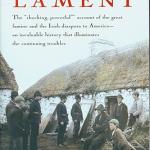
The Real Irish American Story Not Taught in Schools.

The Real Irish American Story Not Taught in Schools

http://zinnedproject.org/2012/03/the-real-irish-american-story-not-taught-in-schools/
Portside Date: 
March 17, 2014
Author: 
Bill Bigelow
Date of Source: 
Sunday, March 16, 2014
Zinn Education Project
“Wear green on St. Patrick’s Day or get pinched.” That pretty much sums up the Irish-American “curriculum” that I learned when I was in school. Yes, I recall a nod to the so-called Potato Famine, but it was mentioned only in passing.
Sadly, today’s high school textbooks continue to largely ignore the famine, despite the fact that it was responsible for unimaginable suffering and the deaths of more than a million Irish peasants, and that it triggered the greatest wave of Irish immigration in U.S. history. Nor do textbooks make any attempt to help students link famines past and present.
Yet there is no shortage of material that can bring these dramatic events to life in the classroom. In my own high school social studies classes, I begin with Sinead O’Connor’s haunting rendition of “Skibbereen,” which includes the verse:
… Oh it’s well I do remember, that bleak
            December day,
The landlord and the sheriff came, to drive
            Us all away
They set my roof on fire, with their cursed
            English spleen
And that’s another reason why I left old
            Skibbereen.

Wednesday, January 22, 2014

Why Education Reform Fails


Jack Rothman.
Co-authored by Amy Rothman, psychotherapist and mediator in Los Angeles
 American education just received another beating. This one came in a December report from the Program for international Student Assessment (PISA). While the United States is the top economic and military power globally, once again our 15-year-olds scored below average in math and only middling in science and reading. American students did not make it into the top 20 on any of these tests across the 65 participating nations.

American education has been under constant criticism since the middle of the last century. A galaxy of reforms has been mounted to address the issues, but these have not produced noticeable results. We live in a permanent environment of educational reform and educational failure. The reforms focus on fixing things within the schoolhouse, but the fundamental problem that needs fixing lies outside in the broader society. 
 Diane Ravitch's recent book, Reign of Error, gives a thorough and well-researched review of our educational plight and can serve as a field manual on reform issues. In the book she excoriates the privatization movement she once championed, decrying charter schools, vouchers, "Race to the Top" testing, numeric accountability, and the rest. She believes privatization, under the guise of choice, seeks to neuter teachers' unions, use test scores to fire teachers, and shut down overwhelmed public schools. To Ravitch, this reform isn't aimed as much at improving public schools as it is at replacing and Walmartizing them. It is a type of reform that hedge fund investors drool over because it provides an unending pool of potential customers to fill the pockets of corporate executives.

Tuesday, November 19, 2013

Why Good Teachers Embrace Culture


Meeting students where they are often requires knowing, celebrating, and incorporating their cultural backgrounds.

By Sophie Quinton

Arizona's attorney general called the program "propagandizing and brainwashing." An administrative law judge ruled that it "promotes racial resentment against 'Whites,' and advocates ethnic solidarity of Latinos."
With that, the Tucson Unified School District's controversial Mexican-American studies courses shut down in 2011. Yet a University of Arizona study found that the mostly Latino students who took the courses were 46 percent to 150 percent more likely to graduate from high school than those who did not. The study also determined positive effects on math and reading test scores. An independent audit of the curriculum confirmed that taking the courses helped students succeed in school.
All good teachers build a bridge between what students know and what they need to learn. Yet teaching that embraces students' cultural backgrounds has largely been left out of current debates on what makes teachers effective. The drama in Tucson helps explain why: Culturally responsive teaching often requires confronting some of the most painful divides in American life.

Friday, July 12, 2013

Taking the Caring Out of Teaching


 From In These Times.
It's not like tests themselves are inherently evil. Almost every teacher gives some kind of test or assessment. But when you place so much, so many outcomes on that edifice it's too much weight for that instrument to bear. It distorts and warps the whole teaching and learning process.
“Teaching is a caring profession–a humane profession about human beings engaging with one another,” says Brian Jones, a former New York City public-school teacher now pursuing a PhD in urban education. “Relationships between the teachers and the learners are an important part of the whole process.”
Jones and other teachers worry that the new system of teacher evaluations slated to be implemented this fall in New York's public schools will take caring out of the equation.

Thursday, January 24, 2013

Why does race, ethnicity matter in public schools ?

Start at about 24 minutes into the recording.
Diversity Forum:  Why Race and Culture Still Matter
Keynote Speaker: Dr. Tyrone Howard

December 5, 2012
California State University, Fullerton

Access the Full Video: 
http://distance-ed.fullerton.edu/bbpresentations/Diversity_Forum_12-5-2012/player.html
 
Creative Commons License
This work is licensed under a Creative Commons Attribution-NonCommercial 3.0 Unported License.