|
The New York governor is replacing elected representatives with private, unaccountable monopolists, and lawmakers across the US are doing the same thing. Too many decision-makers are ceding their policy to corporate power and private sector privileg
|
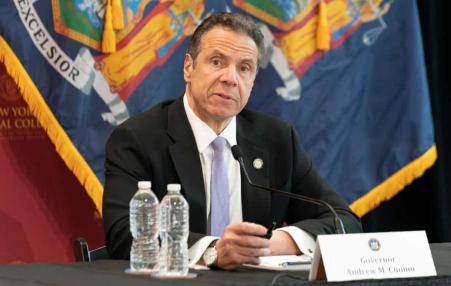
`Lawmakers are notably MIA in the middle of a pandemic - and by all accounts Cuomo likes it that way.', Photograph: Lev Radin/Pacific Press/REX/Shutterstock // The Guardian
|
Last week, New York’s governor, Andrew Cuomo, announced that Bill Gates would be responsible for “reimagining” New York’s education system. Cuomo also asked former Google chief executive Eric Schmidt to lead a panel planning New York’s post-Covid tech infrastructure.
As Naomi Klein writes, the appointments of Schmidt and Gates represent a “Pandemic Shock Doctrine … that is being rushed into being as the bodies still pile up [and] treats our past weeks of physical isolation not as a painful necessity to save lives, but as a living laboratory for a permanent – and highly profitable – no-touch future”.
As she points out, the two billionaires have disastrous records in the precise areas of public policy they are charged with leading. The Gates Foundation was the driving force behind high-stakes testing regimes and the Common Core fiasco. And Schmidt’s vision of the future is Black Mirror with a bow on it: mass surveillance plus public investment in companies in which he has a stake.
Even if Schmidt and Gates had good policies, Cuomo’s knighting of them is offensive to American self-government. Nobody voted for them and they are accountable to no one. Cuomo, often accused of being too close to big campaign donors, is tripling down: he is simply allowing billionaires to plan our future directly, taking out the middlemen.
In case you had any doubt that this is a new form of government worming its way into our old democratic ways, Cuomo anointed these tsars at the exact same time that he took vast new powers away from the state legislature, which has not been holding regular legislative hearings since 1 April. Lawmakers are notably MIA in the middle of a pandemic – and by all accounts Cuomo likes it that way.
Turning away from locally-elected representatives, and towards billionaires with no accountability, represents a terrible erosion of democratic decision-making: Cuomo is quite literally replacing elected representatives with private, unaccountable monopolists. And too many other lawmakers across the US are doing the same thing.
From California to Florida, states are turning to big corporations, CEOs and trade associations to not only decide when and how these states should “reopen”, but also what the post-virus economy should look like. The various taskforces and panels states have convened to chart a way forward are populated by executives from Pepsi, Dell, Disney and other corporations.
The White House has trotted out a steady stream of Wall Street bankers, pharma executives, and big-box store CEOs to make promises about pandemic recovery measures. (Which haven’t been kept – for instance, weeks later, the promised Target and Walmart parking lot testing sites hadn’t materialized.)
Meanwhile, the Cares Act, Congress’ coronavirus rescue package, is an authoritarian, top-down, big business restructuring of the already monopolized American economy. It gives extraordinary powers to the treasury secretary to reshape manufacturing, retail and banking in America, with almost no oversight, via easy access to trillions of dollars from the Federal Reserve.
Too many decision-makers are ceding their policy to corporate power and private sector privilege.
Even before this pandemic, turning to big businesses and their wealthy owners was a common condition of policymaking
Even before this terrible pandemic, turning first to big businesses and their wealthy owners was a common condition of American policymaking. When federal lawmakers want to juice the economy, they pass tax cuts for big corporations and the wealthy. When state and city lawmakers want to promote economic development, they dole out giveaways to big companies, providing them a leg up over smaller, more local competitors, often without letting constituents know until the contracts have all been signed.
|


http://davidbaconrealitycheck.blogspot.com/2016/03/lead-in-flint-water-mold-in-detroit.html
March 13, 2016\\
David Bacon,

A very conservative group has controlled Michigan since the election of Governor Rick Snyder and a Republican majority in its legislature in 2011. At the heart of their policies has been a concerted effort to remove control over cities and communities by the people who live in them, and to impose austerity and free market measures on populations who are mostly African American and people of colour.
Some of the key opponents to that threat to democracy, however, have been Detroit's teachers. This January, the Detroit Federation of Teachers filed lawsuit, and some educators even staged a walkout of the city's schools, to protest against the "deplorable, dangerous, unhealthy and unacceptable" conditions for children that have emerged from the wreck of Michigan's autocratic rule.
The key to the conservative's strategy has been the emergency manager law. While a version of it was passed in 1988 under a Democratic administration, new Republican office holders passed Public Law 4 in 2011, which was much more radical. It gave virtually unlimited powers to unelected managers appointed by the governor in times of financial distress, while elected city councils and school boards lost all decision-making power.
With none of the constraints of public accountability, emergency managers in several cities then proceeded to nullify union bargaining agreements and sell off public assets. Detroit itself was forced into bankruptcy in July 2013.
In nearby Flint, Governor Snyder appointed Darnell Earley as emergency manager in October 2013. Over the next 16 months, Earley laid the groundwork for switching Flint's water supply from the municipal utility that serves Detroit to pumping water from the Flint River - a waterway that is highly-polluted as a result of decades of toxic waste dumping by auto plants and other heavy industry.
Earley, a Democrat, justified the move as a measure to reduce costs. It has since become clear, however, that his action was connected to a plan to drive Detroit even further into bankruptcy.
The Detroit Water and Sewerage Department has operated with budget deficits that averaged US$57 million a year; debt servicing took up half of its budget. Bondholders, facing the loss of Flint as a customer, pressured for cutting off delinquent customers and raising rates to avoid writing down their investments in bankruptcy proceedings. The French waste and water management multinational, Veolia, was waiting in the wings.
Flint is the biggest customer for Detroit's water
When Detroit's water agency offered to halve its rates to keep supplying the city, Earley and his successor refused. Instead they signed an agreement to put Flint into the hands of a new water supplier connected to Veolia.
Without Flint as a customer, Detroit residents now have to pay higher rates. Detroit itself may have to sell its public water system - one of its main assets - to private investors.
One year ago, under the decree of Detroit's emergency manager Kevyn Orr, the water district began to shut off water services to poor residents behind on their bills. Only a global outcry stalled the move. At the same time Orr began negotiations with Veolia.
In February 2015 Veolia was then hired by Flint to study its water, after the switch in sources had been made. Public health doctors were already warning state and federal authorities that the level of lead in the drinking water pumped from the Flint River was alarmingly high. Lead is a recognised cause of learning disabilities in children, and the damage to their cognitive development is permanent.
Veolia announced that Flint's water was safe. It echoed similar false safety claims by the Michigan Department of Environmental Quality, an agency under the control of Governor Snyder. However, last year even General Motors stopped using Flint water in its car manufacturing plant because it was causing corrosion.
Eventually Snyder was forced to admit that corrosive river water was dissolving the lining of Flint's ancient lead pipes, causing a spike in the metal's concentration.
Embarrassing emails revealed knowledge by state authorities of the lead contamination, at the same time they were ridiculing parents and public health officials who warned of the danger.
Eventually a state of emergency was declared, and President Barack Obama offered US$80 million in relief, although replacing the city's pipes is likely to cost over US$1 billion.
Emergency in Detroit's schools
After leaving Flint, in January 2015 Earley was appointed by Governor Snyder as emergency manager of Detroit Public Schools (DPS) - the system's fourth emergency manager in seven years.
The main program of all four has been the privatisation of Detroit schools. By the end of the 2009-2010 school year, 36 per cent of students (50,139 students) were already attending private charter schools, and another 41 schools (30 per cent of the district serving 16,000 students) were converted into charters.
The Deficit Elimination Plan - agreed between managers and the state of Michigan in a bid to erase DPS' US$20.4 million deficit by the end of 2021 - required the district to close a further 70 schools over two years, and raise class sizes to 60 students at high school level.
Voters rebelled and repealed Public Law 4 in the 2012 election. The legislature moved even further to the right, however, passing a law forbidding contracts that require union membership as a condition of employment (a so-called "Right to Work" law), and then passed Public Law 4 again in a slightly modified form, as Public Act 436.
In a recent opinion piece, Pamela Pugh, treasurer of the (elected) State of Michigan Board of Education, wrote: "After more than six years of a failed state takeover, Detroit Public Schools have deteriorated into a destabilised education system, marred by decreased academic outcomes and increased deficit, upward of US$3.5 billion. Just as Flint's water crisis occurred under emergency management, so did the demise of the Detroit school district."
Last month, the Detroit Federation of Teachers finally filed a lawsuit to force Earley to resign, and to return the schools to control by an elected school board. "Asking a child to learn or a teacher to instruct in classrooms with steam coming from their mouth due to the cold in the classroom, in vermin-infested rooms, with ceiling tiles falling from above and buckets to catch the rainwater, or in buildings that are literally making them sick, is more than what is legally or constitutionally tolerable", the suit says.
Other conditions named in the action include black mold, bacteria, freezing cold or boiling hot classrooms, rats and insects, exposed wiring and falling debris.
At the beginning of this February Earley finally resigned, telling Governor Snyder he'd completed his work of "comprehensive restructuring" months ahead of schedule. And as hundreds of teachers staging a'sickout'rallied in front of the school district offices, Snyder announced he'd appoint a 'transition leader' to move the schools back toward local control.
"Educators and parents have been raising the red flag for years about dangerous school conditions, only to be snubbed, ignored and disrespected by DPS and the emergency managers, including Earley", said Ivy Bailey, interim president of the Detroit Federation of Teachers, in a statement. "The state has brought the school district to its knees, and now it's time to give up the reins."
Michigan cities like Detroit and Flint have been used as a laboratory for market-based policies and the most extreme forms of austerity. The results have been deadly.
Detroit remains in bankruptcy and emergency managers still wreak havoc in several other cities. Detroit schools, even without an emergency manager, will take many years to recover from the devastation caused by disinvestment and privatisation. The water in Flint still has lead, and the children damaged by its pollution will never fully heal.
As Americans go to the polls to vote this year, they must remember that conservative candidates all over the country are proposing to extend policies like those enacted in Michigan. The actions of politicians shouldn't just be debated in the abstract; when people are forced to suffer the very real consequences of political negligence such as that wrought on Flint and Detroit, individuals must be held to account.
David Bacon is a California writer and documentary photographer. A former union organizer, today he documents labor, the global economy, war and migration, and the struggle for human rights. His latest book, The Right to Stay Home (Beacon Press, 2013). discusses alternatives to forced migration and the criminalization of migrants.
Reposted from Portside.
Some of the key opponents to that threat to democracy, however, have been Detroit's teachers. This January, the Detroit Federation of Teachers filed lawsuit, and some educators even staged a walkout of the city's schools, to protest against the "deplorable, dangerous, unhealthy and unacceptable" conditions for children that have emerged from the wreck of Michigan's autocratic rule.
The key to the conservative's strategy has been the emergency manager law. While a version of it was passed in 1988 under a Democratic administration, new Republican office holders passed Public Law 4 in 2011, which was much more radical. It gave virtually unlimited powers to unelected managers appointed by the governor in times of financial distress, while elected city councils and school boards lost all decision-making power.
With none of the constraints of public accountability, emergency managers in several cities then proceeded to nullify union bargaining agreements and sell off public assets. Detroit itself was forced into bankruptcy in July 2013.
In nearby Flint, Governor Snyder appointed Darnell Earley as emergency manager in October 2013. Over the next 16 months, Earley laid the groundwork for switching Flint's water supply from the municipal utility that serves Detroit to pumping water from the Flint River - a waterway that is highly-polluted as a result of decades of toxic waste dumping by auto plants and other heavy industry.
Earley, a Democrat, justified the move as a measure to reduce costs. It has since become clear, however, that his action was connected to a plan to drive Detroit even further into bankruptcy.
The Detroit Water and Sewerage Department has operated with budget deficits that averaged US$57 million a year; debt servicing took up half of its budget. Bondholders, facing the loss of Flint as a customer, pressured for cutting off delinquent customers and raising rates to avoid writing down their investments in bankruptcy proceedings. The French waste and water management multinational, Veolia, was waiting in the wings.
Flint is the biggest customer for Detroit's water
When Detroit's water agency offered to halve its rates to keep supplying the city, Earley and his successor refused. Instead they signed an agreement to put Flint into the hands of a new water supplier connected to Veolia.
Without Flint as a customer, Detroit residents now have to pay higher rates. Detroit itself may have to sell its public water system - one of its main assets - to private investors.
One year ago, under the decree of Detroit's emergency manager Kevyn Orr, the water district began to shut off water services to poor residents behind on their bills. Only a global outcry stalled the move. At the same time Orr began negotiations with Veolia.
In February 2015 Veolia was then hired by Flint to study its water, after the switch in sources had been made. Public health doctors were already warning state and federal authorities that the level of lead in the drinking water pumped from the Flint River was alarmingly high. Lead is a recognised cause of learning disabilities in children, and the damage to their cognitive development is permanent.
Veolia announced that Flint's water was safe. It echoed similar false safety claims by the Michigan Department of Environmental Quality, an agency under the control of Governor Snyder. However, last year even General Motors stopped using Flint water in its car manufacturing plant because it was causing corrosion.
Eventually Snyder was forced to admit that corrosive river water was dissolving the lining of Flint's ancient lead pipes, causing a spike in the metal's concentration.
Embarrassing emails revealed knowledge by state authorities of the lead contamination, at the same time they were ridiculing parents and public health officials who warned of the danger.
Eventually a state of emergency was declared, and President Barack Obama offered US$80 million in relief, although replacing the city's pipes is likely to cost over US$1 billion.
Emergency in Detroit's schools
After leaving Flint, in January 2015 Earley was appointed by Governor Snyder as emergency manager of Detroit Public Schools (DPS) - the system's fourth emergency manager in seven years.
The main program of all four has been the privatisation of Detroit schools. By the end of the 2009-2010 school year, 36 per cent of students (50,139 students) were already attending private charter schools, and another 41 schools (30 per cent of the district serving 16,000 students) were converted into charters.
The Deficit Elimination Plan - agreed between managers and the state of Michigan in a bid to erase DPS' US$20.4 million deficit by the end of 2021 - required the district to close a further 70 schools over two years, and raise class sizes to 60 students at high school level.
Voters rebelled and repealed Public Law 4 in the 2012 election. The legislature moved even further to the right, however, passing a law forbidding contracts that require union membership as a condition of employment (a so-called "Right to Work" law), and then passed Public Law 4 again in a slightly modified form, as Public Act 436.
In a recent opinion piece, Pamela Pugh, treasurer of the (elected) State of Michigan Board of Education, wrote: "After more than six years of a failed state takeover, Detroit Public Schools have deteriorated into a destabilised education system, marred by decreased academic outcomes and increased deficit, upward of US$3.5 billion. Just as Flint's water crisis occurred under emergency management, so did the demise of the Detroit school district."
Last month, the Detroit Federation of Teachers finally filed a lawsuit to force Earley to resign, and to return the schools to control by an elected school board. "Asking a child to learn or a teacher to instruct in classrooms with steam coming from their mouth due to the cold in the classroom, in vermin-infested rooms, with ceiling tiles falling from above and buckets to catch the rainwater, or in buildings that are literally making them sick, is more than what is legally or constitutionally tolerable", the suit says.
Other conditions named in the action include black mold, bacteria, freezing cold or boiling hot classrooms, rats and insects, exposed wiring and falling debris.
At the beginning of this February Earley finally resigned, telling Governor Snyder he'd completed his work of "comprehensive restructuring" months ahead of schedule. And as hundreds of teachers staging a'sickout'rallied in front of the school district offices, Snyder announced he'd appoint a 'transition leader' to move the schools back toward local control.
"Educators and parents have been raising the red flag for years about dangerous school conditions, only to be snubbed, ignored and disrespected by DPS and the emergency managers, including Earley", said Ivy Bailey, interim president of the Detroit Federation of Teachers, in a statement. "The state has brought the school district to its knees, and now it's time to give up the reins."
Michigan cities like Detroit and Flint have been used as a laboratory for market-based policies and the most extreme forms of austerity. The results have been deadly.
Detroit remains in bankruptcy and emergency managers still wreak havoc in several other cities. Detroit schools, even without an emergency manager, will take many years to recover from the devastation caused by disinvestment and privatisation. The water in Flint still has lead, and the children damaged by its pollution will never fully heal.
As Americans go to the polls to vote this year, they must remember that conservative candidates all over the country are proposing to extend policies like those enacted in Michigan. The actions of politicians shouldn't just be debated in the abstract; when people are forced to suffer the very real consequences of political negligence such as that wrought on Flint and Detroit, individuals must be held to account.
David Bacon is a California writer and documentary photographer. A former union organizer, today he documents labor, the global economy, war and migration, and the struggle for human rights. His latest book, The Right to Stay Home (Beacon Press, 2013). discusses alternatives to forced migration and the criminalization of migrants.
Reposted from Portside.