Showing posts with label charters. Show all posts

Sunday, July 05, 2020

New Sacramento Bee Reporter Accepts and Uses Deceptive Claims of Data on"Personalized Learning " in Response to Covid School Closings

Sac Bee Reporter accepts and uses deceptive data on “  Pesonalized  Learning” schools response to Covid.  
Welcome to Sacramento. 

In the Bee Article  “ Lawmakers, advocates say budget hurts top schools, “   published in the Bee on July 5,  new  Bee reporter Mackenzie Hawkins makes a series of claims   based upon a fundamental, and highly partisan claims.  Hawkins has been at the Bee for 2 months. Prior to this position she wrote for the Yale News, which may have been a student intern position.   Note, recognize that reporters often do not write the titles of pieces. 

Hawkins  says, 
“But under this year’s education budget, lawmakers and education advocates warn, the state will abandon its traditional allocation formula in favor of a system that harms the very schools — disproportionately, charter schools and personalized education programs — that have performed best under pandemic pressures.” [ no evidence  provided of the last phrase… that have performed best under pandemic pressures]
“California’s public schools usually receive money based on a combination of the prior year’s funding and the current year’s average daily attendance — a metric that reflects not the number of students enrolled, but rather how many students show up each day. 
Historically, this has meant that if a student switches schools from one year to the next, the money to fund their education moves with them. That will change under budget trailer bills AB 77 and SB 98, which allocate next year’s funding based on attendance through February 29 of this year.”
here: 
https://www.sacbee.com/news/politics-government/capitol-alert/article243822982.html#storylink=cpy

This statement is inaccurate.  State funding of schools in California is based upon the Local Control Funding system, LCFF.    
The Local Control Funding Formula (LCFF) was enacted in 2013. The LCFF was designed to be a more equitable system of funding, with the goal of providing additional funding for the highest needs students. These subgroups of students include English learners, low-income students, and foster children. If the student groups targeted for assistance make larger than a majority of enrollment, districts receive additional concentration money.
          Schools do not receive money sole  based upon Average Daily Attendance, as the reporter asserts.  They receive money based upon ADA and  the state also gives additional state funds to districts based on the number of low-income students, English learners, foster children and homeless youth they serve.
There is a significant difference between these two

Reporter Hawkins goes  on to say, 

“Proponents say the legislation preserves educational equity and ensures adequate funding in the most disadvantaged areas. But according to charter school advocates and a bipartisan group of lawmakers, turning an emergency measure into a permanent policy undermines school choice and forces top-performing schools to turn away students — often, those served poorly in traditional schools — looking for another option. “[There is no evidence for the  claimthat the funding would force top performing schools to turn away students because we do not know which are the top performing schools.]
“What the state is essentially proposing is we’re going to protect and essentially reward failing schools, and we’re going to punish schools that have proven that they’re performing well and successful in this COVID crisis,” Association of Personalized Learning Schools & Services (APLUS+) Director Jeff Rice, who represents 75 personalized education programs in California, told The Sacramento Bee. “While so many other public schools had to completely shut down their educational services, we kept them going without missing a heartbeat.”
 here: https://www.sacbee.com/news/politics-government/capitol-alert/article243822982.html
Yes, that is their assertion.  They are correct that the schools stayed open.  But, there is no evidence that these were top performing schools, only that the schools were kept open.   The reporter stated this without analyzing the factual claim.   Yes, they kept the personalized learning schools going, but with no evaluation of their effectiveness.  No one knows if these on line connections were significant learning experiences,  or were they just on line efforts to cover up and/ or avoid social education?  We just do not know.  And,  no evidence that the "schools" are top performing.  The Personalized learning and Charter School folks  propose to change the allocation of funds and to stop the distribution based upon the current equity provisions of  LCFF.   That is, they would move money from current schools to their on line “ personalized” instruction.. what ever that is. 


The  writer makes the statement because advocates for charter schools, and the Charter School Development Center want readers to consider changes in  funding by ADA.  It is  more than unfortunate that  a Bee reporter  made this report without providing accurate, complete, and balanced coverage.   For coverage of LCFF  I recommend the news source EdSource.

The charter school advocates want to focus the discussion on shifting demographics caused by the Covid crisis and the closing of schools.  They want to only consider the changing enrollments.  However, that is intellectually dishonest.  The budget trailer bills were not drawn up based upon their assertion, they were drawn up based upon the agreed upon criteria of the LCFF that promote equity in funding.  

In the two months since the  California schools closed, a number of families have indeed moved their children out of public schools and into a network of charters.  They needed to “do something” with their children.  Many of these charters  had pre existing on line education programs.   These programs are substantially not evaluated.  The only measure being used is that parents moved their children. Moving children in a crisis does not prove that the schools are failing nor that on line personalized programs are “top schools”.    Now the corporate sector – with the Bee’s assistance- is seeking to gain funds by urging the legislature to  take  funds from public schools to fund these on line  coaching events.  

Here is a June research report on how the response to the virus is effecting K-12 schools.


There isn’t much research on the effectiveness of on line education.  What research exists concentrates on Moocs type courses that are substantially different than the individualized on line connections promoted  by this effort to reallocate funds by the charter developers. 
Here is an example of research on on-line learning
https://www.frontiersin.org/articles/10.3389/feduc.2017.00059/full

If any reader has evidence or research on the actual performance in this “personalized learning” in k-12 please share it.




Thursday, February 27, 2020

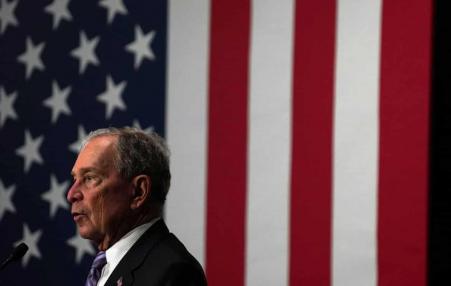
How Bloomberg Trashed Public Education in New York


How Bloomberg Trashed Public Education in New York


Jake Jacobs
February 24, 2020
The Progressive

I’m an art teacher. Mike’s policies gutted my school. During those years, I was lucky to have enough copy paper for my students to draw on. Bloomberg’s harmful education policies are today being papered over as his money cascades through the media.


Former Mayor Michael Bloomberg at a campaign event in Phoenix, Arizona., Photo by Gage Skidmore, courtesy of Flickr // The Progressive


Mike Bloomberg, the former mayor of New York City now running for President, often brags about being one of the most prolific charter school creators in the United States. Bloomberg says he “absolutely” intends to expand charters in his federal education plan. This is a serious threat to public education, especially given Bloomberg’s history of using his fortune to shape policy.

Since 2013, Bloomberg has been one of the nation’s biggest donors to candidates and ballot initiatives promoting charters and vouchers, giving more than $4 million to candidates in New Jersey, Colorado, Minnesota, and Louisiana, often through “dark money” PACs. In California, Bloomberg spent a whopping $39 million, backing both Democrats and Republicans who support charters. In Pennsylvania, he gave $6 million to pro-charter incumbent Republican Sen. Pat Toomey, who won re-election with a narrow 1.5 percent edge, and ended up casting a critical vote for Supreme Court nominee Brett Kavanaugh.

New York City teachers are vocal critics of Bloomberg, who not only used public money for school privatization but usurped the power of elected community school boards as the state granted Bloomberg “mayoral control” of New York City schools in 2002.

Bloomberg proceeded to appoint corporate attorney Joel Klein as head of New York City’s education department. Klein began a "test-and-punish" regime, which led to the closure of 150 schools and earned him an 80 percent disapproval rating with teachers


Wednesday, February 19, 2020

Bloomberg's Education Reforms Would be a Disaster for Public Schoos


Mike Bloomberg's Education 'Reforms' Would be a Disaster for Public Schools

Dr Heather Gautney and Eric Blanc
February 17, 2020  The Guardian

Like Trump, Bloomberg is a fervent backer of privatizing and dismantling public schools across the country


Democratic presidential candidate Michael Bloomberg attends a campaign event at Buffalo Soldiers national museum in Houston, Texas, on 13 February., Photograph: Go Nakamura/Reuters

Nominating Michael Bloomberg would be a disaster for public schools – and for the Democrats’ chances at beating Donald Trump in 2020. Because when it comes to education policy, it is virtually impossible to tell the two billionaire politicians apart.

Like Trump and his inept secretary of education, Betsy Devos, Bloomberg is a fervent backer of privatizing and dismantling public schools across the country. Education, in their view, should be run like a business.

While other establishment Democrats have begun changing their tune in response to the “Red for Ed” movement, Bloomberg’s campaign spokesman has made it clear that privatization will be a core message of his 2020 presidential run: “Mike has always supported charter schools, he opened a record number of charter schools as mayor of New York City, and he will champion the issue as president.”

Indeed, Bloomberg succeeded in massively expanding privately run but publicly funded charter schools during his term as mayor, increasing their number from 18 to 183. His controversial push to “increase school choice” closed over 100 schools in low-income communities and entrenched New York City’s education system as the most racially segregated in the country.

In contrast with Bloomberg’s too-little-too-late apology for imposing racist stop-and-frisk policies upon New York City – and its overwhelmingly non-white student body – the former mayor has doubled down on his rightwing education approach in recent years.

If anything, the main difference between Bloomberg and Trump is that the former has spent far more of his immense personal fortune to boost corporate “education reform” and local candidates driving this agenda. The New York Times reported last week that Bloomberg has spent millions to promote charters in the state of Louisiana alone. And this is just the tip of the iceberg: Bloomberg’s foundation in 2018 announced its plan to spend $375m to promote charters, merit pay and the sacking of “failing” teachers, among other reforms.

Tuesday, January 08, 2019

Why the Los Angeles Teachers Strike Matters


The January 10 strike date announced by the United Teachers of Los Angeles (UTLA) has heightened tensions in an already contentious dispute with Los Angeles Superintendent Austin Beutner, who represents the Los Angeles Unified School District (LAUSD) in negotiations. However, far more is at stake in Los Angeles and for the rest of us than a traditional contract struggle.
Given how many students LAUSD educates, the possibility of a strike by its union is huge news. LAUSD has 694,000 in its schools. The entire state of Oklahoma educates about that same number of students in its public schools.
The reforms LAUSD has demanded in Los Angeles schools are based on the bipartisan project to convert public education into a lucrative market for wealthy investors. Merrill-Lynch heralded this change in a 1999 report for prospective investors: “A new mindset is necessary, one that views families as customers, schools as ‘retail outlets’ where educational services are received, and the school board as a customer service department that hears and addresses parental concerns.”
Networks of wealthy billionaires and the foundations they create have advocated and imposed reforms nationally, even globally, we see today in LA schools: using standardized tests to control what and how children learn; creating charter schools to weaken neighborhood schools and undermine parent loyalty to public education; creating new revenue sources for corporations to profit from education; and weakening teachers unions. The “portfolio model” LAUSD has announced it will adopt fragments the school system into networks operated by private charter management organizations.

Saturday, October 06, 2018

Corporate Money, Charters and the Schools

Hijacked By Billionaires: How The Super Rich Buy Elections To Undermine Public SchoolsAn NPE Action Investigative Report www.npeaction.org


Tuesday, September 25, 2018

California Bans For Profit Charter Schools

 Governor Brown signing CFT-sponsored AB 406, banning for-profit charter schools in California
The following is a statement from CFT President Joshua Pechthalt on California Governor Jerry Brown signing AB 406. AB 406 was sponsored by the California Federation of Teachers and authored by Assemblymember Kevin McCarty (AD-7) and co-authored by Assemblymember Tony Thurmond (AD-15).
“The education of our children should not be a profit making industry. Assembly Bill 406 is a landmark piece of legislation that will stop the practice of for-profit corporations from taking scarce resources away from our students for corporate profits. AB 406 is a critical step forward to ensure that all charter schools are accountable to our students, parents, and communities. There is still much work to be done to ensure that all charter schools in California are held to the same financial transparency and accountability laws as our traditional public schools.”
The California Federation of Teachers represents 120,000 teachers, faculty, and school employees in public and private schools and colleges, from early childhood through higher education. It is the statewide affiliate of the AFT. More information at www.cft.org.

Wednesday, August 01, 2018

LCFF and Charters


A startling report uncovers a systemic failure by California charter schools to meet their obligations under state law. Among the findings, not a single school analyzed properly documented how it was increasing or improving services for high need students. Statewide, charter schools receive more than $900 million annually to provide these services.

Learn more: https://bit.ly/2OCfZD8 #CAcharterschools

Wednesday, June 13, 2018

Charter Schools and Death by a Thousand Cuts

Death by a Thousand Cuts
Privatization in education has been slow and halting. But it's already crippling many public schools.

ed. note. And it will be on the California ballot in November in the race for Superintendent of Public Instruction. 

In this marketized system, competition would, theoretically, eliminate low-performing schools because they wouldn’t attract enough customers to stay in business. In the real world, the poor buy necessities at a price they can afford even if the quality is inferior. This is why the free market has always failed to meet the real needs of low-income people; they get what they can pay for.
In a school voucher system, wealthy families can (and will) add as much money as they want to their vouchers to pay for their choice of schools; middle-income families will pull together whatever resources they can for the best schools in their price range. Low-income families without additional resources will “choose” schools charging the value of the voucher. Almost no higher quality schools will be available because they will have no incentive except altruism to offer their products at the minimum price. (For example, the value of a government voucher for high school in Washington, D.C. in 2016–17 was $12,679 while tuition at Washington’s elite private schools exceeded $40,000 a year.) As a last resort, low-income families could choose a “government school.” For free-market ideologues, government schools are always a last resort and available to the poor.
Many Southern states anticipated the 1954 Brown school desegregation decision and prepared policies to evade racial integration. Between 1954 and 1959, eight states adopted what were whites-only versions of Friedman’s voucher system. They used public funds to pay for white students to attend all-white private schools, which were called “freedom of choice schools” or “segregation academies.” States also leased unused public school property to private schools.
Read the entire essay.

Wednesday, May 31, 2017

DeVos, Charters, and Corporate Theft

by Jeff Bryan, 
Betsy DeVos wants to give your tax dollars to private schools and businesses and tell you it’s an education “transformation.”
That’s the main theme of an address she gave this week to a conference held by the organization she helped found and lead, the American Federation for Children.
Declaring “the time has expired for ‘reform,'” she called instead for a “transformation… that will open up America’s closed and antiquated education system.” Her plan also opens your wallet to new moochers of taxpayer dollars.
By the way, AFC, according to SourceWatch, is a “conservative 501(c)(4) dark money group that promotes the school privatization agenda via the American Legislative Exchange Council (ALEC) and other avenues.” It also grew out of a defunct PAC connected to DeVos called “All Children Matter” that ran afoul legally in Ohio and Wisconsin and still owes Ohio $5.3 million for breaking election laws.
So DeVos had a supportive crowd for her speech, but what should the rest of us think of it?
The transformation she calls for seems to rest on the premise that, “It shouldn’t matter where a student learns so long as they are actually learning.” But what does she mean by “learning”? And what should the public expect about how its funds are being spent?

Friday, May 26, 2017

Why Do Billionaires Want Charter Schools ?


Eli Broad and Edyth 


Harold Meyerson:

The billionaires, apparently, we shall always have with us — even when we decide how to run the state-funded schools where they rarely send their own kids.

In the Los Angeles school board elections earlier this month, a number of billionaires, including Eli Broad, Netflix founder Reed Hastings and two Walton family siblings, poured millions into the campaigns of two charter-school advocates. These billionaire-sponsored candidates defeated two badly outspent opponents who took a more cautionary stance on expanding charters, lest they decimate the school district’s budget. In total, pro-charter groups outspent teacher unions, $9.7 million to $5.2 million. (In the 2016 state legislative campaigns, the charterizers outspent the unions by a far larger margin, $20.5 million to $1.2 million.)
ADVERTISING


Though a number of the billionaires who’ve involved themselves in the charter cause are conservatives and Republicans, the actual election battles they join almost always pit Democrat against Democrat — in part because nearly all big cities are now overwhelmingly Democratic. In California, where Republicans’ numbers have ebbed past the point of power, the lion’s share of billionaires’ legislative campaign contributions have gone to more centrist Democrats, who not only are reliable votes on charter issues but also often oppose environmental and other measures advanced by their more progressive colleagues.
Charter billionaires have settled on a diagnosis, and a cure, that focuses on the deficiencies of the system’s victims, not the system itself.


Of all the issues billionaires could choose, why charters, and why now? One reason commonly adduced is that they’ve noticed something troubling: Public school graduates lack the skills necessary for employment. Many of those needed skills, however, are the kind that students acquire in vocational educational programs, not at charter schools.


That there are huge problems in the education of low-income students is beyond dispute — but this is hardly a recent development. The real recent development is the rising share of such students as the middle class has waned.

If the Waltons, say, decided to redirect more of their fortune to raising Wal-Mart workers’ wages, that in turn might enable hundreds of thousands of families to have more economically secure and stable lives, which could have a greater effect on student performance than charterization.

Tuesday, May 23, 2017

Trump, DeVos Budget Proposal for Public Education

We need your help. When Betsy DeVos was nominated to be secretary of education, we sounded the alarm because of her role in Michigan and Florida as an anti-public education and pro-voucher lobbyist—what I call a “public school denier.” The public agreed with us, but the White House and GOP-led Senate ignored the outcry of millions of Americans from across the country and confirmed her appointment—using a tiebreaking vote by Vice President Mike Pence. The budget DeVos and the Trump administration issued today reaffirms our concerns—big-time. 

We feared DeVos was ill-prepared to be education secretary, and now, after seeing this budget, we know she doesn’t care. The Trump-DeVos budget is manifestly cruel to children and catastrophic to public schools, while being a windfall for those who want to profit off of children or make education a commodity.

That is why we are reaching out to everyone, regardless of your job title, where you live or your political party. We need your help in taking on the Trump-DeVos budget and its consequences.

Write to Betsy DeVos and oppose this cruel and catastrophic budget today.

Just look at what the DeVos budget proposes: 
  • While Trump and DeVos chose private schools for their children, with small class sizes, they want to eliminate the federal funding that helps America’s public schools lower class sizes.
  • While Trump and DeVos can afford whatever their children and grandchildren need or want, and while Ivanka Trump got $19 billion for her parental leave project, the budget completely zeros out all current federal programs that keep millions of poor children safe and well-fed in after-school and summer programs.
  • Trump says there is nothing more important than being a teacher, but he eliminates the loan forgiveness program that helps students pursue teaching careers, eliminates funding for teacher preparation and educator support, and guts most other programs that alleviate student debt or make college more affordable.
  • Trump says vocational education is the way of the future yet slashes career and technical education funding.
  • DeVos promised not to hurt children with special needs, but the budget cuts one-quarter of the Medicaid funding that now pays for essential school-based services like physical therapists, feeding tubes and other medical equipment, and health screenings. 
And what do they fund with all these cuts? This budget provides tax cuts for the wealthy and redirects funding for expanded charter schools and vouchers. It spends $250 million on further research for vouchers even though the most recent studies, including one on the D.C. voucher program by DeVos’ own Education Department, show that vouchers hurt kids. And it diverts $1 billion from Title I funding—including $550 million in direct Title I cuts—to fund an Arne Duncan-like Race to the Top-style program.

Tell Betsy DeVos that our children deserve better. She must stop her crusade for private, religious schools and failed voucher programs and fully fund public education.

Federal and state funding is vitally important for our public schools to help children. Just ask the people in Van Wert, Ohio, who spent a day hosting DeVos and me. DeVos saw examples of great public schools in this rural area that voted big-time for Donald Trump. She saw the importance of early childhood education, observed hands-on learning in robotics classes, and learned about after-school programs, including a senior project that helps provide backpacks filled with food for the weekend to kids who receive free and reduced-price lunch. 

Wednesday, May 17, 2017

Billionaires with Agenda to Privatize Public Schools Buy LAUSD School Board Election for $10 Million - California Teachers Association

Billionaires with Agenda to Privatize Public Schools Buy LAUSD School Board Election for $10 Million - California Teachers Association


In his first interview after declaring victory in the LA Unified school board election, Nick Melvoin vowed to protect parents’ choices in education and to move the district beyond the charter school versus traditional school narrative.
“I would like the first thing we try to tackle to be moving beyond this what we call the school, who governs the school and respect parents’ choices and respect educators’ choices,” he said soon after his acceptance speech Tuesday night as he paused from greeting supporters to talk to LA School Report.
Melvoin delivered an upset victory in Tuesday’s election, unseating a school board president, something that hasn’t happened in at least two decades. Together with Kelly Gonez who won in District 6, they will be part of the strongest reform majority that the board has seen. Melvoin defeated Steve Zimmer in the District 4 race with about 57 percent of the vote, according to unofficial results.
Other top priorities include a unified enrollment system and transparency in the district’s finances and facilities. He said he would work to reform the co-location process in which charter schools share campus space with traditional schools. He also wants to push for more autonomies for district schools like those granted to charter schools.
Melvoin’s brief acceptance speech didn’t include charters, but in the interview afterward he professed his support for independent charter schools, which are publicly funded and run by nonprofit organizations. LA has more charter schools than any other district in the nation, with about 16 percent of LA schoolchildren enrolled in independent charters.
Melvoin had the backing of deep-pocketed philanthropists who have supported charter school growth, including Reed Hastings, the CEO of Netflix, Eli Broad, and former LA Mayor Richard Riordan.

Monday, June 06, 2016

School Solutions and Turn Arounds

Bobbi Murray & Bill Raden
June 3, 2016
Capital and Main
 
California has become ground zero for the national battle over charter school expansion. Some of America’s richest individuals and largest foundations are pouring resources into what critics view as the privatization of public education. Based on six months of reporting and interviews with experts, elected officials, educators and advocates on both sides of the debate, “Failing the Test” is a comprehensive portrait of how charter schools are changing public education.


Yolanda Rodriguez, Pandora Young
 
 
Elana Goldbaum was happy working at Burbank Junior High School, a public school located in Los Angeles’ Highland Park neighborhood, until she was let go during the recession in 2008. She now works with what Goldbaum calls “a talented and amazing team” of educators at the Alliance Gertz-Ressler charter school, one of a network of 27 high schools and middle schools spread across the Los Angeles area. She loves teaching history to 10th graders, even though she finds herself embroiled in some of the teacher-management conflicts that have defined charters. 

Thursday, June 02, 2016

Trump University : For Profit Education

by Jeff Bryant
Revelations from documents connected to Trump University are generating outrage across the political spectrum, from my colleague Terrance Heath, who called it “a scheme to transfer wealth from people who had little,” to the conservative journal National Review which carried an editorial proclaiming it “a massive scam.”
Much of the commentary has focused on the “playbook” that guided sales reps for Trump U in how to coerce prospective students to sign up for the bogus degree program. A review of the document by CBS News highlights the hard sell tactics Trump U staffers used to push prospects into committing many thousands of dollars – upwards of $35,000 – to a course of study that many of those students now concede turned out to be “useless information.”
The outrage is much deserved, but we shouldn’t lose sight of the fact that making a buck off people’s urges to fulfill their education destinies has become commonplace in American society.
As reports of the Trump U documents were breaking, Politico reported on how the Obama administration is currently engaged in a struggle to rein in the practices of for-profit colleges that lure students into degree programs that plunge them deeply into debt without advancing their financial well beings in the long run.

Sunday, March 27, 2016

Why I Am Pessimistic About the Future of Public Education

Mark Naison
March 11, 2016
The Washington Post - The Answer Sheet
 
Public schools in recent years have sustained assaults from believers in the privatization of the public education system. The powers that be plan a data-based reinvention of teacher education that will require the closing, or reinvention of colleges of teacher education. If these plans go through, a majority of the nation's teachers and teacher educators could lose their jobs in the next 10 years, replaced by people who will largely be temp workers-making minimum wages


As a student of history who has watched how the financialization of capital and the expansion of technology has affected labor markets, housing markets and the political process, I am incredibly pessimistic about the future of public education.
 
After the 2007-2008 financial crisis in the United States, a growing number of those with investment capital seeking profitable outlets are seeing education - and educational technology - as growth areas. Resistance by students, parents and educators to high-stakes standardized testing and the Common Core State Standards confronted them with a temporary setback, but now they are poised to make an end run around the Opt Out movement by concentrating on "personalized learning" which requires a huge investment in computerization of classrooms as well as software.

Thursday, November 12, 2015

The Education Fight in the Democratic Party

Jeff Bryant, Education Opportunity Network.
The “big economic fight” in the Democratic Party that news outlets are reporting isn’t confined to economics.
The link above takes you to a story in the Washington Post explaining how a “populist wing” in the Democratic Party is rebelling against the conventional wisdom of “centrist” Democrats who have dominated the party since the 1990s.
“Right now the populist story is winning,” the article concludes.
My colleague Richard Eskow pounced on the article and writes for the Huffington Post, “The corporate-friendly policies of the party’s more conservative wing have fared poorly, both as policy and as politics, and as a result the party has moved to the left.”
Eskow points to “the insurgent candidacy of Bernie Sanders” and other recent events as signs of “a major setback for the so-called ‘New Democrats’ who have dominated the party since the election of Bill Clinton in 1992. Nearly 25 years after they rose to power, the ideas of the ‘New Democrats’ don’t seem so new.”

Wednesday, August 19, 2015

Another Republican Candidate Attacks Public Education and Teachers

Jeff Bryant
Some Very Serious People have decided Governor John Kasich of Ohio is the latest personality to emerge from the field of presidential candidates in the Republican Party as a genuine bona fide consideration.
According to a round up of political pundits and campaign strategists compiled by Politico, Kasich – along with Hewlett-Packard ex-CEO Carly Fiorina – put in a superior performance in the recent televised Republican presidential debate on Fox News. Folks at The Hill have christened Kasich a “sleeper candidate” who is “getting buzz because his message resonates more with the beltway crowd.” And analysts at Real Clear Politics, as of this writing, have Kasich edging ever so close to Jeb Bush who trails only Donald Trump in polling for the New Hampshire Republican primary.
Yet in all this horse-race analysis there is very little scrutiny of what Kasich’s track record actually is in the state he governed for the past four years – a consideration that should matter a lot in order to be recognized as a candidate in the first rank.
On the economic policy front, Kasich has very little to brag about. According to a recent op ed by Dale Butland of Innovation Ohio, a progressive think tank in that state, Kasich makes a case for his economic prowess based on an increase in jobs in his state since the Great Recession. But compared to other states, Ohio has “led the nation in lost jobs” and “is still about 140,000 jobs short of where we were in 2007 before the downturn began.” Job creation in the Buckeye state has “lagged the national average for 20 straight months” and kept its rank mired at 41st.
 
Creative Commons License
This work is licensed under a Creative Commons Attribution-NonCommercial 3.0 Unported License.