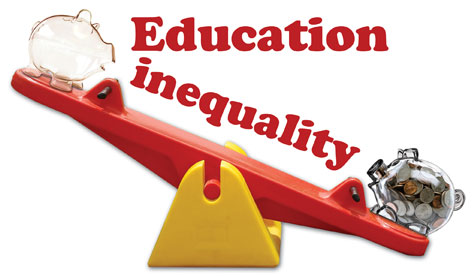
Showing posts with label inequality. Show all posts

Thursday, June 20, 2024

Local MAGA Congressperson


 Sacramento Area Congressperson Kevin Kiley

votes to impose extreme agenda on Defense Appropriations bill. 2024. 

Blocks passage of funding of U.S.military.  Votes with extreme MAGA Republicans.

https://www.nytimes.com/2024/06/14/us/politics/house-defense-bill-abortion.html?


Our problem is massive inequality,  Reich.

https://www.theguardian.com/commentisfree/article/2024/jun/11/income-inequality-college-graduates-finance-consulting


Tuesday, November 14, 2023

Thousands Protest APEC Summit


SAN FRANCISCO, CA -12NOVEMBER23 - Thousands of demonstrators protested the San Francisco meeting of the Asia-Pacific Economic Cooperation forum and the continuing Israeli bombing of Gaza.  Protesters demanded fair trade policies and a ceasefire.
 
Photographs Copyright David Bacon
To see a complete set of photos, click here

Thursday, September 24, 2015

Our Kids: The American Dream in Crisis

Our Kids: The American Dream In Crisis.
Robert D. Putnam.
Review by Duane Campbell
This new book is an insightful and well researched analysis  of on the achievement gap, which Robert Putnam  correctly calls an opportunity gap for the current generation of young people.  I was drawn to the book by respect for his prior writing,  Bowling Alone . This new work  is of equal value in synthesizing social science research.  Perhaps it is of more value since we have major institutions-schools- in positions , that could contribute to the rebirth of equal, democratic opportunity.

In Our Kids, Putnam   describes major developments in our schools and our communities - the growing inequality of opportunity for the working class and the poor.
Educational writers have long chronicled several of the key concepts, the role of tracking, of concentrations of poverty and of race. This work excels because it is a very well informed outsiders sociological viewpoint of these issues.  Putnam and research associate Jen Sliva bring together extensive social science data and research to support the  many interpretive suggestions.

Tuesday, June 23, 2015

Our Kids : The American Dream in Crisis

Our Kids: The American Dream In Crisis (2015)
Robert Putnam
A  Preliminary Review by Duane Campbell

This new book is an insightful and well researched analysis  of on the achievement gap, which Robert Putnam  correctly calls an opportunity gap for the current generation of young people.  I was drawn to the book by respect for his prior writing,  Bowling Alone . This new work  is of equal value in synthesizing social science research.  Perhaps it is of more value since we have major institutions-schools- in positions , that could contribute to the rebirth of equal, democratic opportunity.

In Our Kids, Putnam   describes major developments in our schools and our communities - the growing inequality of opportunity for the working class and the poor.
Educational writers have long chronicled several of the key concepts, the role of tracking, of concentrations of poverty and of race. This work excels because it is a very well informed outsiders sociological viewpoint of these issues.  Putnam and research associate Jen Sliva bring together extensive social science data and research to support the  many interpretive suggestions.

This is not the over simplification of many general and popular books, nor the ideological tracts of education’s many critics and neoliberal "reform" advocates. Putnam provides vivid and useful examples combined with a well informed data bases  of social science research  of the most important issues. He builds his arguments upon both individual interviews and the synthesis of an enormous amount of social science research thus combining big and important  ideas with the research to support them.  

Thursday, August 28, 2014

Back to School, and to Widening Inequality

 Robert Reich
 American kids are getting ready to head back to school. But the schools they’re heading back to differ dramatically by family income. Which helps explain the growing achievement gap between lower and higher-income children. Thirty years ago, the average gap on SAT-type tests between children of families in the richest 10 percent and bottom 10 percent was about 90 points on an 800-point scale. Today it’s 125 points. The gap in the mathematical abilities of American kids, by income, is one of widest among the 65 countries participating in the Program for International Student Achievement.
On their reading skills, children from high-income families score 110 points higher, on average, than those from poor families. This is about the same disparity that exists between average test scores in the United States as a whole and Tunisia.
The achievement gap between poor kids and wealthy kids isn’t mainly about race. In fact, the racial achievement gap has been narrowing.
It’s a reflection of the nation’s widening gulf between poor and wealthy families. And also about how schools in poor and rich communities are financed, and the nation’s increasing residential segregation by income.

Thursday, August 21, 2014

The U.S.'s Classist Educational System - And California's

by Peter Dreier.
America's education system is unequal and unfair. Students who live in wealthy communities have huge advantages that rig the system in their favor. They have more experienced teachers and a much lower student-teacher ratio. They have more modern facilities, more up-to-date computer and science equipment, and more up-to-date textbooks. They have more elective courses, more music and art offerings, and more extracurricular programs. They have better libraries, more guidance counselors and superior athletic facilities.
2014-07-25-EducationalInequalityposter.jpg
Not surprisingly, affluent students in well-off school districts have higher rates of high school graduation, college attendance and entry to the more selective colleges. This has little to do with intelligence or ability. For example, 82 percent of affluent students who had SAT scores over 1200 graduate from college. In contrast, only 44 percent of low-income students with the same high SAT scores graduate from college. This wide gap can't be explained by differences in motivation or smarts. It can, however, be explained by differences in money.

Wednesday, April 09, 2014

Something Else- Not School Reform

When politicians and the corporate advocates (lobbyists) choose one set of policies over another, they make important decisions. When they select accountability ( testing, common core, PACT assessments) and market-based privatization they are selecting policies that enrich their benefactors, not policies selected to improve the school lives of children. They avoid policies based upon evidence based practices. Kevin Weiner, in Kappan says, “In doing so, politicians seem willfully ignorant of the direct connection between opportunity and achievement. Our national opportunity gaps lead inexorably to our achievement gaps. Yet the test-based accountability policies still advocated by politicians dis- regard the opportunity side of the equation. Capacity building and supports are relegated to a small footnote within a long diatribe about mandated performance.” Inequality in funding and resources have an effect on students’ experience of school: the ratio of students to teachers; the number of experienced teachers, the number and quality of books, and instructional materials; the condition of the physical plant. Most schools in low-income are in bad shape, the students are suffering, and the politicians and the corporate lobbyists are looking to make money off of “reforms efforts. “ See the video below- Protecting Public Education.

Saturday, January 11, 2014

Persistent Educational Inequality

An excellent video explanation by Dr. Wayne Au

"Recolonizing Our Classrooms: 
The Race and Class Hypocrisy of Corporate Education Reform"

VIEW THE VIDEO STREAM:


His talk starts at 27 minutes. 

Monday, June 24, 2013

Education to rebuild the U.S.


An Education Declaration to Rebuild America
Americans have long looked to our public schools to provide opportunities for individual advancement, promote social mobility and share democratic values. We have built great universities, helped bring children out of factories and into classrooms, held open the college door for returning veterans, fought racial segregation and struggled to support and empower students with special needs. We believe good schools are essential to democracy and prosperity — and that it is our collective responsibility to educate all children, not just a fortunate few.
Over the past three decades, however, we have witnessed a betrayal of those ideals. Following the 1983 report A Nation at Risk, policymakers on all sides have pursued an education agenda that imposes top-down standards and punitive high-stakes testing while ignoring the supports students need to thrive and achieve. This approach – along with years of drastic financial cutbacks — are turning public schools into uncreative, joyless institutions. Educators are being stripped of their dignity and autonomy, leading many to leave the profession. Neighborhood schools are being closed for arbitrary reasons. Parent and community voices are being shut out of the debate. And children, most importantly, are being systemically deprived of opportunities to learn.
As a nation we have failed to rectify glaring inequities in access to educational opportunities and resources. By focusing solely on the achievement gap, we have neglected the opportunity gap that creates it, and have allowed the resegregation of our schools and communities by class and race. The inevitable result, highlighted in the Federal Equity and Excellence Commission’s recent report, For Each and Every Child, is an inequitable system that hits disadvantaged students, families, and communities the hardest.

Wednesday, August 03, 2011

As Union membership declines, wage inequality increases

By James Parks
AFL-CIO
With union members under attack across the country, a new study shows how important unions are to the economy. The study, “Union Decline Accounts for Much of the Rise in Wage Inequality,” published in the August issue of the “American Sociological Review,” says the decline in the percentage of workers who belong to unions is worsening income inequality and closely parallels the decline of the middle-class.
In fact, the decline of union membership explains about a fifth of the increase in wage inequality among women and about a third among men, says Bruce Western, a professor of sociology at Harvard University and co-author of the study. According to Western:
Our study underscores the role of unions as an equalizing force in the labor market.
Even nonunion workers benefit from stronger unions as employers raise wages and increase employee benefits, says co-author Jake Rosenfeld, a professor of sociology at the University of Washington:
For generations, unions have been the core institution advocating for more equitable wage distribution. Today, when unions—at least in the private sector—have largely disappeared, that means that this voice for equity has faded dramatically. People now have very different ideas about what’s acceptable in terms of pay distribution.

Friday, May 06, 2011

Free Fall- Educational opportunities in California

Summary from the new report of UCLA Accord Center:
California Educational Opportunity Report.


Core Findings from our Surveys and Interviews:
• California high schools are providing less time and attention and fewer quality programs. As a consequence, student
engagement, achievement, and progress to graduation and college are suffering;
• School reform has all but sputtered to a halt due to staff cutbacks and the elimination of time for professional development;
• Even as high schools across the state are impacted by declining budgets, inequality is growing across and within schools;
• California’s high schools face growing demands from families experiencing economic crisis; these demands point to the interrelationship
of California’s education and social welfare budgets.
Rogers, J., Bertrand, M., Freelon, R., Fanelli, S. (2011). Free Fall: Educational Opportunities in 2011.
Los Angeles: UCLA IDEA, UC /ACCORD.
To access this report online, please visit http://www.edopp.org

Sunday, July 27, 2008

Barbara Ehrenreich: Inequality

from the London Guardian

http://books.guardian.co.uk/interviews/story/0,,2291935,00.html

America's last taboo

Barbara Ehrenreich has been called a Marxist just for writing that the US is not a classless society. But criticism has never stopped her exposing social injustice before. Emma Brockes talks to her about her new book, Barack Obama and the great wealth divide

Monday July 21, 2008
The Guardian

Twenty years ago, Barbara Ehrenreich wrote an article for the New York Times in which she pointed out the growing inequality of American society and was promptly denounced, by a rival paper, as a Marxist. "The Washington Times is an extreme-rightwing publication," she says, so there was no surprise there. But the paper's reaction underlined a general principle: that while one can say "fairly wild" things about race and gender in the US, there persists a certain coyness about class. "There's this powerful myth that America doesn't have classes; that they're an ancient English or European thing that we abolished. And that if you're not rich, it's your own damn fault."

Now 66, Ehrenreich has devoted most of her career to disproving this maxim. Her 2001 bestseller Nickel and Dimed was an account of the year she spent trying to eke out an existence on the minimum wage, which caused affluent readers everywhere to exclaim guiltily: "We had no idea!" She reported that companies cheat their staff of wages (there are 70 lawsuits pending); limit the number of toilet breaks staff take; forbid them from talking to each other or using "profanity" on the premises, and that the cleaner you hired through a "reputable" firm is probably made to clean your house while sick or injured. The book's success owed much to the personal journey of Ehrenreich herself, who suggested the idea to her editor for a younger journalist to take on. But she fitted the profile of the invisible worker - middle-aged, female and knackered. Once in situ, she was bullied by various bosses and forced to retire each night to a motel because she couldn't afford a flat.

Her latest book, which in the US is called This Land Is Their Land: Reports from a Divided Nation, is the animating force behind all this, a collection of columns that almost amounts to a manifesto. The title comes from a Woody Guthrie song, which Ehrenreich can hardly bear to listen to these days. She writes: "I flinch when I hear Woody Guthrie's line, 'This land belongs to you and me'. Somehow, I don't think it was meant to be sung by a chorus of hedge-fund operators." (The book's UK publisher evidently didn't feel Guthrie's song travelled well, and has opted for the title Going to Extremes instead.)

Ehrenreich's skill, apart from the sheer quality of her writing, is to illustrate her opinions with wave after wave of examples, of unglamorous labour disputes and everyday injustices that don't get much of a look-in elsewhere. Through them she details how wealth in America has transferred from the bottom to the top, thanks to tax cuts for the rich and Bush's reluctance to regulate the markets, and exposes the fallacy that "growth" as measured by GDP is, for the majority of Americans, synonymous with better living.

"It was just so fascinating to me, without being an economist, to see how in the past few years growth has become completely decoupled from wages or the real conditions of what we call working people," she says. "And the reason they were so decoupled is because of the huge inequality. So you could have many [economic] indicators looking very sunny and good, but you're talking about a population that is so divided there's not an average there any more."

A book about the joylessness of the American right must struggle to avoid matching it with a litany of dreary, rival orthodoxies. But Ehrenreich has never been dour, nor for that matter predictable. She lives in the historic town of Alexandria, just south of Washington DC, in a jolly chaos of papers and magazines. On the mantelpiece is a card that reads, "I am not, therefore I buy", but she is as suspicious of self-denial as she is of self-indulgence, both of which she sees as affectations. In one unexpected column, Ehrenreich flies at Jane Brody, the health editor of the New York Times, who throughout the 90s championed with great influence the virtues of a low-fat, high-carb diet. As well as questioning the health benefits of Brody's principles, Ehrenreich calls them a way of enabling the well-off to feel virtuous merely by indulging their own narcissism. "The low-fat diet has been the hair shirt under the fur coat - the daily deprivation that offsets the endless greed."

The "tireless preaching" that bedevils modern life elicits a resounding screw-you from Ehrenreich. Her latest bugbear is "positive thinking", the underlying philosophy of much life coaching and motivational speaking, which she came across during the research for Bait and Switch, the follow-up to Nickel and Dimed. In it, she spent a year trying to expose white-collar office life but was scuppered by not being able to get a job. Instead Ehrenreich fell into the hands of the gannets who feed on the unemployed and sell them reassurances that getting a job is just a question of attitude. This was illustrated by cheerful Kimberly, a "co-active coach" whom Ehrenreich employed and ended up wanting to kill. As the economy recedes, you wonder if Kimberly and her ilk will disappear. "I tend to think that the irrational, delusional approaches will persist," she warns.

Ehrenreich is by training a scientist, with a degree in chemistry and a PhD in cell biology. As a child she saw both sides of the economic divide. Her father was a copper miner from Montana who got an education and eventually qualified as a metallurgist and made it on to the corporate ladder at Gillette. "He was a very exceptional person, as he'd be the first to tell you. But he never - nor did my mother - say about people who didn't do as well, 'Oh we did it, so they can do it.' They recognised that theirs was an unusual trajectory."

Did they identify as working-class?

"No. I think they would have said middle-class. But I think my father always thought that he didn't fit in. He was too rough-edged. And he had a lot of contempt for, say, Ivy League types or MBA types."

What she sees as the stigmatisation of the sick in the US is a reaction in part to a "strange little detail" of her childhood. Her mother, who was politically more radical than her father and whom the young Ehrenreich would look at in alarm sometimes and wonder if she was a communist, had been brought up by her Christian Scientist grandparents. "And in no other way was my mother continuing to be a Christian Scientist, except for one thing: health. It was very bad to get sick. I remember when I had trouble seeing the blackboard in about seventh grade, she said, "People in our family don't wear glasses." Ehrenreich smiles ruefully.

Her son is a writer and her daughter a lawyer, (Ehrenreich is divorced; she moved to Alexandria to be near her two grandchildren) and half of her family still lives on low wages; her sister and her husband have just been forced to cancel their health insurance. I wonder if she had ethical qualms about Nickel and Dimed; isn't there something unsavoury about a comfortable journalist pretending to be poor and then being paid a lot of money to write about it?

"Well you know, that never entered my mind . . . what began to bother me a little bit was that there was a deception involved; that I had to tell people that I was working these jobs because I needed the money, which wasn't true. But I always tried at the end to tell people I had got to know what the truth was. And then you can work off the guilt of any money by giving it away. Easily fixed."

Until the success of that book she had been freelance, and the security, she says, has been wonderful. She hasn't had a staff position since her first job working for the New York City government as a health planner, which she left after seven months when she decided that "the government was selling out to private interests" and went to work for a "radical collective" lobbying for better healthcare in the city. "That's where I started writing, because we had a newsletter and I loved to do investigative pieces."

Nowadays, people write to Ehrenreich with their workplace horror stories. The most shocking in the new book came from an ex-employee of one large retailer, who told Ehrenreich that in 2003 the company held him captive for six hours and interrogated him for giving a colleague a discount on a videogame, before getting him to write a false confession and firing him. A former colleague alleged that such incidents were not unusual.

With Obama ascending there is hope of a sea change, although Ehrenreich remains characteristically cautious. She sees him "tacking to the right" and was disheartened by his choice of economic adviser, Jason Furman, "who was to the far right of the Democratic party and made his reputation as a defender of Wal-Mart [one of her principal targets in Nickel and Dimed]. And so in a way, I thought, OK, I'm not going to pay [Obama] any attention for a while."

I wonder if the huge success of Nickel and Dimed, and the tax bill that presumably came with it, hasn't sent Ehrenreich skidding off a bit in that direction. "Ha! I have to watch that kind of stuff. But no. I always say, if I could pay more taxes and be in turn told for sure that there would be decent schools for my grandchildren, that there would be healthcare for them, that there would be social security, if there was something in return, other than wars, it would be a wonderful thing." She cackles. "As it is, I just get angrier and angrier"

· Going to Extremes: Notes From A Divided Nation is published by Granta (£8.99).To order a copy for £8.99 with free UK p&p go to guardian.co.uk/bookshop or call 0870 836 0875

In the U.S. the book is : This Land is Their Land; Notes from a Divided Nation.
Barbara Ehrenreich is an Honorary Chair of Democratic Socialists of America

Wednesday, January 24, 2007

State of Delusion

State Of Delusion

Robert L. Borosage

January 24, 2007

Robert L. Borosage is co-director of the Campaign For America's Future .

Last night’s State of the Union address revealed that the state of this president is still delusional. He can’t level with the American people because he can’t or won’t recognize the reality that we face.

The best part of the speech wasn’t anything the president said. It was House Speaker Nancy Pelosi sitting over his shoulder, signaling the change that Americans voted for. The president also got a lift from the “ordinary heroes” that he recognized at the end of the speech. But when it came to substance, the president seemed bored with his own words as he trotted out his pledge for more of the same.

For this president, the economy is great and we need to stay the course. The Democratic response by freshman Virginia Sen. Jim Webb offered a glimpse of the reality that the president doesn’t get—that this economy isn’t working for most Americans. No wonder fewer than a third of Americans think the president has any clue about the problems they face.

For this president, we have a strategy for moving forward in Iraq, and we’re garnering global support for our foreign policies. Maybe he's back on the sauce; he certainly isn’t reading his briefing papers or listening to his own generals. The president called for bipartisanship, apparently not aware that senators from both parties are already coming together—in opposition to the president’s escalation of the war in Iraq. Again, Webb offered a dose of reality in his response, stating flatly that it was time to bring the president’s war to an end, and that if he couldn’t understand that, “we will be showing him the way.”

Even where it has dawned on the president that there is a problem to be addressed, his proposals are gestures, if not mockeries. The health care system is broken. The president’s reforms, by his own exaggerated numbers, might provide health insurance for maybe 3 million of the 47 million that now go without, while taking a whack at workers who have decent plans (read unions) and public hospitals (read Hillary Clinton’s New York, which takes 40 percent of the hit).

Catastrophic climate change and our dependence on foreign oil are a clear and present threat to our security. The president recycles his ethanol enthusiasms (substituting “woodchips” for last year’s “switch grass” as a potential source). But his plans won’t even cover the projected increase in U.S. oil demand over the next decades. He still defaults on the imperative for a dramatic national drive for energy independence—like that called for by the Apollo Alliance , which can generate jobs even as it helps address global warming.

Our education system is not providing the basics—children with the nutrition and access to health care to be ready to learn, universal pre-school, smaller classes in the early grades, skilled teachers, affordable college and advanced training. The president offers only to continue the No Child Left Behind reforms that he has failed to fund.

Immigration reform is a vital necessity. The president calls for comprehensive reform, in the face of growing right-wing opposition. But he insists on a guest worker program, simply a subsidy for exploitative employers, insuring them a pool of second-class workers.

The president’s speech was more striking for what it omitted than for what it contained. No mention of our unsustainable trade deficits, the loss of 17 percent of our manufacturing jobs, the growing indebtedness to foreign creditors, particularly the Chinese and Japanese central bankers. No talk of the worst corporate crime wave in modern history, with executives cooking the books and plundering their own companies. Not a word about the worst inequality since the Gilded Age or the rise of families in poverty. Obscenely, the president said not a word about the beleaguered survivors of Katrina, who, having weathered that hurricane’s winds now must struggle to survive the administration’s broken promises.

Speaker Pelosi’s presence and Sen. Webb’s response offered the only solace for Americans watching last night. This president remains in his bubble, divorced from a reality he can’t see, committed to a course at home and abroad that won’t work. But it matters less and less. Americans have already tuned him out, and the Congress no longer dances to his fancies. From now on, it is the new leadership in Congress that “will be showing him the way.”
 
Creative Commons License
This work is licensed under a Creative Commons Attribution-NonCommercial 3.0 Unported License.